If you have tattoos and you’re planning an onsen visit in Japan, it’s normal to feel unsure. The good news: you usually have a few calm, practical options—especially if you choose a private bath or confirm the policy before you go. This guide focuses on avoiding awkward surprises, not on “perfect” answers (because rules vary by facility and can change).
Quick answer (the real-world version)
- Sometimes yes, sometimes no. Tattoo rules are set by each facility, not one national rule.
- The lowest-stress option for first-timers: book a private bath (either a reservable private bath or a room with a private open-air bath).
- If you want a public bath: you’ll usually need either a tattoo-friendly facility or to cover small tattoos (if the facility allows cover-up).
- If the policy is unclear: confirm before you book or choose a private bath instead.
Start here: the calmest option for first-timers
If you’re new to Japan and you don’t want any stress at the entrance, choose one of these:
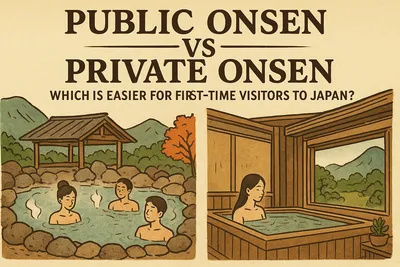
- A room with a private bath (often called a private open-air bath). You bathe on your own schedule.
- A reservable private bath at a ryokan or onsen facility (you book a time slot).
- A clearly tattoo-friendly facility that states tattoos are allowed.
Private baths cost more than a standard public bath, but they buy you something valuable: certainty.
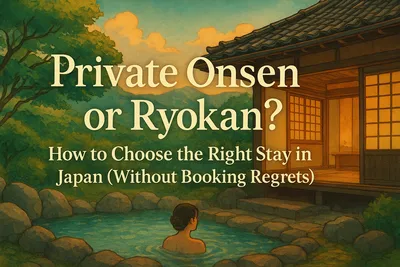
Related guide: Private Onsen or Ryokan? How to Choose the Right Stay in Japan (Without Booking Regrets).
Related guide: How to Book a Ryokan in Japan Without Getting Confused: A Calm, Step-by-Step Guide for First-Timers.
Can you use onsen with tattoos in Japan? Short answer + practical rules
In practice, you’ll run into one of these policies:
| What the facility says (or implies) | What it usually means for you | Low-stress move |
|---|---|---|
| Tattoos allowed | You can use the public baths normally. | Still follow standard etiquette and be discreet. |
| Tattoos not allowed | You may be refused entry to the public baths. | Choose a private bath or another facility. |
| Cover-up required / allowed | Small tattoos may be okay if fully covered. | Bring waterproof cover patches and confirm size limits. |
| Policy unclear | Front desk decides; outcomes vary. | Ask before booking or default to private. |
A calm mindset that helps: being turned away usually isn’t personal. Staff are following house rules designed to keep the bathing area comfortable for all guests.
Three safe choices: tattoo-friendly, cover-up, or private bath
Option A: Choose a tattoo-friendly facility
This is the simplest public-bath option. Look for a clear statement on the official site or booking page that tattoos are allowed. If it’s not clearly stated, treat it as unknown and confirm.
Option B: Cover small tattoos (only if the facility allows it)
Some places allow small tattoos if they’re fully covered with a waterproof patch. Others do not allow cover-up as a workaround. That’s why checking first matters.
Small tattoos (one or a few)
- Often the easiest to handle with cover patches if permitted.
- Confirm whether there’s a size limit (some facilities set a maximum).
- Bring more patches than you think you’ll need (edges can lift in hot water).
Large tattoos or multiple tattoos
- Covering may not be realistic or may violate the facility’s policy.
- Private bath is usually the smoothest plan.
- If you want public baths, prioritize facilities that explicitly welcome tattoos.
Option C: Use a private bath (best for “no surprises”)
Private baths are ideal for:
- Couples who want to bathe together (many public baths are gender-separated).
- Families with kids who want a simpler routine.
- Solo travelers who want a quiet, predictable first onsen experience.
Related guide: Best Ryokan Areas Near Tokyo for a Relaxing First Stay (Easy 1-Night Getaways).
How to check a facility before you book (so you don’t waste money)
What to look for on the official page
- A clear policy statement about tattoos (allowed / not allowed / cover allowed).
- Whether there are private baths and if they require reservations.
- Any notes about size limits or “must be fully covered.”
- Whether the facility is a day-use bath or part of a hotel/ryokan stay.
Simple English messages you can send (copy/paste)
- Message 1 (basic): “Hello. I have tattoos. May I use your public hot spring baths? If not, do you have a private bath I can reserve?”
- Message 2 (small tattoo + cover): “My tattoo is small. If I cover it with a waterproof patch, may I use the public baths?”
- Message 3 (private bath details): “If a private bath is available, how do I reserve it, and is there an extra fee?”
Red flags that usually mean “skip it”
- The policy is not stated anywhere and staff won’t confirm in writing.
- You’re told “maybe” or “depends on the day” for public baths.
- The facility only offers public baths and the tattoo policy is strict or unclear.
Related guide: Japan Travel Apps You Should Download Before Your Trip (First-Timer List).
Onsen vs sento vs “spa” facilities: why it matters for tattoo rules
These places can feel similar, but rules and vibes can differ:
- Onsen: hot spring water (natural mineral water). Often traditional, sometimes stricter about tattoos.
- Sento (public bath): heated tap water. Policies vary widely; some are relaxed, some are not.
- Large bath/spa complexes: big facilities with many baths and rules. Some allow tattoos with cover; others restrict tattoos more strictly. Always check before you go.
For a first-timer with tattoos, the goal is not the “best” category—it’s the clearest policy.
What to bring for a smooth first visit (tattoo-friendly packing list)
Waterproof cover patches (if you plan to cover)
- Bring multiple sizes and extras.
- Make sure they’re designed for water and heat.
- Test one in the shower before your trip if possible (some adhesives react differently).
Cash, towel, hair tie, toiletries (the “no small surprises” kit)
- Cash: many baths and ryokan extras are easier to pay in cash.
- Small towel: for modesty while walking and for drying off (often available to rent, but not always).
- Hair tie: long hair should be tied up and kept out of the water.
- Basic toiletries: some places provide them, some don’t (or you may prefer your own).
Related guide: Do You Need Cash in Japan? Simple Cash, Card & ATM Tips for First-Time Visitors.
Onsen etiquette for tattooed visitors (what never changes)
What never changes
- Wash before you soak. Sit at the shower station and rinse thoroughly.
- No swimsuits in traditional onsen bathing areas (private baths vary, but usually also no swimsuits).
- Keep towels out of the bath water.
- Keep voices low and phones away.
- Take your time. The calm atmosphere is part of the experience.
If staff says no (how to handle it without stress)
- Stay polite and simple: “Okay, thank you.”
- Ask one practical follow-up: “Is a private bath available instead?”
- If not, leave and try another facility—this happens, and it’s not a failure.
Best low-stress onsen types for tattooed travelers
1) Ryokan with a private bath in your room
This is the most predictable option. It’s also great if you want to avoid timing issues (no reservation slots, no walking to a separate bath).
2) Ryokan or hotel with reservable private baths
You usually book a time slot at check-in (sometimes in advance). If you’re traveling during busy seasons, confirm the reservation method before you arrive.
3) Day-use facilities with a clear cover policy
Good for travelers based in cities who want a single onsen experience without an overnight stay. The key is clear rules—don’t assume.
4) Tattoo-friendly public baths
If you find one with an explicit “tattoos allowed” policy, it can be a very relaxed experience. Still, expect the same etiquette and quiet atmosphere.
Common mistakes (and the calm fixes)
- Mistake: Assuming “cover patches always make it okay.”
Fix: Only cover if the facility says cover-up is allowed. - Mistake: Booking a ryokan and assuming the onsen is private.
Fix: Confirm whether the bath is private-in-room, reservable private, or public-only. - Mistake: Arriving without cash for entry or towel rental.
Fix: Carry a small cash buffer for bath visits. - Mistake: Waiting until you’re at the entrance to ask about tattoos.
Fix: Message before booking, or choose private.
Sample 1-day plan for a first visit (low-stress)
Before booking
- Decide your comfort level: public bath vs private bath.
- Check the official site for tattoo policy and private bath details.
- Send a short message if anything is unclear.
At check-in
- Confirm bathing hours and private bath reservation steps (if applicable).
- Ask where towels are provided or rented.
- If you’re using cover patches, apply them in your room (not in the changing area).
In the bath
- Wash first, then soak quietly.
- Keep towels out of the water.
- After soaking, dry off before returning to the changing area.
FAQ
Are tattoos “more accepted” in 2026?
Some places are more flexible than in the past, especially in tourist-heavy areas, but there’s no universal rule. The only reliable approach is to check each facility and keep a private-bath backup plan.
If I cover my tattoo, can I go anywhere?
Not necessarily. Some facilities allow cover-up; others don’t. If you can’t confirm the policy, choose a private bath to avoid a wasted trip.
What if I’m traveling with kids?
A private bath is often the easiest: fewer rules to juggle, no separating by gender for young children, and a calmer pace.
Related guide: Japan Travel with Kids: Simple Tips for a Smoother Family Trip.
What if I’m a couple and want to bathe together?
Most public baths are separated, so book a private bath (in-room or reservable). It’s also the simplest solution for tattoos.
Should I plan transport differently for onsen trips?
For rural onsen towns, trains and buses are common, but timing can be limited. If you’re arriving late or carrying luggage, a taxi can be a calm upgrade—just check current prices and availability.
Related guide: Are Taxis in Japan Expensive? A Simple Guide for Tourists (No Stress).
Bottom line: a simple decision path that works
- If you want zero awkwardness: book a private bath.
- If you want a public bath: pick a facility that clearly allows tattoos, or confirms that cover-up is allowed.
- If anything is unclear: ask before you book—or choose private and relax.