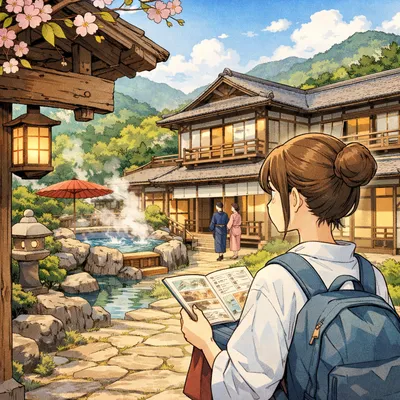
Traveling in Japan with kids sounds amazing… and also a little terrifying, right? You might be picturing a huge train station, a sleepy child, two suitcases, and a phone battery that suddenly drops to 3%. Yep. That’s a very real first-timer moment.
But here’s the thing. Japan can actually be one of the smoother countries to travel with children. It’s safe. It’s organized. And there are conveniences everywhere. The stress usually comes from a few predictable “surprise points” like crowds, stairs, hotel room size, and not knowing what a booking page really means.
This guide is here to calm the noise. You’ll get simple, practical tips for planning, packing, trains, food, hotels (including ryokan and private baths), and how to avoid the classic family-trip meltdowns. Not perfection. Just prepared,ですよね。
Quick note: Travel rules, train fares, child fare rules, pass conditions, hotel services, and ryokan or bath policies can change. Use this as a calm starting point, and always check the latest official information before booking or buying anything important.
Quick Answer: What makes Japan travel with kids smoother?

Keep your pace slow. Pick one main base city and stay longer. Travel outside rush hour. Pack lighter than you think you should. And choose hotels for “easy access,” not just “famous station.”
For many families, the magic combo is: IC cards + compact stroller + simple daily rhythm (one highlight + one rest block).
And if you want an onsen stay, don’t panic. You just need to understand what “private bath” actually means before you pay.
Who This Guide Is For
This is for you if you are:
- A first-time visitor to Japan traveling with babies, toddlers, or elementary-age kids
- Nervous about not speaking Japanese
- Worried about getting lost in big stations or airports
- Trying to choose the right hotel area and accommodation type
- Interested in ryokan or onsen, but confused by “private bath” wording
- Trying to avoid overspending on the wrong pass, the wrong hotel, or the wrong schedule
1) Plan the trip pace: slow travel wins (especially with kids)
Let’s be honest. The classic first-time Japan itinerary is… a bit intense. Tokyo today, Kyoto tomorrow, Osaka the next day, and a day trip to somewhere “because Instagram.” With kids, that’s how you end up eating konbini dinner on a hotel bed while everyone silently stares at the wall.
Many family travel guides generally recommend a base-style itinerary: stay in one city for several nights and do day trips from there. It’s calmer. And it reduces the “where is the elevator?” station stress.
A simple family-friendly daily rhythm
A common pattern that works well is:
- Morning: one main activity (museum, temple area, teamLab, theme park entry, etc.)
- Afternoon: flexible time (park, indoor play space, shopping mall, hotel break)
- Evening: early dinner, then sleep (or at least attempt sleep… you know how it goes)
Make “transfer days” light on purpose
Moving hotels takes longer than you think. Check-out. Finding the platform. Buying snacks. Bathroom breaks. Then check-in rules. It adds up.
So on travel days, plan something easy near your hotel. A department store. A playground. A simple neighborhood stroll. Your future self will thank you,ですよね。
Stress-Free Tip: If you remember one thing, remember this: one highlight per day is plenty. Japan is stimulating. Kids don’t need five “must-sees.”
2) Crowds and seasons: avoid the pain points (when you can)
Japan gets crowded. Not “a bit busy.” More like “why are there so many humans in this one hallway” crowded.
Some periods are widely considered extra difficult for families, like Golden Week (late April to early May), Obon (mid-August), and the New Year holidays. If you can avoid those windows, it can make trains and attractions feel dramatically easier.
Rush hour is the hidden boss battle
In big cities, morning and evening commuter rush can be intense. Many family travel resources recommend avoiding those times with strollers and luggage if possible.
If your child wakes up early anyway (because of jet lag), you can flip it: do your sightseeing early, then rest mid-day when crowds peak.
Weather reality check (especially summer)
Summer in Japan can be hot and humid. For little kids, that can be exhausting fast. If you’re traveling in July or August, it’s often smart to plan more indoor stops: museums, aquariums, play spaces, and anything with air conditioning.
Stress-Free Tip: Build a “crowd escape plan” for each day: one indoor place near your main area where you can cool down, sit, and reset.
3) Trains with kids: IC cards, child fares, and stroller survival
Trains are amazing in Japan. Also… stations can be huge. And when you’re tired, everything feels bigger.
Get IC cards early (it saves your brain)
Having an IC card (like Suica or Pasmo) makes daily transport easier. You tap in, tap out, and you’re done. In many cases, you can also use it for small purchases like drinks or snacks.
If you’re traveling as a family, setting up your payment routine early helps. Less “Wait, who has the coins?” and more “We’re on the train!”
Child fare basics (confirm for your exact situation)
Child fare rules can vary by company and situation, so please check the latest official info. That said, it is often described like this: ages around 6–11 use a child fare (often about half), and very young children may be free within certain limits when accompanied by an adult.
Tiny warning: If your child is right on the age boundary, or you’re using special tickets (like reserved seats), confirm the rules before you travel. It avoids awkward gate moments.
Strollers: compact is king
Many travelers find a lightweight, foldable stroller is the sweet spot in Japan. Elevators exist, but they can be far. Some exits have stairs. Some platforms are crowded. A big stroller can feel like a shopping cart in a packed elevator.
A common strategy is stroller + carrier. Use the stroller when it’s easy, and switch to the carrier for stations, stairs, or crowded areas.
“Near the station” is not always stress-free
This surprises a lot of first-timers. A hotel can look close on a map, but the station might be massive, confusing, or have long underground walks.
For families, “easy station” often beats “famous station.” A smaller station on a convenient line can feel much calmer than a major hub.
Stress-Free Tip: When you choose a hotel, check not only distance, but also station size, number of lines, and whether you can reach the hotel without complex underground routes.
4) Luggage: lighter is calmer (and your shoulders will agree)
Many first-time visitors pack like they’re going to the moon. Totally understandable. But Japan is not a wilderness survival trip. You can buy basics easily, and laundry is often available in hotels or apartments.
The “less stuff” formula
- Pack fewer outfits and plan to do laundry
- Bring one good pair of walking shoes per person (plus a backup for kids if needed)
- Keep your day bag light (especially if you’re also carrying snacks and water)
Diapers and kid supplies
It’s often suggested to bring only a few days of diapers and then buy more in Japan. This can reduce luggage a lot. Brands and sizes may feel different, though, so if your child is picky about fit, you might want a small buffer.
Consider luggage delivery (takkyubin)
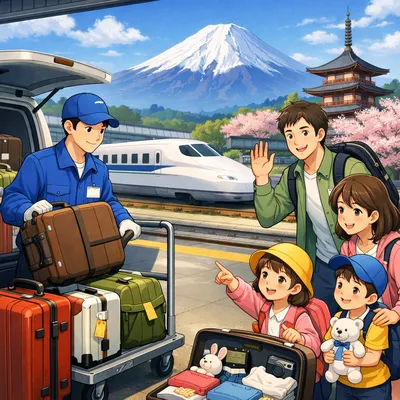
Japan has convenient luggage delivery services often called takkyubin. Depending on where you are staying and the service area, you may be able to send suitcases between hotels (or to the airport) so you can travel lighter for a day.
This can be a game-changer with kids, especially on transfer days.
Tiny warning: Delivery timing, cut-off times, and availability vary. Confirm with your hotel before you rely on it.
Stress-Free Tip: If you’re doing a one-night stop between big cities, consider sending your largest suitcase ahead and traveling with just a small “overnight bag.” It feels like cheating (in a good way)!
5) Food with kids: picky eater strategy (without losing your mind)
Food anxiety is real. Your child might love noodles at home… and suddenly refuse everything that looks unfamiliar. Japan has endless great food, but family meals go smoother with a little planning.
One reliable meal per day
Many families find it helps to plan one “safe” meal daily. Not fancy. Just reliable. That could be:
- A casual restaurant in a department store
- A food hall where everyone picks what they want
- A simple chain restaurant when you’re tired
This is not “wasting Japan.” This is keeping everyone functional,ですよね。
Timing matters more than you think
If your child melts down at 7pm, don’t aim for a 7:30pm dinner. Eat earlier. Or do a late afternoon snack “meal” and a smaller dinner later.
Konbini are your friend
Convenience stores (konbini) are everywhere. They’re helpful for breakfast, fruit, yogurt-style snacks, drinks, and emergency meals when plans collapse. And yes, plans sometimes collapse. That’s family travel!
Stress-Free Tip: Keep a small “food safety kit” in your day bag: a familiar snack, wet wipes, and a small trash bag. Sounds boring. Works like magic.
6) Hotels and where to stay: what matters most with kids
Hotel choice can make or break your energy. Not because you need luxury. But because you need easy logistics.
What “family-friendly” really means in Japan
Sometimes it means bigger rooms. Sometimes it just means the hotel allows children. Sometimes it means there’s a coin laundry and a microwave. The wording can be vague, so it’s smart to check details before booking.
Practical hotel features that reduce stress
- Easy station access (not just “close,” but simple)
- Elevators that fit a stroller
- Coin laundry in the building or nearby
- Convenience store close by
- Flexible check-in, or at least clear late check-in rules
Apartment-style stays: good option, not perfect for everyone
Apartment hotels or family apartments can be great if you want a kitchen, laundry, and more space. They can also reduce food stress.
But they may have stricter check-in rules, fewer staff, or less English support depending on the property. Read the fine print.
Stress-Free Tip: For your first night in Japan, choose the easiest option. Near your arrival route. Simple check-in. Minimal transfers. You can do the “special stay” later.
Accommodation Terms Explained (Ryokan, Onsen, Private Baths)
Ryokan and onsen are amazing cultural experiences. They can also be confusing on booking sites. So let’s make it simple,ですよね!
Ryokan
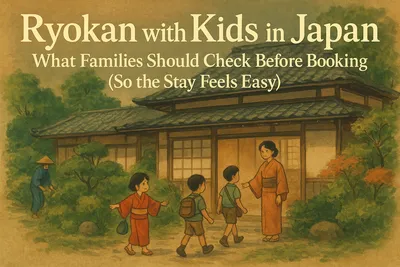
A ryokan is a traditional Japanese inn. Rooms often have tatami-style flooring, and bedding may be laid out later. Many ryokan offer meal plans, often dinner and breakfast.
Onsen
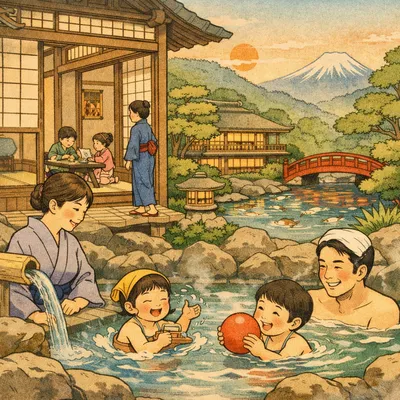
An onsen is a hot spring bath using natural hot spring water. Some properties have onsen baths on-site. Others may have a regular bath (not hot spring water). Booking pages don’t always make this super clear, so it’s worth checking.
Public onsen (shared bath)
This is a shared bathing area. It is usually separated by gender. You bathe without swimsuits. For some first-time visitors, that feels intimidating. For others, it becomes a trip highlight.
Private onsen
Private onsen can mean different things depending on the property. It might mean:
- A bath inside your room (most private, most convenient, often more expensive)
- A reservable private bath you book for a time slot
- A private bath that is first-come-first-served
Family bath / reserved bath
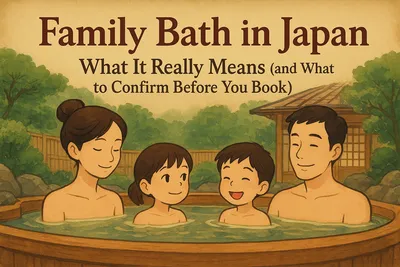
A family bath often means a private bath that a couple, family, or small group can use together. It does not always mean the whole ryokan is designed for families with young children.
A reserved bath usually means you book a time slot. Rules and fees vary by property, so confirm directly with the ryokan or hotel before booking if this matters for your family.
Open-air bath and rooms with private open-air baths
An open-air bath is outdoors (or semi-outdoors). A room with a private open-air bath usually means the bath is attached to your room. It’s convenient for families who want privacy or who feel nervous about public bath rules. It can also cost more, and availability can be limited.
Dinner included vs room-only
Dinner included means your stay includes dinner (and often breakfast). Timing can be fixed, and late arrival may cause issues.
Room-only means no meals included. This can be easier with picky eaters or unpredictable kid schedules.
Stress-Free Tip: If you want the ryokan experience but worry about bath rules, look for a stay with a reservable private bath or a room with a private bath. Then confirm the details before you pay.
Common Mistakes (Totally understandable, but avoid these if you can)
- Overplanning every day. Kids need downtime. Adults do too.
- Choosing a hotel only because it’s near a famous station. Big stations can be exhausting with strollers and luggage.
- Traveling in rush hour “because it’s efficient.” It’s efficient for commuters. Not for families.
- Bringing a giant stroller. It can turn every station into a puzzle.
- Booking a ryokan without checking meal times and child policies. Dinner timing, bedding, and fees vary.
- Assuming “private bath” means it’s in your room. Sometimes it’s a shared facility you reserve.
- Planning a remote onsen stay for night one. After a long flight, simple is better.
Recommended Options (Choose what fits your family)
IC card for each adult (and child if needed)
Best for: Families using trains and buses often, and anyone who wants less ticket-machine time.
Not ideal for: Very short stays with almost no local transport (rare in Japan, honestly!).
My honest take: This is one of the easiest stress reducers. Tap-and-go helps when kids are impatient and stations are loud.
Compact stroller + carrier combo
Best for: Toddlers who walk sometimes but still need breaks.
Not ideal for: Families who rely on a large stroller for storage all day (it can be tough in crowds).
My honest take: A small stroller you can fold quickly is often worth more than extra storage space.
Luggage delivery (takkyubin)
Best for: Families changing cities and anyone traveling with multiple suitcases.
Not ideal for: Last-minute planners who need their suitcase the same day (timing varies).
My honest take: If your budget allows, this can turn a stressful transfer day into a normal day. Confirm cut-off times with your hotel.
Ryokan with a reservable private bath (or in-room bath)
Best for: Families who want onsen vibes without public bath stress.
Not ideal for: Travelers on a tight budget (private options can cost more) or families who prefer flexible meal schedules.
My honest take: Private bath options are fantastic for first-timers, but wording varies. Confirm directly with the ryokan or hotel before booking.
Booking Checklist (Hotels, Ryokan, and Private Baths)
- Check whether the bath is private, shared, reservable, first-come-first-served, or attached to your room
- Confirm whether the bath is real hot spring water (onsen) or a regular bath (if that matters to you)
- Confirm whether dinner and breakfast are included, and the latest check-in time for meal plans
- Check child policies: age limits, extra bedding fees, and meal options (varies by property)
- Confirm tattoo rules if anyone in your group has tattoos (rules vary widely)
- Check station access: elevator routes, walking distance, and whether a shuttle exists (if needed)
- Check room type carefully before paying (especially “private bath” wording)
- If you need English support, confirm what is available (it varies)
Stress-Free Checklist (Do these before you fly)
- Save your hotel name, address, and check-in info in your phone (and screenshot it)
- Plan your arrival day as a “soft landing” with minimal transfers and one easy activity
- Decide your internet plan (eSIM, SIM, or pocket WiFi) and set it up before landing if possible
- Plan to avoid rush hour on your first few train rides
- Pack lighter and plan laundry days
- Bring a small kid “quiet kit” for trains and restaurants (stickers, small toys, headphones)
- Keep some cash for small purchases (cash-only still happens in some places)
- Choose hotels for ease: simple station, elevator access, and nearby convenience stores
What to Prepare Next
You don’t need to plan everything at once. Start with the parts that reduce the most stress first,ですよね。
- Decide your base cities and how many nights you will stay in each
- Pick your “easy first night” hotel near your arrival route
- Make a short list of indoor options for hot days or rainy days
- Decide whether you want a ryokan, and if you need a private bath option
FAQ
Is Japan stroller-friendly?
Often yes, but “stroller-friendly” can still include stairs, long elevator detours, and crowded trains. Many families find a compact foldable stroller plus a carrier is the easiest combo.
Do I need to speak Japanese to travel in Japan with kids?
No. In major areas, you can often get by with simple English, signs, and translation apps. The key is preparation: save addresses, screenshot bookings, and keep your plans simple.
What’s the easiest way to use trains with kids?
Use IC cards, avoid rush hour when possible, and plan routes with fewer transfers. If you’re traveling with luggage, consider luggage delivery to reduce stress.
Should we stay in a ryokan with kids?
It can be a wonderful experience, especially if you choose a property that welcomes children and fits your schedule. Check meal times, child policies, and bath options carefully before booking.
What does “private onsen” actually mean?
It varies. It might be a bath in your room, or a reservable private bath you book for a time slot. Always read the room type and confirm directly with the ryokan or hotel before booking if privacy is important.
Final Thoughts
Japan Travel with Kids: Simple Tips for a Smoother Family Trip is not about doing everything. It’s about making the trip feel manageable.
You don’t need perfect Japanese. You don’t need a minute-by-minute itinerary. You just need a few smart choices: slower pacing, lighter luggage, easier hotels, and a plan for crowds.
And when something goes a little off-plan (because kids), don’t worry. Japan is full of backup options. Konbini snacks, clean stations, helpful staff, and plenty of places to reset. Prepared beats perfect,ですよね!