A ryokan stay can be one of the most memorable parts of a Japan trip—but it’s also one of the easiest places to overspend or feel rushed. If you only have one night, you can still have a great experience, as long as you choose the right style of ryokan and plan around check-in, dinner, and bathing.
This guide will help you decide whether one night is “worth it” for your trip, what you’ll actually do during that short stay, what to budget, and how to avoid common first-timer mistakes.
Quick answer: Is a ryokan worth it for one night?
- Yes, one night is worth it if you can arrive by mid-afternoon, you want the full dinner-and-breakfast experience, and you’re treating it as a “mini retreat” rather than a place to just sleep.
- Consider two nights if you want a slower pace, multiple baths, time to explore the onsen town, or you’re paying for a high-end property and want to enjoy the facilities.
- Skip a ryokan (for now) if your schedule is packed, you’ll arrive late, you’re very price-sensitive, or you strongly prefer hotel-style privacy and flexibility.
Rule of thumb: A one-night ryokan stay works best when it’s the main event of that day and evening—not something squeezed between sightseeing and trains.
Is one night in a ryokan enough?
It can be enough, because a ryokan experience is naturally “compressed”: check-in, bath, dinner, sleep, breakfast, check-out. The question is whether you’ll have enough time to enjoy it without feeling like you’re following a strict schedule.
When 1 night is enough
- You can check in early (ideally around mid-afternoon) and you’re happy to slow down for the evening.
- You mainly want the highlights: traditional room, hot bath, and a special dinner.
- You’re using it as a break between busy cities (for example, one night in an onsen area between Tokyo and Kyoto).
- You’re choosing mid-range where the value is in the meal + bath + atmosphere, not a long list of resort amenities.
When 2 nights is worth the cost
- You’re paying for a premium property (especially if it has multiple baths, gardens, lounges, or activities you want to use).
- You want to explore the area (short hikes, scenic trains, local museums, or a relaxed onsen town stroll) without rushing.
- You want “bath time” more than once—for many people, the best part is soaking in the evening and again in the morning.
- You’re a light sleeper and want a “buffer day” in case you don’t sleep perfectly on a futon.
Who should skip a ryokan stay (or choose a simpler one)
- Late arrivals: If your train lands you in town near or after dinner time, you’ll likely feel stressed and may miss the best part.
- Very tight budgets: A ryokan with meals can be a big chunk of a short trip’s total cost.
- Preference for flexibility: If you want to eat out spontaneously, come and go late, or keep a totally open schedule, a hotel can fit better.
- Mobility concerns: Some properties have stairs, floor seating, and futons. You can still do a ryokan, but you’ll want to filter for accessible rooms or western beds.
Good news: Many ryokan can accommodate western-style beds or chairs, but availability varies—double-check room photos and descriptions before booking.
Ryokan vs hotel vs onsen resort: what’s the real difference?
If you’re deciding where to spend your “splurge night,” it helps to compare what you’re paying for.
| Feature | Ryokan | Hotel | Onsen resort / spa hotel |
|---|---|---|---|
| Meals | Often a core part of the stay (set dinner + breakfast) | Optional; many guests eat out | Often available; sometimes buffet-style |
| Bathing | Usually shared baths; sometimes private baths or in-room bath | Private bathroom in room; onsen is less common | Large bathing facilities are a main feature |
| Room style | Often tatami + futon; some have beds | Western-style beds | Mixed styles; often larger rooms |
| Schedule | More structured (dinner time, check-in expectations) | Flexible | Moderate structure; facilities have hours |
| Best for | Culture + relaxation in one place | Convenience, location, price control | Facilities, variety, groups/families |
Stress-free takeaway: If you want a curated “evening experience,” choose a ryokan. If you want maximum flexibility and easy logistics, choose a hotel. If you want big facilities and entertainment, an onsen resort can be a happy middle.
Related guide: Planning other nights as hotels? Japan Hotel Guide for First-Time Visitors: What to Know Before Booking.
What you actually do during a 1-night ryokan stay (simple timeline)
A one-night stay feels best when you treat it like an itinerary. Here’s a typical flow (times vary by property and plan, so confirm your booking details).
Typical timeline: check-in to check-out
- 2:30–4:30 pm: Arrive, check in, and settle. Many ryokan want guests in-house before dinner prep begins.
- 3:30–5:30 pm: First bath (shared or private). This is often the most relaxing soak because you’re not rushed.
- 6:00–7:30 pm: Dinner (usually a set meal). Timing is often fixed or chosen from a small window.
- 8:00–10:00 pm: Second bath, light stroll, or quiet time in the room.
- 7:00–9:00 am: Breakfast (often set; sometimes a buffet in larger properties).
- 10:00–11:00 am: Check-out. Many ryokan check-out times are earlier than big hotels.
How meals and bathing fit into the schedule
- Meals are the anchor. If dinner is included, your arrival time matters more than at a hotel.
- Bathing is usually best before dinner and/or after dinner. Plan for at least one long soak.
- Morning bath is a bonus. If you love baths, choosing two nights can feel noticeably better.
Related guide: If your schedule includes late nights in cities, this can affect a ryokan plan. Missed the Last Train in Japan? What to Do Next (Safe, Cheap Options in Tokyo for 2026).
How much should you budget for one night?
Ryokan pricing varies a lot by region, season, day of week, and what’s included. Always check current rates and what the plan includes before booking.
Typical price ranges (per person, per night)
- Budget: often the lowest-cost ryokan-style stays are room-only or breakfast-only. Expect simpler facilities and fewer “extras.”
- Mid-range: commonly includes dinner + breakfast, a comfortable room, and shared baths (sometimes an onsen).
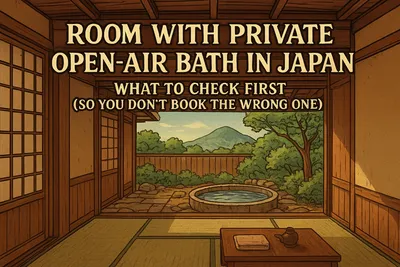
- Luxury: higher-end service, better views/locations, premium meals, and sometimes in-room open-air baths or private bath time.
Because rates change constantly, a practical approach is to set a maximum you’re comfortable paying per person, then decide which “must-haves” matter most: meals, private bathing, location, or room size.
What is usually included (and what isn’t)
- Often included: room, bedding setup, basic amenities, and access to shared baths.
- Sometimes included: dinner and breakfast (depends on plan), private bath time, drinks, or snacks.
- Often extra: alcoholic drinks, upgraded meal courses, private bath reservations, and local taxes/fees (varies by area).
Related guide: If a private bath is your priority, start here: How to Choose a Ryokan with a Private Onsen in Japan for Your First Trip.
Related guide: Wondering if paying extra for a bath in your room makes sense for one night? Are Private Onsen Rooms in Japan Worth It? Pros, Cons, and Price Guide for First-Timers.
Best ryokan types for a short (1-night) stay
For one night, the “best” ryokan is usually the one that minimizes logistics and maximizes relaxation.
1) City ryokan (best for convenience)
These are easier to fit into a packed itinerary because they’re closer to major stations and sightseeing. They may not have hot spring water, but you can still enjoy the room style and meals.
- Choose this if: you want a cultural stay without adding extra travel time.
- Watch for: smaller baths and less “onsen town” atmosphere.
2) Onsen ryokan (best for the classic experience)
This is what most people imagine: scenic area + hot baths + set meals. For one night, pick a location that’s easy to reach and doesn’t require multiple transfers.
- Choose this if: bathing is a top priority and you can arrive early.
- Watch for: early dinner cutoffs and limited late-night transport.
Related guide: Looking for easy one-night escapes without overcomplicating your route? Best Ryokan Areas Near Tokyo for a Relaxing First Stay (Easy 1-Night Getaways).
3) Luxury ryokan (best when the ryokan is the trip)
If you’re paying for a high-end property, one night can still be enjoyable—but it often feels better with two nights because you’ll have time to use the bath more than once, enjoy the grounds, and not rush meals.
- Choose this if: you’re intentionally planning a “slow day” and you’ll arrive early.
- Watch for: paying for facilities you won’t have time to use.
Common first-timer mistakes (and easy fixes)
Arriving too late for dinner
Why it happens: People schedule a ryokan night after a long sightseeing day, then underestimate travel time or station transfers.
Fix: On your ryokan day, aim to arrive in the area earlier than you think you need. If dinner is included, confirm the latest acceptable check-in time and plan around it.
Overpacking and struggling with the room setup
Why it happens: A ryokan room may be rearranged in the evening (for bedding) and morning. Large suitcases can feel “in the way.”
Fix: Pack a small overnight bag and forward or store big luggage when possible. Keep valuables and essentials easy to find.
Misunderstanding bath timing and etiquette
Why it happens: Shared bathing has a rhythm, and some facilities have rules about towels, rinsing, and quiet behavior.
Fix: Read the in-room instructions, go at off-peak times (mid-afternoon or later evening), and take your time. If you’re unsure, choose a property with a reservable private bath.
Trying to “do everything” in one night
Why it happens: A ryokan stay is exciting, so it’s tempting to cram in sightseeing, shopping, and a big transit day too.
Fix: For one night, pick just one nearby activity (or none). The value is the slow pace.
Related guide: For more first-trip planning basics that reduce stress (including timing and logistics), see First Time in Japan? 15 Things to Know Before You Go (Stress-Free Tips).
One-night “worth it” checklist (decision tool)
If you can say “yes” to most of these, a one-night ryokan stay is usually a good choice:
- I can arrive and check in by mid-afternoon (or by the property’s dinner deadline).
- I want dinner and breakfast included (or I’m okay paying for a plan that includes them).
- I’m comfortable with a more structured schedule than a hotel.
- I’m excited about bathing, quiet time, and an early-ish night.
- I’m okay with futons, or I’ll book a room with beds.
- I’m choosing a location that doesn’t require stressful transfers.
If you answered “no” to two or more, consider either two nights (to reduce rushing) or a hotel + day visit to an onsen facility (for more flexibility).
FAQ
Do I need two nights to “get the full experience”?
No. One night can cover the core experience: a traditional room, a hot bath, and special meals. Two nights mainly adds breathing room and a slower pace.
Is it still worth it if I don’t book dinner?
It depends on your goal. Room-only plans can be good value in some areas, but many first-timers feel the included dinner is a big part of what makes a ryokan feel special. If you skip dinner, choose a location with easy nearby restaurants and confirm what time places close.
What if I have tattoos?
Policies vary widely by property and bathing facility, and they can change. If bathing is important to you, look for places that offer private baths or clearly state their tattoo policy, and confirm directly before booking.
Is a ryokan good for solo travelers?
It can be, especially if you want a quiet reset night. The main downside is cost: some plans price per person with minimum occupancy assumptions. Look for solo-friendly plans or smaller properties that welcome solo guests.
Is a ryokan good for families with kids?
Many families enjoy ryokan, but it depends on the property. Consider room size, meal style, bath rules, and whether the atmosphere is quiet/adult-oriented. If you want more flexibility and facilities, an onsen resort may be easier for families.
Final verdict: Is a ryokan worth it for one night in Japan?
For many first-time visitors, yes—one night in a ryokan is worth it if you plan for an early arrival and treat the stay as the main event. You’ll get the signature rhythm (bath, dinner, sleep, breakfast) without needing to restructure your whole trip.
If you’re choosing a high-end property, want a slower pace, or care most about multiple long soaks, two nights is often the better value per hour of enjoyment.
Either way, the best choice is the one that matches your travel style: calm, convenient, and realistic for your schedule and budget.