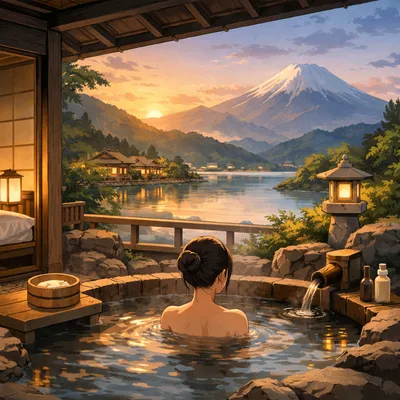
Booking a room with a private open-air bath can be one of the most relaxing parts of a Japan trip—especially if you want privacy, have tattoos, are traveling with kids, or simply prefer a quieter pace.
The tricky part: listings don’t always mean the same thing by “private,” “open-air,” or even “hot spring.” This guide shows you what to check first (in plain English), so you can book confidently and avoid common surprises.
Quick answer: the 3 things to confirm first
- Is it actually hot spring water? Some “open-air baths” are just heated tap water.
- Is the bath truly in your room and private? Sometimes it’s a reservable family bath elsewhere in the building.
- Is the setup practical for you? Size, view, shower location, steps, and terrace privacy matter more than photos suggest.
Related guide: How to Choose a Ryokan with a Private Onsen in Japan for Your First Trip.
Related guide: Private Onsen, Family Bath, and Open-Air Bath Rooms in Japan: What’s the Difference?.
First, confirm what “private open-air bath” actually means
In Japan, “open-air bath” describes the location/feeling (outside or semi-outside), not the water type. And “private” can mean different things depending on the property.
In-room open-air bath vs. reservable private bath vs. semi-open-air
| Type | What it usually means | Best for | Common “gotcha” |
|---|---|---|---|
| In-room open-air bath | A bath attached to your guest room (often on a balcony/terrace) | Maximum privacy, flexible timing | May not be hot spring water; terrace may be partially visible |
| Reservable private bath | A separate bath you book for a time slot (sometimes called a family bath) | Families, couples, tattoo-friendly options | Limited slots, extra fees, or first-come booking at check-in |
| Semi-open-air bath | Feels outdoors but is partially enclosed (roof/walls/windows) | Cold seasons, people who dislike exposure | Photos can look “fully open-air” when it isn’t |
How to tell if the bath is truly “in your room”
- Look for wording that clearly indicates it’s attached to the guest room, not “available for private use.”
- Check the room facilities list (not only the marketing photos).
- Confirm whether the bath is exclusive to your room or shared with other rooms at different times.
Related guide: Private Onsen vs Public Onsen: Which Is Better for Foreign Visitors?.
Is it a natural hot spring—or just a bath with a view?
This is the biggest point of confusion for first-timers. A room can have a beautiful outdoor-style bath and still use regular heated water. That doesn’t make it “bad,” but it should match what you’re paying for.
Where to look on the booking page
- Room details: some properties specify hot spring water only for certain room types.
- Hot spring information section: often describes the water source and how it’s managed.
- Fine print: sometimes the room bath uses different water than the public baths.
What the water details usually mean (simple version)
Many booking pages describe how the bath water is handled. Here’s how to interpret it without getting overwhelmed:
- Free-flowing from the source: typically means fresh hot spring water is continuously supplied (often the most “onsen-like” experience).
- Circulated/filtered: water may be reused through a system to maintain cleanliness and temperature.
- Heated: the water temperature is boosted (common when the source is cooler or in cold seasons).
- Added water: water is diluted (often to adjust temperature or volume).
If the listing doesn’t clearly state anything about hot spring water, assume you need to double-check—especially if “open-air bath” is the main selling point.
Two quick questions to ask the property (copy/paste friendly)
- “Does the bath in this room use natural hot spring water?”
- “Is the bath in the room private for our stay, and can we use it anytime?”
If you’re booking through a third-party site, you can still message the property. If anything is unclear, it’s worth confirming before you pay.
Related guide: Are Private Onsen Rooms in Japan Worth It? Pros, Cons, and Price Guide for First-Timers.
What to check on photos (because photos can be misleading)
Photos are helpful—but they’re also where many travelers get surprised. Use this mini checklist while you scroll.
Bath size: will it fit your group comfortably?
- For two adults, many in-room baths are comfortable—but not all allow stretching out.
- For families, look for notes like “fits 3–4” or a clearly larger tub shape.
- If only close-up photos exist, check if the room plan shows the bath area.
View vs. privacy: can neighbors see the terrace?
- Look for railings, screens, fences, or frosted panels.
- Mountain and ocean properties sometimes have open sightlines from nearby paths or buildings.
- If privacy is essential, prioritize listings that explicitly mention privacy measures.
Is there a proper shower area right next to the bath?
Traditional bathing is: wash first, soak second. Some rooms have a shower area next to the bath; others expect you to use the indoor bathroom or even the public bath for washing.
- Look for a shower chair or a dedicated washing space in photos.
- If the bath is outside but the shower is inside, expect extra back-and-forth (especially in winter).
Practical room checks that matter more than you’d think
Bath hours and temperature control
- Some in-room baths are available 24 hours; others have set hours for noise or maintenance.
- Some baths have adjustable temperature; others are fixed and managed by staff.
- If you care about late-night soaking, confirm the usable hours.
Extra fees (and what they’re for)
It’s not unusual to see additional charges related to baths, but you want to know them upfront.
- Hot spring tax: common in many hot spring areas (often charged per person, per night).
- Private bath reservation fee: more common for reservable family baths than for in-room baths.
- Children’s pricing: can vary widely by property and meal plan.
Always check the latest total on the final booking screen and the property’s current policies.
Accessibility and safety: steps, slippery floors, and handrails
- Outdoor baths often involve steps or a raised tub edge.
- Terrace floors can be slippery when wet.
- If traveling with seniors or anyone with mobility concerns, look for handrails and minimal steps—or consider a reservable private bath designed for easier access.
Best match by traveler type
For couples (privacy + atmosphere)
- Prioritize terrace privacy and a comfortable bath size for two.
- Check whether dinner is served in-room, in a private dining room, or in a shared restaurant.
- If you want a special occasion feel, confirm what’s included (view room, upgraded meals, late checkout) before paying extra.
For families with children (space + convenience)
- Confirm the bath is safe and easy to supervise (not too far from the main room, not too many steps).
- Check child policies: meals, bedding, and age cutoffs.
- Consider whether a reservable private bath might be easier than a small in-room tub.
Related guide: Family-Friendly Ryokan in Japan: What to Check Before Booking (Without Regrets).
For first-time onsen travelers (low-stress learning curve)
- Choose a place that explains bathing etiquette clearly and has straightforward room instructions.
- If you’re nervous about public baths, an in-room bath can be a gentle introduction.
- Still check whether you need to wash in the room or in a separate bathing area.
For luxury seekers (value is in the details)
- Look beyond “open-air bath” and confirm: water type, view, privacy design, and meal style.
- Check the room size and whether the bath area is truly spacious or just a small tub on a balcony.
- Make sure your room category is the one shown in the photos (some properties mix images across room types).
Red flags that should make you double-check
- “Open-air bath” is mentioned, but there are no hot spring details anywhere.
- Photos show multiple baths and it’s unclear which one is in your room vs. public.
- Room name is vague (e.g., “special room”) without a facility list.
- Private bath requires a reservation but the booking method isn’t explained (advance vs. check-in vs. first-come).
- View photos look too perfect with no mention of season, weather, or potential obstructions.
- Very low price for the area with “open-air bath” as the headline feature—could be a non-hot-spring bath or a semi-open setup.
Quick booking checklist: 7 things to confirm in 3 minutes
- Bath type: in-room bath vs. reservable private bath
- Water type: hot spring water or regular heated water
- Privacy: terrace screening, visibility from outside
- Washing area: shower next to the bath (or not)
- Bath access: steps, handrails, slippery surfaces
- Hours & rules: usable times, temperature control, any limitations
- Total cost: taxes/fees, meal plan, child pricing, cancellation policy
Common mistakes (and how to avoid them)
- Mistake: Assuming “private open-air bath” automatically means “private hot spring bath.”
Fix: Look specifically for hot spring water details for your exact room type. - Mistake: Booking the cheapest “bath included” room and expecting the best view.
Fix: Check the room category carefully; views are often tied to higher tiers. - Mistake: Not noticing the bath is reservable (time-limited) rather than in-room.
Fix: Confirm whether it’s attached to your room and available anytime. - Mistake: Over-optimizing for the bath and forgetting logistics.
Fix: Check access from the station, shuttle times, and meal timing—especially for short stays.
Related guide: Japan Hotel Guide for First-Time Visitors: What to Know Before Booking.
Related guide: Best Onsen Areas Near Tokyo for First-Time Visitors: Hakone, Kawaguchiko, and More.
FAQ
Does a room with a private open-air bath always mean it’s an onsen?
No. “Open-air” describes the style/location of the bath. Whether it’s natural hot spring water depends on the property and sometimes the specific room. Check the room details and hot spring information, or message the property.
If the property has hot springs, does my room bath use the same water?
Not always. Some properties provide hot spring water in public baths but use regular heated water for certain room baths (or only provide hot spring water in higher room categories). Confirm for your exact room name.
Are private open-air baths tattoo-friendly?
Usually, yes—because it’s private. But policies can vary for shared facilities. If you plan to use public baths too, check the property’s current rules before booking.
Is a reservable private bath a good alternative to an in-room bath?
Yes, especially for families or travelers who want a private soak without paying for an in-room bath upgrade. Just confirm how reservations work, whether there’s a fee, and how long each session is.
What if the booking page is unclear in English?
Message the property with two simple questions: whether the room bath uses natural hot spring water, and whether it’s private for your stay with anytime access. If you don’t get a clear answer, consider another property to avoid surprises.
Bottom line
A room with a private open-air bath can be absolutely worth it—but only if you confirm what you’re actually booking. Focus on water type, true privacy, and practical setup (shower, steps, hours). Once those basics are clear, you can choose the view and vibe that fits your trip.