Booking a hotel in Japan sounds simple… until you open a map of Tokyo and suddenly everything looks like a subway diagram had a busy day!
Don’t worry. You’re not the only one. This is where many first-time visitors get stuck: picking a “nice” hotel that’s secretly far from the trains, accidentally choosing a smoking room, or realizing (too late) that the room is smaller than expected.
This guide will help you choose a place that makes your trip easier, not harder. We’ll cover the main hotel types in Japan, where to stay for simple sightseeing, what to check before you book, and a few stress-saving tricks for luggage, jet lag, and station chaos.
Quick Answer

For a first trip to Japan, the easiest choice is usually a Western-style hotel near a major train/subway station (ideally within about 10 minutes on foot).
Expect compact but efficient rooms, and make sure you select non-smoking when booking.
If you want a traditional experience, try a ryokan for 1–2 nights, but confirm meal times and what’s included.
In peak seasons like cherry blossom (March–April), Golden Week (late April–early May), and New Year, booking earlier (often months ahead) can make life much easier.
Who This Guide Is For
This is for you if you’re a first-time visitor who wants Japan to feel exciting… not exhausting.
- You don’t speak Japanese and want a hotel that feels straightforward.
- You’re nervous about getting lost in big stations.
- You want to avoid dragging luggage through crowds.
- You’re traveling as a couple, with kids, or with parents and need comfort and convenience.
- You’re trying to choose between a hotel, ryokan, capsule hotel, or vacation rental.
Know Your Options: The Main Types of Places to Stay
Japan has a few main accommodation styles. They’re all valid. The best one depends on your trip style (and your tolerance for “new experiences” when you’re jet-lagged!).
Western-style hotels (the easiest default)
These are what most first-time visitors end up booking, and honestly… that’s usually a smart move.
You typically get a private room, private bathroom, predictable check-in, and staff used to international guests. Rooms in big cities are often smaller than many travelers expect, but they’re usually designed to be efficient and clean.
Stress-Free Tip: If you’re traveling with large suitcases, look closely at the room size and bed layout. “Small double” can be tighter than it sounds.
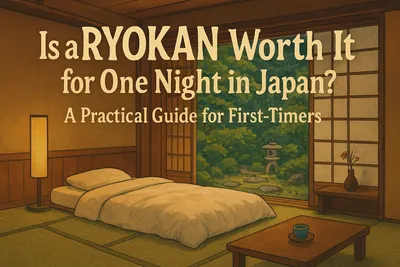
Ryokan (traditional inns, often with meals)
Ryokan can be a highlight of a Japan trip. But here’s the thing: they come with rules and timing.
Many ryokan stays are built around a set meal plan (often dinner and breakfast included). That’s wonderful if you want a “we’ll take care of you” experience. It’s less wonderful if you arrive late and hungry, or if you were planning to wander for street food all evening.
Tiny warning: Meal times can be fixed, and late arrival may affect dinner service. Always check the property’s latest policy before booking.
Stress-Free Tip: For first-timers, consider doing a ryokan for one special night and a regular hotel for the rest. Best of both worlds.
Capsule hotels (fun, but not for everyone)
Capsule hotels are usually designed for solo travelers who just need a place to sleep. You get a sleeping pod, shared facilities, and a very “efficient” setup.
They can be great for a short stay, but if you have lots of luggage, light sleep, or you’re traveling as a couple or family, it may feel more stressful than it’s worth.
Stress-Free Tip: If you try a capsule hotel, pack a small overnight bag and keep your main suitcase in a locker or luggage storage.
Vacation rentals (apartments, short-term rentals)
These can be comfortable, especially for families or longer stays. A kitchen and laundry can feel like magic halfway through your trip.
But vacation rentals can also add friction: key pickup instructions, trash rules, quiet hours, and fewer on-site staff to help if something goes wrong.
Stress-Free Tip: If you choose a rental, prioritize listings with clear check-in instructions, strong recent reviews, and an address that’s easy to find on Google Maps.
Location Matters More Than the Hotel Itself
Let’s be honest. A “beautiful” hotel is not so beautiful when it’s 25 minutes from the station and you’re hauling luggage in the rain.
For first-time visitors, being near trains is the biggest stress-reducer. Many travel guides strongly emphasize staying near a station or subway line, and it’s for a good reason.
How close is “close enough”?
A common, practical target is within about a 10-minute walk to a station. Closer is even better if you’re arriving with suitcases or traveling with kids.
Also check the walking route. A “7-minute walk” can include stairs, overpasses, or confusing crossings.
Stress-Free Tip: On Google Maps, switch to walking directions and zoom in. If the route looks like a maze of ramps and stairs, consider a different hotel.
Tokyo: areas many first-time visitors consider
Tokyo is huge, but you don’t need to “solve” the whole city. Many first-time visitors compare areas like Shinjuku, Shibuya, Ginza, Asakusa, and Ueno because they’re well-known and convenient in different ways.
Shinjuku
Big transport hub. Lots of hotels. Lots of restaurants. Also… one of the busiest station areas on the planet.
If you want maximum connectivity and don’t mind crowds, it can work well.
Stress-Free Tip: Save your hotel’s exact location and the nearest station exit before you go. Shinjuku has many exits, and yes, it matters.
Shibuya
Trendy, lively, and convenient for certain routes. Great if you like shopping and nightlife energy.
It can feel intense at peak times, though.
Stress-Free Tip: If crowds drain you, pick a hotel one stop away on the same line. You’ll still enjoy the area without living inside the busiest intersection.
Ginza
Polished, central, and often calmer at night than the big nightlife hubs. Good for easy access and a more “grown-up” vibe.
Stress-Free Tip: If you’re sensitive to noise, Ginza-style business areas can be a surprisingly good choice.
Asakusa
Popular for traditional atmosphere and sightseeing. It can be a nice base if you want a slower feel.
Stress-Free Tip: Double-check your transit connections to the places you’ll visit most. “Charming” is best when it’s also convenient.
Ueno
Often practical for museums, parks, and straightforward travel connections. It’s frequently considered a good value area, too.
Stress-Free Tip: If you’re arriving with luggage and want simpler navigation, Ueno can feel less overwhelming than some mega-hubs.
Kyoto and Osaka: the simple first-timer approach
Many first-time itineraries use Tokyo, Kyoto, and Osaka as main bases, then add day trips. This keeps hotel changes manageable and helps you avoid constantly moving luggage.
In Kyoto, being near a convenient transit area can really help, because sightseeing spots are spread out. In Osaka, staying near major stations can make day trips easy.
Stress-Free Tip: If you remember one thing, remember this: fewer hotel changes usually equals a calmer trip.
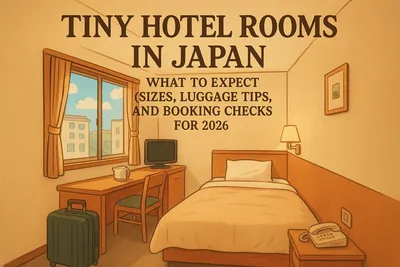
What to Expect from Japanese Hotel Rooms (Yes, They’re Often Small)
This surprises a lot of first-time visitors: urban Japanese hotel rooms are often compact but functional. You’ll usually have what you need, just… arranged like a clever puzzle.
That means bed, desk, and bathroom in a tight layout. It’s efficient, clean, and very normal in Japan’s big cities.
Stress-Free Tip: Before booking, check photos for where suitcases can open. If you’re traveling with two large bags, consider a room labeled “twin” or “superior,” or choose a slightly higher category.
Booking Details That Matter (More Than You’d Think)
These are the small things that cause big stress later. Let’s catch them now.
1) Non-smoking vs smoking rooms
Japan still has smoking rooms in some hotels. So if you want non-smoking, you need to select it clearly during booking.
Tiny warning: “Non-smoking preferred” is not the same as “non-smoking guaranteed.” Choose the non-smoking room type if it’s offered.
Stress-Free Tip: After booking, check your confirmation and look for the non-smoking note. If it’s missing, message the hotel right away.
2) Breakfast plans (helpful when you’re jet-lagged)
Many guides aimed at first-time visitors highlight breakfast-included plans, and it makes sense. On your first mornings, you may wake up early and feel hungry at a weird hour.
Having breakfast downstairs can be a calm start, especially before long sightseeing days.
Stress-Free Tip: If breakfast is expensive or you’re not a morning eater, stay near a konbini (convenience store). Quick, easy, and surprisingly good.
3) Hotel taxes and extra fees
In some cities, including Tokyo and Osaka, there may be a separate accommodation tax added to your bill. The exact rules can vary, and they can change, so don’t assume the booking price is the final total.
Stress-Free Tip: Look for “taxes and fees” during checkout on booking sites, and read the hotel policy section. If it’s unclear, message the property or check the latest official city information before you go.
4) Check-in time, late arrival, and room access
Many first-time visitors underestimate how long arrival takes: immigration, baggage claim, finding the right train, getting turned around in a station… it adds up.
Make sure your hotel’s check-in rules fit your flight schedule.
Stress-Free Tip: Screenshot your booking confirmation and hotel address before you fly. Wi-Fi is not guaranteed the second you land.
Airport Access: Make Your First Day Easier
Your first day is when you’re most tired and most likely to get overwhelmed. So yes, airport access matters.
For short trips, many guides recommend checking whether your hotel is on a route with simple access to Narita or Haneda, ideally with fewer transfers.
Routes and timetables can change, so check the latest official airport and railway information close to your travel date.
Stress-Free Tip: When comparing hotels, look up “airport to hotel” on Google Maps for your arrival time. If it shows three transfers and a long walk, keep shopping.
Luggage Reality: Japan Is Walkable… Until You Have a Suitcase
Japan is great for walking. Stations are clean. Sidewalks exist. Life is good.
Then you add a big suitcase at rush hour. Suddenly, every staircase feels personal.
Choose a hotel that reduces “luggage pain”
Staying near a station helps. But also consider the station itself. Some stations are easier to navigate than others, and some routes involve lots of stairs.
Stress-Free Tip: If you’re arriving with large luggage, try to avoid hotel transfers during weekday commuter rush (morning and early evening). Travel mid-morning or early afternoon if you can.
Consider luggage delivery (if you want maximum calm)
Japan has reliable luggage delivery services many travelers use to send bags between hotels or from the airport to a hotel. Availability, cut-off times, and rules vary by provider and location, so check the latest official information or ask your hotel.
Stress-Free Tip: Even sending just one large suitcase can make trains feel 10 times easier.
Ryokan-Specific Booking Checks (So It Feels Relaxing, Not Stressful)
Ryokan are lovely, but they’re not “just hotels with tatami.” They’re a different style of stay.
Confirm what’s included
Many ryokan commonly offer a one-night, two-meal plan (dinner and breakfast). But not all do, and some offer multiple plan types.
Stress-Free Tip: Read the plan description carefully. If meals are included, check the dinner time window and any dietary request process.
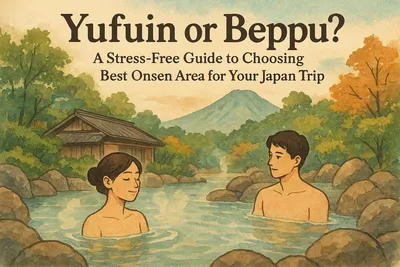
Check bath details (especially if “onsen” is mentioned)
Some ryokan have hot spring baths (onsen), some have shared baths that are not hot spring water, and some have private baths you can reserve. Rules can vary by property.
Stress-Free Tip: If you want private bathing for comfort, search for “private bath” or “in-room bath” and confirm the details before booking.
Common Mistakes (Totally Understandable, But Avoid These If You Can)
Let’s gently save you from a few classic first-timer problems.
- Booking a “great deal” far from transit. The money you save can disappear in time, taxis, and tired feet.
- Forgetting to choose non-smoking. If you’re sensitive to smoke, this can ruin sleep fast.
- Overbooking hotel changes. Moving every other night sounds efficient, but it often creates luggage stress and lost time.
- Not checking peak-season availability early. During cherry blossom season, Golden Week, and New Year, hotels can book out and prices can rise. Many guides recommend reserving well ahead (often 3–6 months when possible).
- Assuming room size from photos. Wide-angle lenses are powerful. Always check the square meters/feet if listed.
Stress-Free Tip: If you’re unsure, choose convenience over perfection. A simple, well-located hotel makes everything else easier.
Recommended Options (Only If They Fit Your Trip)
No hard selling here. These are just options that many first-time visitors find genuinely helpful in real-life travel situations.
Booking platforms with free cancellation
Best for:
Travelers booking early for peak seasons, or anyone whose plans might change.
Not ideal for:
Trips with fixed dates where a non-refundable discount is truly worth the risk.
My honest take:
For first-timers, flexibility can be a stress saver. You can lock in a good location early, then adjust if you learn something new.
Breakfast-included plans
Best for:
Jet-lagged travelers, families, and anyone who wants a simple morning routine.
Not ideal for:
People who prefer sleeping in or eating lightly (a konbini breakfast might be enough).
My honest take:
Not required, but it can make your first mornings feel calmer and more predictable.
Luggage delivery between hotels
Best for:
Multi-city trips (Tokyo → Kyoto → Osaka), travelers with large suitcases, and anyone anxious about stairs and crowds.
Not ideal for:
Overnight one-night moves where you need your bag immediately, or travelers on a strict ultra-budget.
My honest take:
If you’re feeling nervous about trains with luggage, this is one of the most practical “buy calm” options. Just confirm cut-off times and procedures with your hotel.
Stress-Free Checklist (Before You Click “Book”)
- Choose a hotel within about a 10-minute walk of a major station or subway stop.
- Check the route from the station to the hotel (stairs, crossings, confusing turns).
- Confirm non-smoking is selected and shown on your confirmation.
- Look up the room size and bed type, especially if you have big luggage.
- Check check-in time and late arrival policies.
- Review taxes and fees, including possible accommodation tax (rules can vary by city).
- If booking a ryokan, confirm meal inclusion and dinner time expectations.
- Check airport-to-hotel access from Narita/Haneda using the latest official info close to your trip.
- Save your hotel name, address, and a map pin offline on your phone.
FAQ
Are hotels in Japan really that small?
In major cities, yes, rooms are often compact. They’re usually clean and well-designed, but it’s smart to check the listed room size and photos before booking.
Should I stay in Tokyo, Kyoto, and Osaka for my first trip?
Many first-time visitors do, because it’s a practical base plan with easy day trips. You don’t have to, but it’s a common, low-stress structure.
Do I need to speak Japanese to check into a hotel?
Usually no. Many hotels are used to international guests. Having your reservation details and passport ready makes it smoother.
Is it worth paying more to stay near a station?
For most first-time visitors, yes. A convenient location saves time, reduces fatigue, and makes getting “a little lost” much less stressful.
Do I need to book hotels far in advance?
For busy periods like cherry blossom season, Golden Week, and New Year, booking early is often recommended. For quieter times, you may have more flexibility.
Final Thoughts
Picking a hotel in Japan doesn’t have to feel like a high-stakes exam.
You don’t need the “perfect” neighborhood or the most photogenic room. You just need a place that supports your trip: near transit, clearly non-smoking (if that’s your preference), and realistic for your luggage and energy level.
Sounds dramatic? Maybe. But it helps: a well-chosen hotel is like a quiet teammate. It makes Japan feel easier, safer, and more fun from day one. And you deserve that kind of start, don’t you?