Japan is wonderfully convenient for first-time travelers—but yes, many city hotels are compact. The good news: once you know what “tiny” usually means (in real measurements) and how to handle luggage, small rooms can feel clean, efficient, and totally manageable.
Quick answer: In big cities, “tiny” often means 10–12 m² for a basic business hotel double/twin, and even smaller for capsule-style stays. Expect limited floor space, smart storage, and bathrooms designed to fit everything you need—just not a lot of extra room.
Related guide: Before you book, skim Japan Hotel Guide for First-Time Visitors: What to Know Before Booking.
What “tiny hotel rooms in Japan” usually means (with size benchmarks)
Room listings can be misleading because wide-angle photos make spaces look bigger. The most reliable way to set expectations is to check the room’s size in square meters.
| Room size | How it usually feels | Best for |
|---|---|---|
| Under 10 m² | Very tight; mostly bed + narrow walkway | Solo, short stays, ultra-light packing |
| 10–12 m² | Common “tiny” city room; workable but limited floor space | Solo or couples with one medium suitcase |
| 13–15 m² | Noticeably easier; you can move around without constant shuffling | Couples, longer stays, more luggage |
| 16–20 m² | Comfortable for most travelers; easier repacking | Couples with two suitcases, relaxed mornings |
| 20 m²+ | Feels spacious for Japan’s city hotels | Families, travelers who value room time |
Why checking m² matters more than room photos
- Photos can’t show “walk space.” A bed may take most of the floor area.
- Layouts vary. Two rooms with the same m² can feel different depending on bed placement and desk size.
- Bathrooms can be compact. A small bathroom is normal, but it changes how open the room feels.
Capsule hotel vs tiny business hotel vs small guesthouse room: what’s the difference?
A lot of articles focus on capsule hotels only. For first-time visitors, it’s more helpful to separate the main “small stay” types so you can pick the right experience.
Capsule hotels (sleep-focused, shared facilities)
- Your space: a sleeping pod with limited headroom and minimal storage.
- Bathrooms/showers: usually shared.
- Privacy: varies by property; expect less sound isolation than a private room.
- Luggage: often stored in a locker or designated area, not inside the pod.
Tiny business hotels (private room, compact and practical)
- Your space: a private room (often 10–12 m² in major cities) with a real door and a private bathroom.
- Best feature: you can close the door, unpack a bit, and reset between busy sightseeing days.
- Luggage: usually possible in-room, but large suitcases may need strategy.
Small guesthouse/private rooms (varies widely)
- Your space: can be tiny; bathrooms may be shared depending on the property.
- Noise/quiet hours: often more noticeable than hotels.
- Best for: budget travelers who prioritize location and atmosphere over space.
Related guide: If you’re still choosing a base, start with How to Choose the Best Area to Stay in Japan Without Regret (First-Timer Friendly).
What tiny rooms are like in real life (the details people don’t tell you)
The bed can be the room
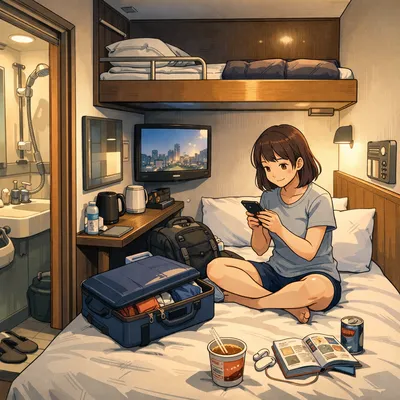
In many compact rooms, the bed takes up most of the footprint. You’ll often have one main walkway and a small desk or narrow shelf. This is normal—even in well-rated hotels.
Bathrooms are efficient, not roomy
Expect a compact bathroom where the sink, toilet, and shower area are close together. It’s designed for function and easy cleaning, not spreading out toiletries.
Storage is “vertical”
You may get hooks, hangers, shelves, or under-bed space rather than a big closet. The room works best if you keep the floor clear.
Temperature and ventilation can feel different
Small rooms warm up quickly. Most hotels provide climate control, but settings vary by property—so if you’re sensitive to temperature, check recent reviews for comfort notes.
Luggage reality: where does your suitcase actually go?
This is the #1 surprise in tiny rooms. The room may technically “fit” your suitcase, but opening it fully can block the walkway.
Simple suitcase strategies that work
- Use the “bed as a packing platform.” Place the suitcase on the bed, open it there, then close it and store it upright.
- Store upright in a corner. Many travelers keep the suitcase closed and vertical when not actively packing.
- Pack with cubes. Packing cubes let you pull out only what you need without fully spreading out.
- Bring a foldable tote. Use it for daily essentials so you don’t dig through the suitcase repeatedly.
- Plan for “one open at a time.” If traveling as a pair, open one suitcase, then the other.
If you’re traveling with big suitcases, consider luggage delivery
For multi-city trips (especially with family), sending luggage ahead can make tiny rooms feel instantly easier. Always confirm timing, cut-off hours, and delivery coverage with the service or your hotel.
Related guide: Luggage Delivery in Japan: A Stress-Free Guide for Families
Booking checks: what to confirm before you click “reserve”
Small rooms can be perfectly comfortable—if you match the room to your trip style. Use this quick checklist before booking.
1) Room size (m²) and bed width
- Look for the m² in the room details.
- Check if the bed is a true double/queen or a smaller “semi-double.”
2) Occupancy limits (especially for pairs and families)
Many compact rooms have strict occupancy rules. A room that looks like it could “squeeze in” an extra person may not allow it. If you’re traveling with a child or need three people in one room, confirm the maximum occupancy in the booking conditions or ask the hotel directly.
3) Window and non-smoking preferences
- Some budget rooms may have limited views or smaller windows.
- If you’re sensitive to smells, book non-smoking and double-check the room type is clearly labeled.
4) Laundry and ice access (helps on longer trips)
In tiny rooms, doing a small load of laundry can reduce how much you need to unpack and repack. If this matters to you, check whether the property has coin laundry or a nearby laundromat.
Related guide: Build your overall plan with First Time in Japan? 15 Things to Know Before You Go (Stress-Free Tips).
Staying comfortable in a tiny room: practical “make it work” techniques
Create a “clear floor” rule
In a small space, one bag on the floor can make the room feel chaotic. Hang jackets, store shoes neatly, and keep the walkway open.
Use the bathroom as a staging area (briefly)
If you’re traveling with a partner, one person can use the bathroom area to get ready while the other uses the main room. It’s a simple way to avoid bumping into each other.
Keep a small “night kit”
Put charger, lip balm, hand cream, and any essentials in one pouch. In compact rooms, this prevents constant rummaging and makes mornings smoother.
2026 snapshot: popular “small stay” chains and how they tend to feel
Experiences vary by location and building, but these well-known brands can help you predict the general style. Always confirm current amenities and policies on the official listing before you book.
Nine Hours (minimalist capsule style)
- Clean, modern, and streamlined.
- Best for travelers who want a simple sleep-and-go setup.
First Cabin (cabin-style pods with a bit more structure)
- Often feels more “room-like” than a basic capsule.
- Good for travelers who want a capsule concept with a slightly upgraded vibe.
The Millennials (smart pod style in some locations)
- Often designed for convenience and modern features.
- Can be a good match if you like a contemporary, tech-forward stay.
Older capsule properties (more variable)
- Can be perfectly fine, but comfort and privacy features vary more.
- Read recent reviews for cleanliness, noise, and storage details.
Women-only floors and privacy features
Some properties offer women-only floors or sections, and many have improved privacy compared with earlier capsule designs. Availability and setup differ by hotel, so check the room/floor details during booking.
Common mistakes first-time visitors make (and easy fixes)
- Mistake: Booking based on photos alone.
Fix: Filter or confirm by m² and bed size. - Mistake: Assuming two large suitcases will open comfortably.
Fix: Plan to open one at a time, pack with cubes, or use luggage delivery. - Mistake: Choosing a capsule stay for a “normal hotel” experience.
Fix: If you want private space to decompress, choose a tiny private room instead. - Mistake: Overlooking occupancy rules for children or extra guests.
Fix: Verify maximum occupancy and bedding details before paying.
Quick checklist: before you book a tiny room
- Room size: ideally you’ve checked the m²
- Bed type and width (especially for two people)
- Occupancy limit matches your group size
- Luggage plan (in-room, locker, or delivery)
- Bathroom type (private vs shared)
- Non-smoking preference confirmed
- Laundry access if staying more than a few nights
Related guide: If Tokyo is your first stop, use Where to Stay in Tokyo for Your First Trip to Japan (Stress-Free Areas).
FAQ: tiny hotel rooms in Japan what to expect
Are tiny rooms “bad,” or just different?
Usually just different. Many are clean, well-designed, and in convenient locations. The main trade-off is floor space—so expectations and luggage planning matter more than usual.
Is 10–12 m² okay for two people?
It can be, especially for short stays and light packers. If you’re staying longer, traveling with multiple large suitcases, or value downtime in the room, consider 13–15 m² or more.
Can I store a large suitcase in a capsule hotel?
Many capsule properties provide lockers or luggage areas, but sizes and rules vary. Check the property details and recent reviews to confirm whether large suitcases fit comfortably.
Do small rooms mean the hotel is low quality?
No. In major Japanese cities, compact rooms are common even in reputable chains. Location, cleanliness, and noise control often matter more than raw room size.
What if I miss the last train and need a quick place to sleep?
Capsule hotels can be a practical option for a last-minute night, depending on availability and check-in hours.
Related guide: Missed the Last Train in Japan? What to Do Next (Safe, Cheap Options in Tokyo for 2026)
If you go in expecting a compact, efficient space—and you plan your luggage setup—tiny hotel rooms in Japan can feel surprisingly easy. Check the m², confirm occupancy rules, and you’ll book with confidence instead of crossing your fingers at check-in.