It happens: you glance up at the departure board, the shutters start coming down, and suddenly you’re standing there with your day bag (or a suitcase) realizing the last train is already gone. The good news is you still have plenty of safe, practical options in Japan—especially in Tokyo. You just want to make one calm decision and move.
Do this first (the 60-second plan)
- 1) Confirm it’s really the last train for your route. Check your line and direction. Don’t assume another line will get you “close enough.”
- 2) Pick one next move and commit.
- Cheapest + still safe: a private-room internet café (if open) or a capsule hotel.
- Most comfortable: a last-minute hotel near the station (prices vary).
- Fastest to your booked hotel: a taxi (often expensive late-night, but can be reasonable when split).
- 3) Protect your phone battery. Low power mode now. You’ll need maps, translation, and booking screens.
- 4) Skip “sleeping outside.” Aim for a staffed indoor place with reception, monitored entry, or a private room.
If your phone is your lifeline (and it usually is), this helps too: Japan Travel Apps You Should Download Before Your Trip (First-Timer List).
First: confirm you really missed the last train (and what “last train” means)
In Japan, “last train” is specific to your line and your direction. A station can still feel busy while the last service to your area is already finished for the night.
- Use a route app to check “last departure” and “first train.” If you have multiple routes, compare them.
- Expect a long gap. Sometimes the next train isn’t until around 5:00.
- Don’t rely on one platform sign when you’re tired or rushed—double-check on your phone.
If station layouts and signs are stressing you out right now, this can make things feel simpler: How to Read Train Station Signs in Japan (Without Panicking).
Your best overnight options (what they’re like in real life)
Below is a practical comparison for first-time visitors. Prices vary by area, day of week, and demand—always confirm current pricing at the counter or in the booking app.
| Option | Typical cost (Tokyo) | Comfort | Safety & privacy | Best for |
|---|---|---|---|---|
| Private-room internet café | Budget to mid-range | Basic to decent | Varies (look for lockable rooms) | Solo travelers, budget travelers |
| Capsule hotel | Budget to mid-range | Good sleep, compact | Generally secure, gender-separated options common | Solo travelers who want a proper bed |
| Karaoke private room | Budget to mid-range (can rise) | Okay (not a real bed) | Private room, staffed building | Groups, couples, “just need a place until morning” |
| 24-hour bath/sauna facility | Mid-range | Relaxing, may be noisy | Staffed; sleeping areas are shared | Travelers who want a shower + rest |
| Last-minute hotel | Mid-range to high | Best | Best | Anyone who prioritizes comfort or has luggage |
| Taxi to your hotel | Often high (especially late-night) | Comfortable ride | Generally safe; use official taxis/app | Groups, tired travelers, far distances |
What’s actually open “24 hours” in 2026? How to confirm fast
Late-night hours can change, even for places that used to be reliably open. When you’re standing outside a station at midnight, the fastest approach is to verify hours the same way locals do: with maps and recent reviews.
How to verify late-night hours (quick Google Maps checks)
- Search by category + area (example: “internet café Shinjuku” or “capsule hotel Shibuya”).
- Open the listing and check: “Hours” + “More hours” (some places show different hours for reception vs. facility).
- Read the newest reviews for mentions of late-night entry, walk-ins, and last check-in time.
- Use “Open now,” then still confirm the closing time (some places are open now but close soon).
- If it’s critical, call. Keep it simple: “Are you open now?” and “Can I check in now?”
Places that are often open late (still confirm)
- Capsule hotels near major stations (walk-in may be possible if not full)
- Chain karaoke buildings around nightlife areas
- Some internet cafés near big stations
- Convenience stores (not a place to sleep, but useful for food, drinks, charging cables, and basics)
If you’re relying on mobile data right now (maps, booking, translation), this may help: Best eSIM for Japan: What First-Time Visitors Should Know (2026).
Option 1: Internet cafés (private rooms) — a practical overnight bridge
Internet cafés can work well when you just need a safe place indoors until the first train. The key is choosing a location that’s open late and has private rooms that are actually comfortable enough to rest.
What to look for (so it’s sleep-friendly)
- Private room type: choose the flattest option available (some rooms have mats rather than chairs).
- Locking door if you’re solo (availability varies by location).
- Shower availability (some charge extra or require a time slot).
- Clear pricing for a “night pack” or long stay (this is often cheaper than paying hour by hour).
Language + payment tips (simple and realistic)
- English level varies. If the counter is busy, it’s normal to point to the room type on a sign or show your request on your phone (room type, hours, shower).
- Bring your passport in case they request ID for registration.
- Payment: many accept cards, but not all. Look for payment icons near the entrance or register before you commit.
Option 2: Capsule hotels — the easiest “real sleep” option
If you want something closer to a hotel routine (front desk, shower area, a proper sleeping space), capsule hotels are often the simplest fix—especially around big stations.
What first-timers should know
- Check-in cutoffs: some allow late entry, others stop check-in after a certain time.
- Storage: you’ll usually store luggage in a locker or at the front desk. If you have a large suitcase, confirm space before paying.
- Noise: capsules can be quiet, but you may still hear footsteps and zippers. Earplugs help.
- Women-only floors or facilities are common in Tokyo and can feel more comfortable for solo women.
If you want a clearer sense of what to expect at check-in (and what “rules” are normal), see: Japan Hotel Guide for First-Time Visitors: What to Know Before Booking.
Option 3: Karaoke rooms — a solid backup (especially for groups)
Karaoke is more than singing in Japan. Late at night, a private karaoke room can be a safe, staffed place to sit down, charge your phone, and wait out the gap until morning—especially if you’re traveling with friends.
How to avoid surprise costs
- Ask for the overnight plan and the exact time it ends.
- Confirm if drinks are required (some plans include a drink bar; others charge per item).
- Know what you’re getting: it’s a couch, not a bed. If you’re running on fumes, a capsule hotel may be worth it.
Option 4: 24-hour bath/sauna facilities — shower, reset, and rest
If you’ve been out all day (or you arrived on a late flight and feel grimy), a bath/sauna facility can be a nice middle option. Many have a relaxation area where people rest until morning.
- Bring essentials: some provide basics, but it’s smart to have your own small towel and toiletries when possible.
- Shared resting areas: privacy is limited compared with a private room or hotel.
- Last entry times vary even when the facility is “open late,” so confirm before walking over.
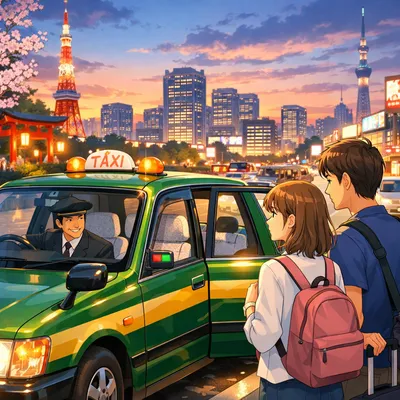
Option 5: Taxi — how to do it smoothly (and avoid sticker shock)
Taxis in Japan are clean and generally reliable. The downside is cost—late-night rides can add up quickly. Still, when you’re dragging luggage, it’s raining, or you’re traveling with kids, a taxi can be the least stressful choice.
How late-night taxi pricing works (practical expectations)
- Late-night surcharges may apply during overnight hours (rules and times can vary by area). Your app or the meter will reflect it.
- Distance matters. A short ride across central Tokyo might be manageable; a long ride to the suburbs can become expensive fast.
- Rule of thumb: if your hotel is within a few kilometers, check an app estimate. If it’s far, compare the taxi estimate with a cheap overnight stay + first train.
How to estimate the fare before you commit
- Use a taxi app to get an estimate and reduce language stress. Availability depends on area and time.
- At big stations, use official taxi ranks rather than trying to flag something in a confusing spot.
- Have your destination ready on your phone map screen to show the driver (hotel name + pin).
Helpful phrase (simple): “Please go to this hotel.” (Then show the map pin and hotel name.)
If you want more detail before you’re in this situation, here’s a deeper read: Are Taxis in Japan Expensive? A Simple Guide for Tourists (No Stress).
Safety first: the best choice depends on who you’re traveling with
Solo women travelers
- Best: women-only capsule hotel or a well-reviewed hotel near the station.
- Good backup: a private-room internet café with a lockable door (confirm before paying).
- Avoid: wandering far from the station to “find something cheaper.” When it’s late, convenience and clear staffing matter.
Couples
- Best comfort: last-minute hotel.
- Budget-friendly: private karaoke room (if you’re okay resting on a couch) or two capsule beds in the same facility if available.
- Note: some accommodation types separate by gender or have limited couple-friendly layouts—check before you pay.
Groups of 3–5 friends
- Best value: karaoke room (split the cost) or multiple internet café rooms.
- Fastest: taxi(s), especially if your hotel is not far and you can split the fare.
Families with kids
- Best: a hotel near the station (space + predictable comfort, easier check-in with luggage).
- Consider: taxi if it gets you to your booked hotel quickly and safely.
- Less ideal: capsule hotels and shared resting spaces can be challenging with young children.
If you’re choosing where to base yourself in Tokyo and want fewer late-night headaches, this can help: Where to Stay in Tokyo for Your First Trip to Japan (Stress-Free Areas).
If you decide to wait for the first train: a calm plan until morning
Sometimes the simplest move is to stop trying to “solve” the whole night and just get somewhere warm, indoors, and staffed. Once you’re settled, everything feels easier—especially if you arrived late, your feet hurt, or you’re trying to coordinate with a friend on messaging.
A low-stress timeline
- Now (0:00–1:00): Head to your chosen facility near a major station area. Grab water and a small snack from a convenience store on the way.
- Middle of the night: Charge your phone. Set two alarms for when you want to leave (it’s easy to doze off in a warm room).
- Early morning (around 4:30–6:30): Re-check your route; “first trains” vary by line and day.
- After trains resume: Go straight to your hotel, drop bags, and rest. If you’re exhausted, don’t try to squeeze in sightseeing immediately.
Early breakfast ideas
- Convenience stores: quick, easy, and open early (often 24 hours).
- Station-area cafés: some open early, but hours vary by location.
- Quick restaurants near business districts: often earlier on weekdays than weekends—check current hours.
Common mistakes (and what works better)
- Mistake: Walking long distances to “save money.”
Do instead: Stay close to a major station and choose a staffed indoor option. - Mistake: Assuming something is 24 hours because an old blog said so.
Do instead: Confirm hours in maps and recent reviews, or call. - Mistake: Letting your phone die while you decide.
Do instead: Switch to low power mode immediately and charge as soon as you can. - Mistake: Taking an expensive taxi without checking distance and alternatives.
Do instead: Get an app estimate first; compare with an overnight stay + first train.
At-the-station checklist (when you’re tired and just need a plan)
- Confirm: last train is truly gone for your route
- Open maps: search your top two options (capsule hotel / internet café / hotel)
- Check: open hours + last check-in time
- Check: payment method (card vs cash)
- Choose: one option and go there (don’t keep switching)
- Charge: phone ASAP
If you’re building your general “first trip” basics list, this pairs well with the above: First Time in Japan? 15 Things to Know Before You Go (Stress-Free Tips).
FAQ: Miss last train Japan—what to do
Is it safe to stay out all night in Tokyo?
Many areas are busy late, but “safe” depends on where you are and how you handle it. The safest approach is to choose a staffed indoor place (capsule hotel, hotel, karaoke, or a reputable private-room internet café) and avoid sleeping outside.
Can I just wait inside the station until morning?
Often, no. Many stations close parts of the building after service ends, and staff may ask you to move along. Plan for an overnight facility nearby instead.
Do internet cafés and karaoke places accept credit cards?
Some do, some don’t, and policies can change. Check the payment signs at the entrance/counter and keep some cash available when possible.
What time do trains start again?
It varies by line, direction, and day. Check a route app for your specific trip and confirm “first train” times before you leave your overnight spot.
Should I change hotels to avoid this happening again?
If you plan to stay out late often, staying near a major station can reduce stress. Otherwise, it may be enough to save a backup plan (capsule hotel area, taxi estimate, and first-train time) on your phone.
If you’re still deciding where to base yourself (Tokyo or elsewhere), this can help you choose without overthinking it: How to Choose the Best Area to Stay in Japan Without Regret (First-Timer Friendly).