You’ve finally booked Japan. You’re excited. You’re a little nervous (totally normal). Then you open the hotel listing and notice something: the bed looks close to the wall, the desk looks like it’s sharing space with the bed, and you start thinking, “Wait… where does my suitcase go?”
Small hotel rooms are one of the most common “oh!” moments for first-time visitors—especially in Tokyo, Osaka, and other big cities. It’s not a trick. Compact design is simply normal in many urban hotels. It’s efficient, usually very clean, often in a great location… and yes, it can feel tight when you arrive jet-lagged, it’s raining, and you’re trying to do the keycard + suitcase + phone map juggle at the door.
This article is here to make the whole thing feel predictable. You’ll learn what “tiny” usually means, how to read listings without getting misled by wide-angle photos, how tiny rooms compare to capsule hotels, and a few ways to make a compact room feel genuinely livable.
Quick note: Hotel room types, bed sizes, child policies, and services like laundry or luggage storage can vary by property and can change over time. Use this guide as a calm starting point, and always check the latest official information (and your exact room plan details) before booking.
If you want the bigger picture on hotel types and booking basics, this overview helps: Japan Hotel Guide for First-Time Visitors: What to Know Before Booking.
Are Japan’s Hotel Rooms Really That Tiny?

Often, yes—especially in big cities and “business hotels.” Many standard rooms are compact, and opening two large suitcases at the same time can be difficult.
But “tiny” doesn’t automatically mean “bad.” If you’re out sightseeing all day and only need a clean base near transit, a small room can be a smart choice.
If space is a big part of comfort for you (families, long stays, lots of luggage, remote work), focus on the room size in square meters and consider family rooms or apartment-style hotels instead.
What “Tiny” Usually Looks Like (In Real Life)
Compact rooms aren’t a rare niche in Japan. In many city hotels, they’re the default.
A pretty typical scene: you arrive after a long day, roll your suitcase in, and realize the room is laid out so efficiently that you can reach the bed, the desk, and the bathroom door with almost no spare floor in between. It can feel surprising for about five minutes—then you start noticing the upside: everything you need is right there.
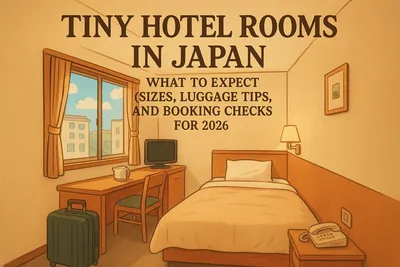
A layout you’ll often see
- A bed (sometimes pushed right up against a wall)
- A narrow walkway (often one person at a time)
- A small desk and one chair (sometimes the chair barely fits)
- No sofa area
- Limited suitcase space—often “open it on the bed” territory
Stress-Free Tip: In Japan, photos matter less than the room size in square meters. Check the ㎡ number first, then look at the photos.
Tiny Hotel Room vs Capsule Hotel (Not the Same Thing)
A lot of search results about “tiny rooms” are actually talking about capsule hotels. Capsules can be a fun, practical option—but they’re a different category from a standard hotel room.
A quick comparison
| Feature | Tiny hotel room | Capsule hotel |
|---|---|---|
| Your space | A private room with a door | A sleeping pod; common areas outside |
| Bathroom | Often in-room (frequently a compact unit bathroom) | Shared showers/baths |
| Luggage | Usually in the room (but tight) | Often lockers/storage; big suitcases may be awkward |
| Noise/privacy | More privacy; thicker separation | Less privacy; quiet rules help, but you’re close to others |
| Best for | Couples, light-packers, short city stays | Solo travelers, one-night stays, budget nights, late arrivals |
Which one should you choose?
- Choose a tiny hotel room if you want a private room, you’re traveling as a couple, you have early mornings, or you want a simple base without shared facilities.
- Consider a capsule hotel if you’re traveling solo, you’re okay with shared spaces, and you’re booking for one night (or you need somewhere practical near a station after a late arrival).
Stress-Free Tip: If you value predictable sleep, a standard hotel room (even a small one) is usually calmer than a capsule.
Room Size Numbers That Actually Help (Square Meters)
Many booking pages in Japan list room size in square meters (㎡). That number is your best shortcut to reality.
A simple size cheat sheet (common ranges)
- 10–13㎡: Very compact. Works for solo travel, or a short stay for two people who pack light.
- 15–18㎡: A common “standard” city double/twin size. Usually manageable for a couple with luggage.
- 20–25㎡: More breathing room. Better if you have larger suitcases or you want to spend time in the room.
- 30㎡+: More likely to feel like a real base (family rooms, apartment-style hotels, larger layouts).
Many first-time visitors assume “double room” automatically means “normal couple space.” In Japan, the ㎡ number is what tells the real story.
Stress-Free Tip: For two adults with two medium/large suitcases, aiming for around 15㎡+ often reduces daily friction a lot.
When Paying for Space Is (and Isn’t) Worth It
Room prices swing a lot by city, season, and how close you are to major stations. Instead of chasing a perfect price, use this idea: pay for space when it saves daily hassle.
When a small room is good value
- You’ll be out all day and just need a clean, safe base
- You’re staying 1–2 nights before moving on
- You pack light (or you’re using laundry and luggage delivery)
When upgrading often feels worth it
- You’re staying 4+ nights in one hotel
- You have big luggage, shopping plans, or bulky gear
- You need downtime in the room (kids’ bedtime, remote work, jet lag recovery)
Stress-Free Tip: If you can only upgrade sometimes, upgrade the nights you’ll be in the room the most (first night, long-stay base, or family-heavy days).
If you’re balancing comfort and cost across your whole trip, this helps you plan calmly: Japan Travel Budget: How Much Money Do You Really Need?.
Bed Sizes: The Detail That Can Make a Room Feel Smaller
Beds are where expectations can get weirdly mismatched.
In many Japanese city hotels, a “double” bed can be narrower than what some travelers expect in North America or Europe. It’s not a quality issue—it’s just a different standard in many properties, especially where space is tight.
What this means for couples
If you like a bit of personal space while sleeping, a compact double can feel cozy… or too cozy.
A common money-saving move is booking one double room, then realizing you’d sleep better in a twin. And sleep matters in Japan because days often involve a lot of walking, stairs, and train transfers.
What this means for families
Many city hotels simply don’t have room for an extra bed, even if the room is technically “for 2.” Some properties also offer “child shares existing bed” options, but conditions vary a lot by hotel and by the child’s age.
Tiny warning: Don’t assume you can “add an extra bed later.” In many compact rooms, it’s physically impossible. Confirm the exact bedding setup before paying.
Stress-Free Tip: For 3 people (2 adults + 1 child), search as 3 guests from the start. That forces booking sites to show rooms that actually work.
The Bathroom Factor: Small Layout, Big Impact
Even when the bedroom area is tiny, the bathroom setup can make the stay feel easier (or more annoying). In many compact city hotels, you’ll see an all-in-one unit bathroom where the toilet, sink, and shower/bathtub are in one compact space.
What to check on the listing
- Separate bathroom and toilet: Often more comfortable for couples/families, but not common in the smallest city rooms.
- Shower-only vs bathtub: Some compact rooms still include a small bathtub; others don’t.
- Sink location: In some layouts, the sink is in the room or near the entry area (not a problem—just surprising).
Stress-Free Tip: If you’re sensitive to tight bathrooms, check guest photos in reviews. They usually show the real layout more honestly than the official listing.
The Suitcase Problem: Where Does Your Luggage Go?
This is the most practical stress point with tiny rooms. Not the bed. Not the bathroom. The suitcase.
Many travelers end up doing a “suitcase rotation”: open one, grab what you need, close it, then open the next. It sounds silly until you’re trying to step around two open suitcases in a narrow walkway.
Simple ways to make a tiny room feel bigger
- Use the bed as your luggage table: Open your suitcase on the bed, pack/unpack, then close it again.
- Stand your suitcase upright: Many rooms are designed for vertical storage more than “lay everything flat.”
- Use under-bed storage if available: Some beds have clearance underneath, some don’t.
- Use the entry area: If there’s a small space near the door, park one suitcase there and keep the walkway clear.
- Bring one foldable tote bag: Use it for daily items so you don’t keep opening your suitcase.
What if you have huge luggage?
If you’re bringing large suitcases and moving hotels often, the room size is only part of the stress. The other part is transit days: station crowds, stairs, narrow sidewalks, and that moment when your phone map is spinning and you’re trying to find the right exit.
This is where luggage delivery can quietly save your trip.
Stress-Free Tip: Consider sending your big suitcase to your next hotel and traveling with a small overnight bag. It can make stations feel dramatically less intense.
Step-by-step help (especially useful for families and big suitcases): Luggage Delivery in Japan: A Stress-Free Guide for Families.
“Small Room” vs “Small Hotel” (Easy to Mix Up)
Sometimes “small hotel” means the property has fewer rooms. That can be a lovely, quiet stay. It does not automatically mean your room is tiny.
And the opposite can also happen: a big chain hotel can still give you a very compact standard room.
Stress-Free Tip: Keep these separate: hotel size (number of rooms) and room size (㎡). They’re different things.
Choosing the Right Room Size (Without Overpaying)
You don’t need a huge room to enjoy Japan. You just want a room that matches how you actually travel.
If you’re traveling solo
A compact single can be totally fine if you’re out all day and just need a clean base. If you’re carrying camera gear, shopping a lot, or working remotely, you may want one tier larger than the cheapest option.
Stress-Free Tip: If you’ll be in the room during the day (remote work, naps, planning), aim one tier larger than the smallest room category.
If you’re traveling as a couple
Ask one honest question: “Are we okay with cozy?” If yes, a smaller room can free up money for food, trains, and experiences.
If no, you’ll feel it every night—especially if you’re both trying to get ready at the same time in a tight space.
Stress-Free Tip: If you’re staying 4+ nights in one place, paying a bit more for space often feels worth it.
If you’re traveling with kids
Families often get stuck because the booking page looks fine… until you realize “2 adults + 2 kids” might still mean one small bed setup, depending on policies.
What often works better:
- A real family room
- A triple room (if available)
- A Japanese-style room where futons can be laid out
- An apartment-style hotel with multiple beds and a table area
Tiny warning: “Family” in hotel wording doesn’t always mean “kid-friendly facilities.” Sometimes it just means “more people can sleep here.” Always check details.
Stress-Free Tip: Some nights, beds matter more than location. A good sleep can rescue the next day.
How to Read Booking Pages Without Getting Tricked by Photos
Booking pages can feel like a puzzle, especially when you’re comparing ten tabs at once. This order keeps you focused on what actually affects comfort.
A calmer order to check things
- Room size (㎡)
- Bed type (double vs twin vs “small double” wording on some sites)
- Bed width (if listed)
- Bathroom type (in-room bathroom, separate toilet, shower-only, etc.)
- Occupancy rules (how many people are allowed, and how the hotel defines “child”)
- Smoking/non-smoking
- Shared spaces (lounge, breakfast area, lockers, microwave—these can make a tiny room easier)
- Laundry options (coin laundry can change how much you pack)
- Cancellation/changes (many deals are strict)
The wide-angle photo problem
Hotel photos are often taken with wide-angle lenses. That’s why the room looks like it could host a yoga class.
Stress-Free Tip: If a room looks “spacious” in photos but the ㎡ number is small, trust the number.
Review keywords that reveal tiny-room reality
You don’t need to read 200 reviews. Skim recent ones and look for practical phrases like:
- Positive signs: “luggage fits under the bed,” “luggage rack,” “good layout,” “easy to store bags,” “clean and quiet.”
- Heads-up signs: “no space for luggage,” “couldn’t open suitcase,” “bed against the wall,” “bathroom very small,” “hard to move around.”
Stress-Free Tip: Filter reviews by “most recent” when possible. Properties can renovate (or get more worn) over time.
Why Tiny-Room Stress Often Starts at the Station
Many travelers assume the stress begins when they open the hotel door. In reality, it often starts earlier: at the station, with luggage, when you’re trying to find the right exit and the “5-minute walk” turns into a slow loop around a huge building.
What to look for (beyond “near station”)
- Is the station simple or mega-complicated?
- Is your hotel closer to an exit with elevators?
- Will you arrive during rush hour with luggage?
- Is there a convenience store nearby for easy breakfast or a late-night snack?
Stress-Free Tip: For your first night, an easy-to-reach hotel is often the best choice, even if the room is small. After a long flight, “easy” beats “perfect.”
Picking an area matters as much as picking a hotel: How to Choose the Best Area to Stay in Japan Without Regret (First-Timer Friendly).
And Tokyo is where small rooms surprise people most often, so these calmer base areas help: Where to Stay in Tokyo for Your First Trip to Japan (Stress-Free Areas).
When a Tiny Room Is Actually a Great Choice
Tiny rooms get a bad reputation, but they can be perfect for certain trips.
Tiny rooms are a good fit if you…
- Plan to sightsee all day and just need a clean base
- Want a convenient location without paying luxury prices
- Are traveling solo
- Are doing a short stay (1–2 nights) before moving on
Many compact hotels are also extremely efficient: good showers, thoughtful amenities, and everything within arm’s reach. If you like a tidy, no-wasted-space setup, you may end up appreciating it.
Stress-Free Tip: If you’re controlling your budget, use tiny rooms on nights you’ll be out late anyway (day trips, theme parks, busy city days).
When to Avoid a Tiny Room (No Guilt)
Wanting more space doesn’t make you “high maintenance.” It just means you know what keeps you comfortable.
Avoid tiny rooms if you…
- Have multiple large suitcases
- Are staying longer in one city and want downtime
- Are traveling with kids who go to bed early
- Are sensitive to clutter or feel anxious in tight spaces
- Need to work, unpack fully, or manage gear
Stress-Free Tip: If your travel energy is low, prioritize comfort. A bigger room reduces friction every single day.
Practical Options That Reduce Tiny-Room Stress
Apartment-style hotels (more space, often a table area)
Best for: Families, groups, longer stays, travelers with lots of luggage, anyone who wants room to breathe.
Not ideal for: Ultra-short stays where you just need a bed near a station, or travelers who don’t want to pay extra for space.
My honest take: If you’re worried about tiny rooms, apartment-style hotels are often the simplest fix. You usually get a more livable layout. Always check what’s included (kitchen, laundry, cleaning frequency), because it varies by property.
Hotels with coin laundry (pack lighter, feel freer)
Best for: Anyone doing a multi-city trip, families with kids, travelers visiting in hot/humid seasons.
Not ideal for: One-night stays or travelers who prefer full-service laundry.
My honest take: Laundry access doesn’t sound exciting, but it changes how much you pack. Packing less makes small rooms much easier to live in.
Luggage delivery between hotels (travel light on transit days)
Best for: Travelers with big suitcases, families, anyone switching cities, anyone nervous about crowded stations.
Not ideal for: Very last-minute planners who need their suitcase immediately, or overnight moves where timing is tight.
My honest take: This is one of the most stress-reducing services in Japan. Timing, cut-off times, and fees vary, so check the latest official info and confirm with your hotel before you rely on it.
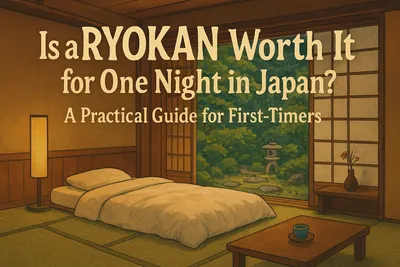
Japanese-style rooms (futons can be flexible)
Best for: Small groups or families who want flexible sleeping setups, travelers curious about traditional-style stays.
Not ideal for: Anyone who struggles with sleeping on a firmer surface, or people who want western beds every night.
My honest take: A tatami-style room can feel more spacious because the floor is usable space. Comfort depends on the property and the futon style, so read reviews and room details carefully.
Accommodation Terms (So Listings Feel Less Confusing)
You may see these terms while comparing hotels and ryokan.
Business hotel
A practical, often compact city hotel style. Great locations, efficient rooms, good value. Rooms are often small.
Ryokan
A traditional-style inn. Many offer tatami rooms and futons, and some include dinner and breakfast plans. The vibe is very different from a city business hotel.
Onsen
A hot spring bath (natural mineral water). Some ryokan have onsen baths; some hotels do too. Rules vary by facility.
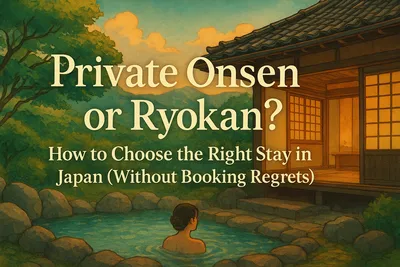
Private onsen / family bath / reserved bath
These often mean a bath you can use privately (as a couple or family) instead of a shared public bath. But the meaning varies by property: it might be a bath attached to your room, or a separate bath you reserve for a time slot. Confirm directly with the ryokan or hotel before booking if this is important to you.
Room with private open-air bath
A room that has its own outdoor-style bath (open-air). Usually very private and convenient, and often more expensive.
Dinner included / room-only plan
Dinner included means a meal plan is part of your booking (common with ryokan). Room-only means no meals included. Always check meal times and the latest check-in time if dinner is included.
Shuttle service
Some ryokan offer shuttle rides from the nearest station. Times and rules vary, so check the property’s official details before you rely on it.
Stress-Free Tip: If you want a private bath experience but don’t want luxury pricing, look for “reserved private bath” options—then confirm the time limits and reservation method before booking.
If onsen choices feel confusing, this makes it simpler: Private Onsen vs Public Onsen: Which Is Better for Foreign Visitors?.
Common Booking Mistakes (Easy to Make)
- Booking based on photos only and skipping the square meter number.
- Assuming “double bed” means queen-size and then wondering why sleep feels cramped.
- Not checking the bathroom type and being surprised by a very compact all-in-one setup.
- Booking “near a famous station” without thinking about station navigation with luggage.
- For families: searching for 2 adults and hoping to “add the kids later.” Policies vary, and it can backfire.
- Choosing the smallest room for a long stay and then feeling stuck when you need downtime.
- Assuming a private bath is attached to the room when it may require a reservation and a time limit.
Stress-Free Tip: Tiny rooms are fine when you choose them on purpose. The stress happens when you accidentally book one.
More beginner pitfalls to dodge (without overthinking): 10 Common Mistakes Foreigners Make in Japan (And How to Avoid Them).
A Tiny-Room Booking Checklist (The Stuff That Actually Matters)
- Room size in ㎡
- Bed type (double, twin, triple) and bed width if listed
- Search with the correct number of guests (especially with kids)
- Bathroom type (separate toilet or compact all-in-one)
- Luggage reality (under-bed space, luggage rack mentions, guest photos)
- Smoking vs non-smoking
- Shared spaces that help small rooms (lounge, lockers, microwave)
- Laundry options (coin laundry, in-room laundry, or none)
- Cancellation/change rules
- For ryokan/onsen stays: whether baths are shared, private, reserved, or attached to the room
- If you need tattoo or child policy clarity, confirm directly with the property before booking
Before You Fly: A Few Small Prep Steps That Help
- Decide your “minimum comfortable room size” in ㎡ for this trip
- Pack with tiny rooms in mind (fewer outfits, laundry plan)
- Plan your luggage strategy: big suitcase + small day/overnight bag
- Save your hotel name and address in your phone (and a screenshot for low battery moments)
- Choose a first-night hotel that is easy to reach, not just “central on the map”
- If switching cities, consider luggage delivery to reduce station stress
- Keep one “hotel room kit” easy to grab (chargers, meds, pajamas) so you’re not unpacking everything
Calm internet = calm navigation (especially with luggage): Best eSIM for Japan: What First-Time Visitors Should Know (2026).
What to Do Next (If You’re Still Deciding)
If you don’t want to plan everything at once, start with the parts that reduce stress the fastest:
- Decide how you’ll handle internet (eSIM, SIM, or pocket WiFi) so you can navigate stations calmly
- Set a luggage plan (what you carry daily vs what stays in the suitcase)
- Choose hotel areas based on “easy station access,” not just famous neighborhoods
- Make a simple arrival-night plan (food options near the hotel, check-in time, convenience store backup)
If you want a simple app list for trains and maps, start here: Japan Travel Apps You Should Download Before Your Trip (First-Timer List).
FAQ: Japan Travel Tiny Hotel Rooms
How small are “tiny” hotel rooms in Japan, usually?
Many compact city rooms are around 10–13㎡, while more typical “standard” rooms are often around 15–18㎡. It varies by city, hotel type, and room plan, so always check the listing.
Can I open two large suitcases in a small Japanese hotel room?
Often not comfortably. Many travelers use the bed to open one suitcase at a time, or store one suitcase upright. If this sounds stressful, consider a larger room or an apartment-style hotel.
Is a “double room” in Japan okay for two adults?
It can be, especially for short stays. But bed width and room size vary. If you value personal space while sleeping, a twin room or a larger double can feel much better.
We’re 2 adults + 1 child. What’s the safest way to book?
Search as 3 guests from the start so you see rooms that truly allow 3 people. Child bed-sharing rules vary, so check the hotel’s policy and confirm directly if you’re unsure.
Are tiny rooms a sign the hotel is low quality?
No. In Japan, small rooms can still be clean, well-designed, and in excellent locations. “Tiny” is often a space choice, not a quality warning.
Is a capsule hotel a good alternative to a tiny room?
Sometimes, especially for solo travelers and one-night stays. But a capsule is a different experience: more shared space, less privacy, and luggage storage rules vary. If you want a private room for decompressing, a standard hotel room (even a small one) is usually the calmer choice.
Final Thoughts
Tiny hotel rooms in Japan can feel shocking at first, but they don’t have to be stressful. Once you know what to check—room size in ㎡, bed type and width, bathroom layout, real occupancy rules, and suitcase reality—you can book with a lot more confidence.
If you choose a small room on purpose, it can be a great deal: clean, efficient, and close to the places you actually want to be. Give yourself an easy first night, and let the room be what it is: a simple base for a very full day outside.