Japan is an amazing place for a first trip. It’s also a place where small “oops” moments happen easily—because so many things work a little differently than you expect.
Let’s be honest. Most mistakes in Japan aren’t “bad tourist” behavior. They’re normal first-timer stuff: assuming you can just walk into that famous view spot, talking a bit too loudly on a train, or realizing your card doesn’t work at a tiny ticket machine when there’s a line behind you. Sounds dramatic? Maybe. But it happens!
This guide is here to make you feel calmer. You’ll learn the 10 common mistakes foreigners make in Japan, plus exactly how to avoid them with simple, practical steps. You don’t need to be perfect. You just need to be prepared.
Quick Answer

The most common Japan travel mistakes are: not booking popular places ahead, being too loud on public transport, not carrying enough cash, and underestimating how much walking you’ll do.
Add a few “quiet rules” (phone sounds, photo distance), and a few “logistics traps” (stations, luggage, hotel location), and you’ve got the full picture.
Fix them with a simple plan: book key activities early, carry some cash, learn basic train etiquette, and choose a hotel that makes your daily travel easier.
Who This Guide Is For
This is for you if you’re:
- A first-time visitor to Japan who wants to avoid awkward moments
- Nervous about not speaking Japanese
- Worried about getting lost in stations (very normal!)
- Trying to choose a hotel area without regretting it later
- Traveling with family, or with large luggage
- Someone who wants a trip that feels calm and organized, not chaotic
The 10 Common Mistakes Foreigners Make in Japan
1) Assuming you can do everything “walk-in” (not booking ahead)
This is where many first-time visitors get stuck. Japan is famous for efficiency, so it’s easy to assume you can just show up and it’ll work out.
But in recent travel trends, advance reservations matter more than people expect—especially for popular observation decks, themed cafes, and restaurants with limited seating. Many travelers find that “we’ll decide on the day” leads to sold-out time slots.
What to do instead: Pick 2–4 “must-do” places and check their official reservation rules early. If booking systems look confusing, don’t worry. Just focus on the basics: date, time slot, cancellation policy, and whether you need to arrive early.
Stress-Free Tip: If it’s famous on social media, assume it may require a booking. Check the latest official information before you go.
2) Talking loudly on trains (or forgetting your phone volume)
Japan’s public transport is wonderful. It’s also… quiet. Not “library quiet,” but definitely “indoor voice” quiet.
A common situation: you’re excited, you’re planning your next stop, and your voice naturally gets louder. Or your phone plays a video sound for two seconds. That’s usually enough to get a few looks.
What to do instead: Keep conversations short and soft. Put your phone on silent. If you need to make a call, step off the train or move to a less crowded area when possible.
Stress-Free Tip: Before you tap into the station, do a 3-second check: phone on silent, bag zipped, IC card ready.
3) Thinking Japan is “fully cashless” (and not carrying cash)
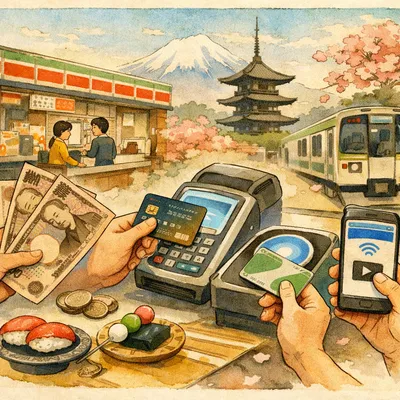
Yes, Japan has plenty of card and contactless payments now. But here’s the thing: cash still matters.
Many travelers run into cash-only moments at smaller restaurants, local ticket machines, small temples, street food stalls, or older businesses. It’s not rare.
What to do instead: Carry a reasonable amount of cash as backup. You don’t need to carry your entire budget, but having enough for a day (plus a little extra) makes everything calmer.
Stress-Free Tip: Keep cash in two places (wallet + a separate pouch). If one goes missing, your day isn’t ruined.
4) Underestimating how much walking you’ll do
This one surprises people. You might be using trains all day, but you still walk… a lot.
Big stations can involve long corridors, multiple levels, and exits that are farther apart than you expect. Add sightseeing areas, temple grounds, and “just one more shop,” and suddenly you’ve done a full workout.
What to do instead: Prioritize comfortable shoes and plan fewer “anchor points” per day. Also, build in breaks. A 20-minute cafe stop can save your evening plans.
Stress-Free Tip: If you remember one thing, remember this: your feet are your real itinerary. Protect them.
5) Treating temples and shrines like photo sets (not religious spaces)
Temples and shrines are beautiful, and photos are often allowed. But they’re also active religious spaces.
Common mistakes include speaking loudly, blocking pathways, stepping into restricted areas, or taking close-up photos when people are praying. Even when it’s not “forbidden,” it can feel intrusive.
What to do instead: Follow posted signs, watch what locals do, and keep a gentle distance from worshippers. If photography rules are unclear, look for signage or ask staff.
Stress-Free Tip: When in doubt, take one step back—literally. More distance usually equals more respect (and better photos anyway).
6) Expecting English to work in every situation
Japan is traveler-friendly, and signage in big cities is often excellent. But spoken English can still be limited depending on the area and the person you’re speaking with.
This can feel scary if you’re already nervous. But it’s manageable—because Japan also runs on systems: signs, icons, ticket machines, and polite routines.
What to do instead: Prepare a few tools:
- Your hotel name and address saved on your phone (in English, and ideally also as it appears on the hotel’s official page)
- A translation app for short phrases
- A screenshot of key reservations and tickets
Stress-Free Tip: Don’t aim for perfect Japanese. Aim for clear information: show the address, show the booking, point to the map.
7) Getting overwhelmed at stations (and choosing the wrong exit)
Japanese stations can be huge. And the “correct” exit really matters.
A classic first-timer moment: you follow signs, pop out of the station… and realize you’re on the opposite side of a massive road network. Your hotel is “close,” but now it’s a 20-minute walk with luggage. Fun!
What to do instead: Before you go, look up the station exit closest to your destination. Many hotels list the best exit on their access page. If you’re using maps, zoom in and confirm which side of the station you need.
Stress-Free Tip: If you feel lost underground, don’t panic-walk. Stop, step aside, and re-check the exit name. Two calm minutes saves 20 sweaty ones.
8) Traveling with big luggage at the worst possible time
Japan is crowded in big cities, and rush hour is real. Dragging a large suitcase through a packed station can be exhausting—and it can slow everyone down.
This is not about shame. It’s about energy. You’re on vacation, right?
What to do instead: Travel between cities outside peak commute times when possible. Consider luggage delivery services for hotel-to-hotel transfers if your route includes multiple cities.
Stress-Free Tip: If you have one “heavy luggage day,” make that day lighter in your sightseeing plan. Your future self will thank you.
9) Standing on the “wrong” side of the escalator (and stressing about it)
This is a tiny one, but it’s famous for a reason. Escalator standing etiquette can vary by region. Tokyo and parts of eastern Japan often stand on one side, while Kansai (like Osaka/Kyoto) may do the opposite.
And yes, it can change depending on local campaigns or station rules. So don’t treat it like a strict law.
What to do instead: Follow the flow. Look at what people around you are doing and copy that.
Stress-Free Tip: If you accidentally choose the “wrong” side, it’s okay. Just step aside when you notice. No dramatic apology tour required.
10) Missing the “quiet rules” in public spaces (photos, personal space, and sound)
Japan has a lot of unspoken courtesy habits. Visitors usually mean well, but small things stand out—especially in quiet places.
Common examples travelers mention:
- Taking photos too close to strangers
- Blocking narrow walkways while checking maps
- Playing audio from a phone in public
What to do instead: Give people space, step to the side when stopping, and keep sound off. If you’re unsure whether a photo is okay, look for signs or choose a wider shot that avoids faces.
Stress-Free Tip: Pretend you’re moving through a calm museum. That mindset solves about 80% of etiquette worries.
Common Mistakes (That Are Totally Understandable)
Just to reassure you: if you’ve already done some of these in your head, you’re not alone. Many first-time visitors do!
- Overplanning every minute and getting stressed when anything changes
- Underplanning key reservations and losing time to sold-out tickets
- Choosing a hotel that looks cheap but is far from a convenient station
- Trying to do Tokyo + Kyoto + Osaka + day trips in a very short trip
- Assuming “I’ll figure it out there” for internet access and navigation
Don’t worry. You don’t need a perfect plan. You just need a plan that protects your energy and reduces avoidable friction.
Recommended Options (If You Want an Easier Trip)
eSIM or Pocket WiFi (so you don’t feel lost)
Best for:
Solo travelers, couples, and anyone who wants simple navigation and translation on the go.
Not ideal for:
Phones that are not compatible with eSIM, or travelers who don’t want to change any phone settings. Pocket WiFi can be easier for groups, but it’s one more device to charge.
My honest take:
Many “Japan is stressful” moments are really “I have no internet” moments. If you set this up before arrival, airports and stations feel much less intimidating. Just check compatibility and the latest plan details before you buy.
Luggage delivery (hotel-to-hotel)
Best for:
Travelers changing cities (Tokyo to Kyoto, for example), families, and anyone with large suitcases.
Not ideal for:
Very short stays where you need your bag immediately, or routes where you’re staying in places that can’t receive luggage.
My honest take:
This can turn a tiring transfer day into a normal day. You still need a small overnight bag if delivery takes time, so plan one “light essentials” kit.
Hotels near a major station (even if the room is smaller)
Best for:
First-time visitors who want easy train access, simple airport transfers, and fewer “which exit?” problems.
Not ideal for:
Travelers who strongly prefer quiet residential neighborhoods and don’t mind extra transfers.
My honest take:
Location is stress insurance. A slightly smaller room can feel worth it when you’re not dragging luggage across town after a long flight.
Stress-Free Checklist
- Check whether your “must-do” spots require advance reservations
- Save your hotel name, address, and phone number on your phone
- Prepare internet access (eSIM or pocket WiFi) before you land
- Carry some cash, even if you plan to use cards most of the time
- Wear shoes you can walk in all day
- Look up the best station exit for your hotel and key sights
- Avoid rush hour with large luggage when possible
- Keep your phone on silent on trains and in quiet places
- Take photos with a bit of distance and watch for posted rules
FAQ
Do I really need to book attractions in Japan ahead of time?
For many popular places, yes—especially observation decks and themed cafes. Rules vary, so check the latest official site before you go.
Is it rude to talk on trains in Japan?
Quiet conversation is usually fine, but loud voices and phone calls can stand out. Keeping your voice low is the safest approach.
How much cash should I carry in Japan?
It depends on your style, but many travelers feel calmer with enough cash for a day of meals, local transport, and small purchases.
What if I don’t speak any Japanese at all?
You can still travel well. Use clear tools: maps, saved addresses, translation apps, and screenshots of bookings. Polite gestures go a long way.
What’s the easiest way to avoid getting lost in big stations?
Know your exit before you arrive, and don’t rush. If you’re unsure, stop to re-check signs or ask station staff with your destination shown on your phone.
Final Thoughts
Japan can feel intimidating before you arrive. Then you land, you take your first train, and you realize: it’s not about being flawless. It’s about knowing the few common traps.
If you avoid the big ones—booking key places, carrying some cash, staying quiet on transport, and planning for walking—your trip gets easier fast.
Don’t worry. You’re not the only one who feels nervous. A little preparation goes a long way, and you’ll be surprised how quickly Japan starts to feel comfortable.
You may also want to read:
One common Japan travel mistake is assuming that every “private bath” means the same thing. If you want to avoid confusion when booking a ryokan or onsen stay, check Private Onsen, Family Bath, and Open-Air Bath Rooms in Japan.