You’re finally in Japan. You’re tired. You’re dragging a suitcase. You just want a snack and a train ticket… and suddenly you’re thinking, “Wait—do I need cash? Will my card work? Why is everyone tapping their phones so confidently?”
Don’t worry. You’re not the only one. This is where many first-time visitors get stuck, because Japan is modern and cashless-looking… but also quietly cash-loving in a lot of everyday places.
In this guide, I’ll break down the four main ways to pay in Japan—cash, credit cards, IC cards (like Suica and Pasmo), and mobile payments. You’ll learn what works where, what to set up before you land, and how to avoid that awkward “uh oh” moment at the register.
Quick note: Payment support can vary by city, shop type, and even by individual location. Fees, limits, and supported features can change over time, so use this as a calm starting point and check the latest official info (from your bank, card issuer, and major services) before relying on one method only.
Quick Answer

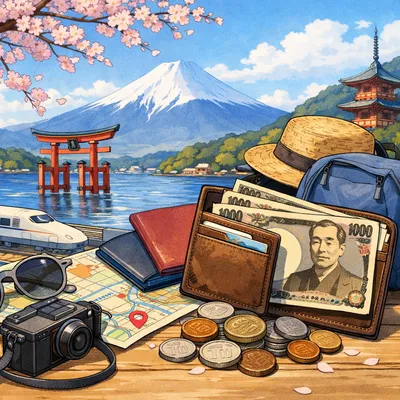
Japan is not fully cashless. Cash is still the most widely accepted, especially in smaller shops, rural areas, temples, and some street-food style places.
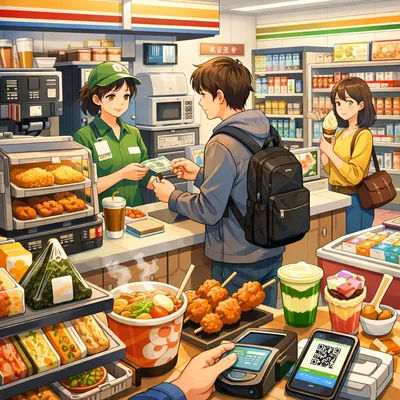
In big cities, credit cards and contactless payments are common in hotels, department stores, chain restaurants, and convenience stores.
For day-to-day travel, many visitors find the easiest combo is: a credit card + an IC card + some cash.
Related guide: Want a simple cash plan? Do You Need Cash in Japan? Simple Cash, Card & ATM Tips for First-Time Visitors.
Who This Guide Is For
This guide is for you if you’re:
- A first-time visitor to Japan who wants to avoid payment surprises
- Nervous about not speaking English at a checkout counter
- Planning to use trains and buses a lot (hello, IC card life)
- Traveling with family and want faster, smoother payments
- Trying to avoid wasting money on fees, bad exchange rates, or the wrong setup
The Big Picture: Japan Is Cashless… Until It Isn’t
Here’s the thing. Japan has made big progress with card and digital payments, especially in large cities. You’ll often be able to tap a card, tap a phone, or pay normally at major stores.
But across Japan as a whole, cash is still a major payment method. And yes, that includes some places you really want to visit—like small restaurants, local markets, and temples.
Stress-Free Tip: Plan for “cash-only surprises” by keeping a small cash buffer every day, even if you prefer cards.
2026 Reality Check: Where Cashless Feels Easy (and Where It Doesn’t)
Think of Japan as two payment worlds that overlap:
- Big-city, chain-heavy Japan: cards and tap-to-pay are often fine (especially at convenience stores, major stations, shopping buildings, and hotels).
- Local, small-business Japan: cash still appears a lot (tiny restaurants, independent cafes, older shops, countryside areas, some guesthouses, and many temple/shrine purchases).
If you’re doing Tokyo/Osaka/Kyoto only, you can lean more on cards. If you’re doing small towns, scenic countryside, or food adventures in tiny shops, cash becomes more important.
Related guide: Planning your first days? What to Do After Landing in Japan: A Simple Arrival Guide for First-Time Visitors.
Paying with Cash in Japan (Still Essential)
Let’s be honest. Many travelers wish they could go fully cashless. Japan is not the easiest place to do that.
Cash is still commonly needed in:
- Small independent restaurants and cafes
- Rural towns and countryside areas
- Temples and shrines (entry fees, charms, small donations)
- Markets and street-food stalls (this varies, but cash-only is still common)
How much cash should you carry?
This depends on your style, but many first-time visitors feel calmer with enough for a day of small purchases plus a little extra for emergencies.
Think: local transport, snacks, a simple meal, and a “cash-only dinner” situation.
Tiny warning: Don’t carry your entire trip budget in cash. Japan is safe in many ways, but losing a wallet is still… not a fun vacation activity.
Where cash makes your life easier
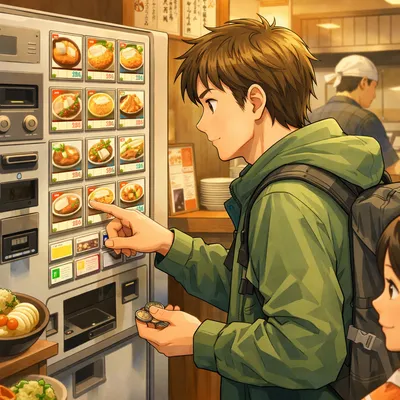
A very common situation: you find a tiny ramen shop near your hotel. It smells amazing. You go in. And the ordering is done via a ticket vending machine.
Those machines are often cash-friendly (and sometimes not card-friendly). If you have cash, you’re fine. If you don’t… you’re suddenly doing mental math in front of a line of hungry people.
Stress-Free Tip: Keep a few smaller bills and coins. Japan uses coins a lot, and exact change can make quick purchases smoother.
Related guide: If ticket machines make you nervous, this helps: How to Use Restaurant Ticket Machines in Japan Without Feeling Confused.
Paying with Credit Cards (Strong in Cities, Patchy in Small Shops)
Credit cards are widely used in big-city travel situations. Think: hotels, department stores, chain shops, convenience stores, and many attractions.
But in smaller independent places, you may still hear (or see a sign suggesting) that cards aren’t accepted.
Where credit cards usually work well
- Hotels and larger ryokan
- Department stores and shopping malls
- Convenience stores
- Many chain restaurants and cafes
- Major tourist facilities (varies, but often yes)
Card brands: what usually works best
Acceptance varies by store and terminal, but in general:
- Visa and Mastercard tend to be the easiest for travelers in Japan.
- American Express is often fine at hotels, department stores, and larger restaurants, but can be less consistent at smaller places.
- UnionPay is accepted in some places, but not as universally as Visa/Mastercard.
Stress-Free Tip: If you can, bring two cards (ideally different networks) and keep them in separate places.
What “card accepted” can look like in real life
Sometimes the card terminal is obvious. Sometimes it’s not. You might see logos near the register, or the staff may point to a small terminal.
If you’re nervous about language, you can simply hold up your card and ask, “Card okay?” That’s usually enough.
Contactless “tap” cards: very handy when available
If your card supports contactless tap-to-pay, it can be a great low-stress option in places that accept it. No signatures, no long pauses, fewer chances to press the wrong button.
Acceptance varies by shop, so don’t make it your only plan.
Fees and Limits: The Two Things That Surprise First-Timers
Most payment stress in Japan isn’t about the technology—it’s about small surprises like fees, daily limits, or a contactless transaction that suddenly asks you to insert the card.
ATM fees and foreign transaction fees (what to watch for)
- ATM operator fee: Some ATMs charge a small fee per withdrawal. Others may not. The screen usually shows the fee before you confirm.
- Your bank/card fees: Your bank may charge a foreign transaction fee and/or a cash withdrawal fee. This depends on your card and account.
- Exchange rate choices: If an ATM or terminal asks whether to pay in your home currency or in yen, choosing yen often gives a cleaner rate (but always check your card issuer’s guidance).
Stress-Free Tip: Fewer, larger withdrawals can reduce per-withdrawal fees. Just don’t withdraw so much that you feel uncomfortable carrying it.
Contactless limits and “please insert your card” moments
Even when a shop supports tap-to-pay, you may hit:
- Per-transaction limits (set by the terminal, the store, or your card issuer)
- Extra verification for higher amounts (insert card, PIN, or signature)
This is normal. It doesn’t mean your card is broken—just switch to insert/chip, or use another method.
IC Cards (Suica, Pasmo): The “Make Trains Easy” Payment Tool
If you remember one thing, remember this: an IC card makes Japan travel simpler. Not perfect. But simpler.
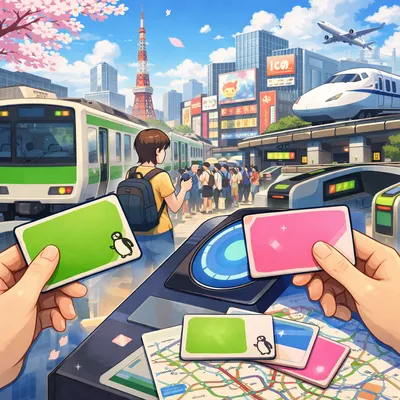
An IC card is a reloadable card mainly used for trains and buses. You tap in, tap out, and you’re done.
And the nice surprise? In many areas, you can also use it for small purchases.
Related guide: Want step-by-step IC help? How to Use IC Cards in Japan: Suica, PASMO, and Other Travel Cards Explained (Stress-Free Guide).
Which IC card should you get (Suica vs Pasmo vs ICOCA)?
For most short-term visitors, the simplest answer is: get whichever major IC card is easiest to obtain where you are.
- Functionally, they’re very similar for travelers. They all work great for everyday transport and small purchases in many places.
- They’re widely compatible for travel. You can typically use a major IC card in many regions beyond where you bought it.
- Your real decision is convenience: buy one at the airport/major station, or add one to your phone if that’s easier.
Stress-Free Tip: Don’t overthink this. The best IC card is the one you actually have in your pocket on day one.
Where IC cards are useful (beyond transport)
- Convenience stores
- Vending machines (many, not all)
- Some fast-food and casual restaurants
- Some lockers in stations (availability varies)
Physical IC card vs mobile IC card
Many travelers now prefer a mobile IC card (added to a phone wallet) because it’s one less thing to carry and it’s fast at gates.
That said, a physical card can still be a good option if you want something simple and separate from your phone battery.
Sounds dramatic? Maybe. But a dead phone at a ticket gate is a special kind of stress.
Charging your IC card: the cash “gotcha”
Important detail: charging (topping up) a physical IC card is sometimes cash-only, especially at certain machines or locations.
So even if you’re happily tapping your IC card all day, you may still need cash to reload it.
Stress-Free Tip: When your IC balance gets low, top up earlier than you think you need. Do it when you’re calm—not when you’re sprinting for a train.
Related guide: If you might need to buy tickets instead of tapping, read How to Buy Train Tickets in Japan Without Getting Confused (First-Timer Guide).
Mobile Payments in Japan (Convenient, But Acceptance Can Be Uneven)
Mobile payments are growing in Japan. You’ll see people paying with phones all the time.
But here’s the slightly annoying part: “mobile payment” can mean different systems.
Apple Pay / Google Pay
In many places, Apple Pay or Google Pay can work smoothly, especially where contactless payments are supported.
It can feel wonderfully effortless: phone, tap, done.
Stress-Free Tip: Before your trip, do a quick real-world test at home: add the card, make a small tap payment, and confirm it works the way you expect.
QR code payments (PayPay and others)
Japan also has popular QR payment apps such as PayPay, plus others. Some shops may accept QR payments but not the mobile wallet you expected.
So you might be standing there thinking, “But… I’m paying with my phone?” Yes. But it’s a different “phone payment.”
Tiny warning: Some QR payment apps are designed mainly for residents and may require local setup. If you’re visiting short-term, it’s often easier to rely on cards, cash, and an IC card instead of building your whole plan around QR apps.
Stress-Free Tip: Treat mobile payments as a bonus convenience, not your only strategy—especially outside major city centers.
ATMs in Japan: The Easiest Places to Get Cash
Needing cash in Japan is normal. The key is knowing where to get it without panic.
Many travelers find convenience store ATMs and post office ATMs the most practical, because they often support overseas cards and offer English menus.
Where ATMs are often traveler-friendly
- 7-Eleven convenience stores (many locations have ATMs)
- Post office ATMs (availability depends on the branch)
- Some major bank ATMs in city areas (varies)
How to avoid ATM stress
A common first-timer worry is, “What if my card gets rejected?”
If that happens, it’s often not personal. It can be a network issue, card setting, or daily limit.
Try a different ATM brand, and make sure your bank knows you’re traveling.
Stress-Free Tip: Withdraw cash earlier in the day. Don’t wait until late night when you’re tired and everything feels harder than it should.
Money Etiquette: How Paying Works (Without Awkwardness)
Tipping: usually not needed
In Japan, tipping is generally not expected. In many situations, it can create confusion because staff may not know how to accept it.
If you’re genuinely grateful, a warm “thank you” and being an easy, respectful customer is already a big win.
The cash tray and checkout flow
In many shops, you’ll see a small tray at the register. If you’re paying cash, placing your bills/coins on the tray is common. Staff will return change the same way.
Stress-Free Tip: If you’re unsure, just follow what the person in front of you does. It’s one of the easiest travel hacks in Japan.
Splitting the bill (what to expect)
In casual restaurants, splitting one bill into multiple payments can be possible, but it depends on the place and how busy they are. For groups, it’s often simpler to have one person pay and settle up afterward.
What to Use for What: A Calm “Best Tool” Cheat Sheet
I know, it sounds confusing. So here’s a simple way to think about it.
Use cash for
- Small local restaurants and older shops
- Temples, shrines, small entry fees, and souvenir stands
- Market snacks and street food (often)
- Charging a physical IC card in cash-only situations
Use a credit card for
- Hotels and bigger purchases
- Department stores and major shopping
- Chain restaurants and convenience stores
- Anything you want to keep track of easily in one statement
Use an IC card for
- Trains and buses (your daily life-saver)
- Quick convenience store stops
- Vending machines when you just want water right now
Use mobile payments for
- Fast tap payments where accepted
- Backup convenience when your wallet is buried in your bag
Stress-Free Tip: The goal isn’t to find the “one perfect payment method.” The goal is to avoid being stuck. Two or three methods is the sweet spot.
Common Mistakes (Totally Understandable, But Try to Avoid These)
1) Arriving with zero cash
Many first-time visitors assume Japan is fully cashless. Then they hit a cash-only counter, a small dinner spot, or an IC top-up machine that wants bills. Oops.
2) Relying on your phone when your battery is low
It happens so easily: photos, maps, translation apps… and suddenly you’re at 8%. If your main payment method is your phone, that’s stressful.
Related guide: A few key apps can reduce payment stress too: Japan Travel Apps You Should Download Before Your Trip (First-Timer List).
3) Assuming all “tap” systems are the same
A shop might accept one type of contactless payment but not another. Or it might accept QR payments but not your mobile wallet. It’s not you. It’s just how payment systems are.
4) Waiting until the last minute to withdraw cash
Doing an ATM run when you’re exhausted (or when you’re already late) makes everything feel harder. A little planning goes a long way.
Stress-Free Tip: Build a tiny routine: check your wallet every morning—cash, card, IC balance, phone battery. It takes 20 seconds and saves a lot of stress.
Recommended Options (Simple Setups That Work for Most First-Timers)
The “Balanced” Setup: Card + IC card + small cash
Best for: Most first-time visitors, city travel, day trips, and anyone who wants fewer payment surprises.
Not ideal for: Travelers who strongly want to be fully cashless everywhere (Japan may fight you on that).
My honest take: This is the most practical approach because it matches how Japan works in real life: cards are common in big places, IC cards make transport easy, and cash covers the gaps.
The “Phone-Forward” Setup: Mobile wallet + backup card + cash
Best for: Light packers, people who love tap-to-pay, and travelers who keep their phone charged reliably.
Not ideal for: Anyone worried about battery life, or travelers doing lots of countryside exploring where acceptance can be uneven.
My honest take: Super convenient when it works. Just don’t make your phone your only lifeline.
The “Cash-Heavy” Setup: More cash + one card
Best for: Rural-focused trips, small-town food adventures, and travelers who prefer simple, visible budgeting.
Not ideal for: People uncomfortable carrying cash, or anyone who wants strong fraud protection and easy expense tracking.
My honest take: Cash is widely accepted, but carrying too much can be stressful. A middle balance is usually calmer.
Stress-Free Checklist
- Bring at least one credit card you know works overseas
- If possible, bring a second backup card (and keep it separate)
- Carry some cash for small shops, temples, and surprise cash-only moments
- Plan to use an IC card for trains and buses (and small purchases)
- Remember that physical IC card top-ups may require cash
- Know where to find ATMs: 7-Eleven and post office ATMs are often easiest for overseas cards
- Set a simple daily habit: check cash + card + IC balance + phone battery
- Keep a backup payment method separate from your main wallet (even just one card)
What to Prepare Next
You don’t need to be perfect. You just need to be prepared. If you want to reduce stress even more, these are good next steps:
- Decide how you’ll handle internet access (so maps and payments don’t become a panic moment)
- Save key addresses (hotel, first night dinner spot) in your notes app
- Learn the “station routine”: tap in, tap out, and keep your IC card easy to reach
- Plan a simple arrival-day route from the airport to your hotel
Related guide: Solid internet makes everything calmer: Best eSIM for Japan: What First-Time Visitors Should Know (2026).
FAQ
Is Japan cashless now?
Not fully. Cashless options are expanding, especially in big cities, but cash is still widely used across Japan.
Can I use my credit card everywhere in Tokyo?
Often, yes in major places. But some small restaurants and independent shops may still be cash-only, so it’s smart to carry some cash.
Do I really need an IC card if I have a credit card?
For most visitors, yes. An IC card makes trains and buses faster and less confusing, and it’s also handy for small purchases.
Can I top up my IC card with a credit card?
Sometimes, but not always. Physical IC card top-ups may require cash at certain machines or locations, so keep some cash available. Mobile IC top-ups depend on your phone, wallet, and card setup.
What’s the easiest way to get cash in Japan?
Many travelers use ATMs at 7-Eleven convenience stores or post offices, which often support overseas cards and have English menus.
Final Thoughts
Paying in Japan doesn’t have to be stressful. It just feels stressful when you expect one method to work everywhere.
My honest recommendation is simple: carry some cash, use a credit card for bigger payments, and get comfortable with an IC card for transport and quick buys.
You don’t need to plan every yen. But a little setup before you go will make your first days in Japan feel calmer, smoother, and a lot more fun.
You may also want to read:
If you want a broader first-timer prep list (including money and manners), read First Time in Japan? 15 Things to Know Before You Go (Stress-Free Tips).
Payment style can vary more in smaller hotels, ryokan, and local hot spring areas than in big-city shops. If you are planning an onsen stay, read Private Onsen, Family Bath, and Open-Air Bath Rooms in Japan as well, especially before choosing a room or bath plan.