Standing in a Japanese station for the first time can feel like a pop quiz you didn’t study for. Gates. Lines. Signs. A ticket machine that suddenly has too many buttons. And you’re thinking, “I just want to get to my hotel without accidentally doing something wrong.”
Here’s the thing. Japan’s IC cards are designed to make travel simpler, not harder. Once you understand the basic rhythm—get a card, add money, tap in, tap out—you’ll feel your stress level drop fast.
This guide explains Suica, PASMO, and other IC cards in plain English. You’ll learn which one to choose, where to buy it (including at airports), how to charge it, and the little “gotchas” that trip up many first-time visitors. You don’t need perfect Japanese. You just need a simple plan.
Quick Answer

For most travelers, any major Japanese IC card (Suica, PASMO, ICOCA, etc.) works the same way.
You add money (top up/charge), then tap at train gates and on buses. The fare is calculated automatically.
These cards are widely interchangeable across Japan in many areas, and you can also use them for small purchases at places like konbini and vending machines.
If you prefer, you can often use a mobile IC card on your phone instead of a physical card—just check the latest official requirements before you go.
Who This Guide Is For
This is for you if you’re:
- A first-time visitor to Japan who wants the simplest way to ride trains and subways
- Nervous about not speaking Japanese at ticket machines or gates
- Landing at an airport and worried about getting lost before you even reach the city
- Traveling with family and want fewer “wait, what do we do now?” moments
- Trying to avoid extra stress with luggage and crowded stations
What an IC Card Is (and Why It Makes Japan Easier)
An IC card is a contactless prepaid travel card used for public transport in Japan. You load money onto it, then tap it on the reader at gates or on buses. The system automatically deducts the correct fare.
And yes—this is the part that feels like magic the first time—many IC cards also work like small electronic money cards. You can often use them at konbini, vending machines, and some restaurants.
If you remember one thing, remember this: IC cards are about reducing decisions. No fare charts. No buying a new ticket for every ride. Just tap and go.
Stress-Free Tip: Think of your IC card as your “tiny travel remote control.” Keep it in one easy-to-reach pocket so you’re not blocking the gate while you dig through your bag.
Suica vs PASMO vs ICOCA: Which One Should You Get?
Let’s be honest. The names make it sound like you need to pick “the correct one” or you’ll be stuck in Tokyo forever.
Good news: for most tourists, they’re functionally very similar. Suica and PASMO are the most common in Tokyo. ICOCA is common around Osaka, Kyoto, and Kobe. There are others too (TOICA, manaca, SUGOCA, nimoca, Kitaca, and more).
The key point: interchangeability is common
According to PASMO’s official guidance, PASMO can be used not only in the Tokyo area but also across many railways and buses nationwide. In many cases, major IC cards are mutually usable across a large part of Japan.
So if you buy a Suica in Tokyo, you can often use it later in other big cities as well. (Coverage can vary by operator and region, so it’s smart to check the latest official info if you’re going somewhere rural.)
So… which one should you choose?
My honest take: Get whatever is easiest to buy where you land.
- If you arrive in Tokyo, you’ll usually see Suica or PASMO first.
- If you arrive in Kansai (Osaka/Kyoto area), ICOCA is often the easiest.
Stress-Free Tip: Don’t waste your arrival energy comparing brands. Use that energy to find the elevator and get to your hotel calmly.
Physical Card vs Mobile IC Card (Phone): Which Is Less Stressful?
You basically have two options:
- Physical IC card (a plastic card you tap)
- Mobile IC card (on your phone via a wallet/app)
Physical IC card: simple and reliable
A physical card is great if you want something you can hand to a family member, keep separate from your phone, or use even when your phone battery is having a dramatic day.
Many physical cards use a deposit system (a refundable deposit when you return the card). The exact rules and refund process can depend on the card and where you return it, so check the latest official details when you’re planning your trip.
Mobile IC card: convenient, but check compatibility
Mobile Suica and Mobile PASMO are widely used. You can often add the card to your phone, tap your phone at gates, and top up digitally.
Tiny warning: Mobile setup and top-ups can depend on your phone model, region settings, and payment method. This changes over time, so check the latest official information before you go.
Stress-Free Tip: If you choose mobile, take 10 minutes to set it up before you fly. Airport Wi‑Fi plus jet lag is not the best time for “Why won’t my card verify?”
Where to Buy an IC Card (Airports and Stations)
This is where many first-time visitors get stuck. Not because it’s impossible—because you’re tired, you’ve just landed, and suddenly every sign looks important.
Best places to buy a physical IC card
In many cases, you can buy IC cards at:
- Train station ticket machines (including multi-function machines)
- Station counters (for example, JR ticket offices in some areas)
- Sometimes at bus offices or travel service counters
If you’re arriving at a major airport, the airport rail station is often the easiest place to look first.
What to look for at the machine
You’re typically looking for a button that indicates:
- Buying a new IC card
- Charging/top up
Many machines have an English option. If you don’t see it immediately, look for a “Language” button on the screen.
Stress-Free Tip: If there’s a line, don’t panic. Step slightly aside, watch one person use the machine, then copy the rhythm. Quietly observing is a very underrated travel skill.
How to Charge (Top Up) Your IC Card
IC cards are prepaid. That means you add money first, then spend it as you ride.
Where you can usually top up
Common top-up locations include:
- Ticket machines at stations
- Fare adjustment machines (often near gates)
- Konbini (ask the cashier to charge your card)
- In some cases, ATMs that support transport IC services
- For mobile cards, in-app top ups may be available depending on your setup
How much can you load?
For Suica card types, it’s stated that the balance can be topped up to 20,000 yen. Many travelers will find that around 20,000 yen is a common maximum for major IC cards, although details can vary by card type and system—so check official sources if you need certainty.
A simple station machine top-up flow
In many cases, it looks like this:
- Insert or place your IC card on the reader area (machine design varies)
- Select “Charge/Top Up”
- Choose an amount
- Pay (often cash; some machines may support other methods)
- Take your card and you’re done
Stress-Free Tip: Top up before you hit the morning rush. Doing it at 8:30 a.m. in a busy station is… possible, but not fun.
How to Use an IC Card on Trains and Subways
This part is wonderfully simple.
At the ticket gates
You tap your IC card (or phone) on the reader at the gate when you enter. Then you tap again when you exit.
The system calculates your fare automatically based on where you started and where you ended.
What if the gate beeps and won’t open?
Don’t worry. It happens. Usually it’s one of these:
- Your balance is too low
- You forgot to tap out on a previous ride (less common, but it happens)
- You tried to enter a gate that doesn’t accept that payment type for that service
If you get a beep and the doors stay closed, step to the side and look for a nearby fare adjustment machine or a staffed gate. Station staff deal with this all day. You are not ruining anyone’s life.
Stress-Free Tip: When you tap, keep your card still for a moment. A quick “drive-by tap” is a common reason for misreads.
How to Use an IC Card on Buses
Buses vary by city, so don’t feel bad if it’s confusing at first. The tap points and boarding rules can differ.
The most common patterns you’ll see
Depending on the area, you may:
- Tap when you board (and sometimes also when you get off)
- Tap when you get off (especially if fares depend on distance)
Look for the card reader near the door. If you’re unsure, watch the person in front of you. Or ask the driver with a simple phrase like, “IC card OK?” (You don’t need perfect grammar. You need clarity.)
Stress-Free Tip: Have your card ready before the bus arrives. Bus boarding is a fast-moving situation, and being prepared helps you feel calm.
Using IC Cards for Small Purchases (Konbini, Vending Machines, and More)
This is the “bonus feature” many visitors love.
In many places, you can use your IC card to pay for small items—think drinks, snacks, and quick convenience store purchases.
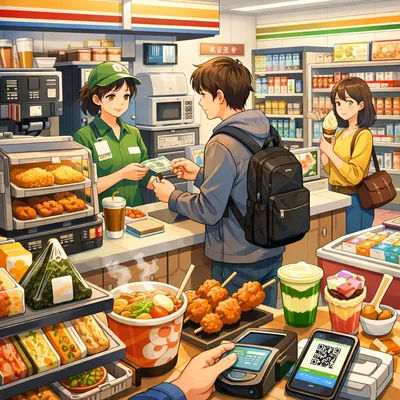
At a konbini register, you’ll usually see a contactless reader. You tap your card, and the amount is deducted from your balance.
Tiny warning: Not every shop accepts every IC card, and some places accept IC cards only for certain terminals. If you don’t see the IC logo, have a backup payment method.
Stress-Free Tip: IC card payments are great when you want to keep your wallet closed in a crowded area. Less fumbling = less stress.
IC Cards and Shinkansen, Limited Express, and Green Cars (What to Know)
This is where it gets a little more “Japan transport system,” and I know it sounds confusing.
Shinkansen: sometimes possible, often needs setup
Some IC card systems can be used for certain Shinkansen services, but it may require separate registration or linking to a specific service. Details depend on the region and operator.
Because these rules can change, check the latest official information before you go, especially if you’re planning to rely on IC-only travel for long-distance trains.
Green Cars on regular trains
In some areas, IC cards can be used with Green Car systems on commuter lines. Again, the exact process depends on the operator and line.
Stress-Free Tip: For long-distance travel days, keep it simple: book the ticket you need, then use your IC card for local trains at both ends.
Common Mistakes (Totally Understandable, But Avoid These If You Can)
- Not topping up before a busy transfer. You’ll be standing at a machine while your train leaves without you. Painful.
- Mixing up your cards. Hotel key cards and IC cards look suspiciously similar when you’re tired.
- Tapping too quickly. The reader needs a brief moment. A calm tap beats a panicked tap.
- Assuming every transport option accepts IC cards. Many do, but not all. Rural areas and some special services can differ.
- Letting your phone battery hit zero (mobile users). Your “ticket” is now a very expensive rectangle.
Stress-Free Tip: If you’re traveling as a group, consider a backup plan: one person carries a little cash, and one person keeps an extra topped-up IC card.
Recommended Options
You don’t need a pile of extra services to use IC cards. But a couple of add-ons can make the whole experience calmer—especially if you’re nervous about stations, language, or luggage.
Mobile data (eSIM or pocket Wi‑Fi)
Best for:
Travelers who want to use map apps, check routes, and top up mobile services without hunting for Wi‑Fi.
Not ideal for:
Anyone who prefers a totally offline trip, or travelers who don’t want to troubleshoot phone settings.
My honest take:
Having reliable internet makes stations feel less overwhelming. Even if you use a physical IC card, maps and route apps reduce stress a lot.
Luggage delivery (takkyubin-style services)
Best for:
People arriving after a long flight, families, and anyone staying in hotels without easy elevator access.
Not ideal for:
Short stays or travelers who need their suitcase immediately.
My honest take:
If you’re worried about dragging a suitcase through crowded stations, luggage delivery can be a sanity-saver. Just check timing and cut-off rules with the provider.
Hotel location planning (near a major station, but not inside the chaos)
Best for:
First-time visitors who want fewer transfers and shorter walks with luggage.
Not ideal for:
Travelers who strongly prefer quiet neighborhoods far from transport hubs.
My honest take:
Being near a station makes IC cards even more powerful. But “near” doesn’t have to mean “next to the busiest exit in the city.” A 7–10 minute walk can be a sweet spot.
Stress-Free Checklist
- Decide: physical IC card or mobile IC card (and set up mobile before flying if possible)
- Plan where you’ll buy your card: airport station machine or station counter
- Start with a reasonable top up amount (many travelers choose a few thousand yen to begin)
- Keep your IC card in an easy pocket, separate from credit cards to avoid misreads
- Screenshot your hotel name and address in English (and keep it accessible offline)
- Avoid trying to top up during peak rush hour if you can
- Carry a small amount of cash as backup for places that don’t accept IC cards
- Check the latest official info if you plan to use IC cards for Shinkansen or special services
FAQ
Do I need Suica specifically, or is PASMO fine?
PASMO is fine. For most travelers, Suica and PASMO work very similarly, and major IC cards are widely interchangeable across many areas.
Can I use one IC card in multiple cities?
In many cases, yes. Major IC cards are designed for broad mutual use across Japan, but coverage can vary by region and operator, so check official information if you’re going far off the usual routes.
What happens if I don’t have enough balance at the gate?
The gate won’t open. Step aside and top up at a nearby machine, or ask at the staffed gate. It’s a normal situation and staff are used to it.
Can I top up my IC card at a convenience store?
Often, yes. Many konbini can charge IC cards at the register. Just ask to add a specific amount.
Is a mobile IC card better than a physical one?
It depends. Mobile can be very convenient, but compatibility and top-up methods can vary. Physical cards are simple and reliable. Choose the option that feels least stressful for you.
Final Thoughts
IC cards are one of the best “stress reducers” in Japan travel. Not because they’re fancy, but because they remove a whole category of small decisions.
You don’t need to be perfect. You just need to be prepared. Get one card, learn the tap-in/tap-out rhythm, and keep it topped up. After that, it’s mostly just enjoying the ride.
And if something beeps at you? Don’t worry. That beep has happened to thousands of travelers before you. You’ll fix it in two minutes and keep going.