You land in Japan, it’s late, you’re tired, and your brain is doing that “new country overload” thing. Then you spot a bright little store on the corner. Doors whoosh open. Shelves are perfectly stocked. And somehow it feels… safe.
That’s the konbini (Japanese convenience store), and honestly, it can be your travel lifesaver. Food, drinks, basic toiletries, ATMs, quick meals, even little “oops, I forgot that” items—right when you need them.
This guide is here to make your first konbini visit feel easy. You’ll know what to buy, how to pay (even if you don’t speak Japanese), what to try for the “Japan-only” experience, and a few tiny manners that help you blend in without stress.
Quick Answer

Japan’s convenience stores (konbini) are everywhere—often 24/7, with surprisingly good food and super practical travel basics.
For first-timers, start with onigiri, sandwiches, a bento, hot snacks, and a dessert.
Payment is usually simple: cash, card, and IC cards like Suica or Pasmo work in many locations.
If you remember one thing, remember this: point, pay, and don’t panic. The staff are used to travelers.
Who This Guide Is For
This is for you if you’re:
- A first-time visitor to Japan who wants simple, safe food options
- Nervous about not speaking Japanese at the register
- Jet-lagged and trying to eat without a full restaurant mission
- Traveling with kids and need snacks fast
- Trying to avoid crowds and long waits (konbini meals can be a calm plan)
- Wondering what’s “actually worth trying” vs. what’s just hype
What a “Konbini” Really Is (And Why It’s So Useful)
Here’s the thing. In many countries, a convenience store is a last resort. In Japan, it’s often a smart choice.
Konbini are like small supermarkets with extra services. The big three chains are 7-Eleven, FamilyMart, and Lawson. Across Japan, there are 50,000+ stores in total, according to various reports, so you’ll see them constantly.
Many stores are open 24 hours, though some locations may have shorter hours depending on the building or area. If you’re arriving late, that flexibility is a big deal.
Why travelers love them: quick meals, clean packaging, easy drinks, and a place to “reset” when you’re overwhelmed.
Stress-Free Tip: If you’re staying near a station, search “7-Eleven” or “Lawson” on your map app and save the closest one. It becomes your “backup plan” spot.
What to Buy: The First-Timer Shopping List
You walk in and suddenly there are 900 choices. Totally normal to freeze a little.
So let’s make it simple. These are the easiest, most reliable first picks—especially when you’re tired, hungry, or not ready for a full restaurant situation.
1) Onigiri (Rice Balls): The Classic “I Need Food Now” Choice
Onigiri are triangular (or round) rice balls with fillings. They’re usually inexpensive—often around 100–150 yen for basic ones, though pricing varies by store and region.
Popular fillings include salmon, tuna mayo, pickled plum, kelp, and spicy cod roe. Some stores also have regional or limited-time flavors.
And yes, the seaweed wrapper is engineered so it stays crisp until you open it. It’s oddly satisfying.
Stress-Free Tip: If you’re unsure what you’re buying, pick a simple one like salmon or tuna mayo. They’re the “safe mode” choices.
2) Bento (Box Meals): A Full Meal Without Restaurant Stress
Bento are full meals in a box—rice plus a main dish and sides. Many are around 500 yen give or take, depending on size and ingredients.
You’ll see things like fried chicken bento, hamburger steak bento, grilled fish, and simple rice-and-sides sets.
Common situation: you buy one and wonder, “Do I eat this cold?” Good news—staff can usually heat it in the microwave behind the counter.
Stress-Free Tip: If you want it heated, you can gently ask, “Warm, please?” while pointing. That’s often enough.
3) Sandwiches and Soft Bread: Surprisingly Great, Very Easy
Japan’s convenience store sandwiches are famous for a reason. The bread is soft, the fillings are neat, and they’re easy to eat while walking back to your hotel.
Look for egg salad sandwiches, mixed sandwiches, and cutlet sandwiches. They’re especially helpful if you’re not ready for strong flavors while jet-lagged.
Stress-Free Tip: If you’re traveling with kids (or picky eaters), convenience store sandwiches are often the calmest option.
4) Hot Snacks Near the Register: Quick, Warm, and Very Tempting
Near the register, you’ll often see a heated case with hot snacks. Think fried chicken, karaage bites, croquettes, corn dogs, and steamed buns.
In winter, some stores also sell seasonal items like hot stew-style snacks. Availability varies a lot by chain, region, and season.
This is where many first-time visitors get stuck because the choices are behind the counter. Don’t worry. Pointing is normal.
Stress-Free Tip: If you’re unsure, choose one item first. You can always come back later for “round two.”
5) Cup Noodles and Instant Foods: The Emergency Dinner Plan
If you arrive late and everything else feels like too much, instant noodles can be a surprisingly good backup meal.
Many stores have hot water available, but not all. And some hotels don’t allow eating in public areas, so you may want to check your room setup first.
Stress-Free Tip: If you don’t see a hot water station, your hotel room likely has a kettle—or you can choose a meal that doesn’t need heating.
6) Sweets and Seasonal Snacks: The Fun Part
Konbini desserts are a whole category. You’ll see puddings, cream puffs, cheesecake-style desserts, roll cakes, and more.
And then there are the seasonal items. Cherry blossom flavors in spring, chestnut in autumn, matcha shows up often, and limited-edition snacks rotate constantly.
Let’s be honest: “limited time” is powerful. Even locals fall for it.
Stress-Free Tip: If you want a low-risk dessert, pick a small pudding or cream puff first. Easy, not too expensive, and no forks required (usually).
7) Drinks: Tea, Coffee, and the “What Is This Tiny Bottle?” Moment
You’ll find bottled tea, water, sports drinks, and lots of coffee options. Convenience store coffee is popular because it’s quick and often better than you’d expect for the price.
You may also see small energy shots and vitamin drinks. They look intense. If you’re sensitive to caffeine, check labels carefully.
Stress-Free Tip: When in doubt, grab a plain bottled tea or water first. It’s the simplest way to stay hydrated while you figure everything else out.
8) Toiletries and “I Forgot That” Items
Konbini are great for emergency basics: umbrellas, phone chargers (sometimes), tissues, masks (sometimes), razors, toothbrush kits, hair ties, basic skincare, and simple medicine-style items.
Selection depends on the store size and location, but in big cities you’ll often find a solid travel shelf.
Stress-Free Tip: If you’re missing something important at night, check the nearest konbini before you start a late-night pharmacy hunt.
How to Pay at a Japanese Convenience Store (Without Feeling Awkward)
Paying is usually the easiest part—even if you don’t speak Japanese.
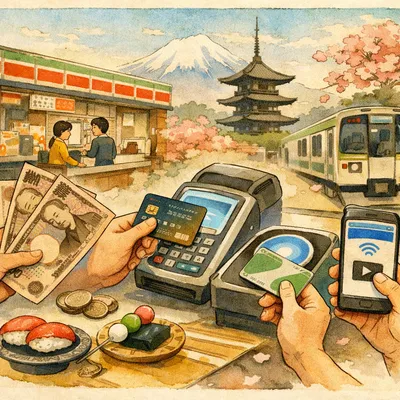
Most major convenience stores accept cash. Many also accept credit/debit cards and contactless payments. And in many cases, you can pay with an IC card like Suica or Pasmo.
Payment options can vary by store and region, so if something doesn’t work, it’s not “you doing it wrong.” It’s just that particular register setup.
Option A: Cash (The Universal Backup)
Cash always works, and it’s still useful in Japan. Konbini are also a common place to break larger bills into coins you’ll need for small purchases elsewhere.
Stress-Free Tip: Keep a small “konbini wallet” amount—like a few thousand yen—so you can buy food even if your card has an issue.
Option B: Credit Card / Debit Card / Contactless
In many stores, you can tap or insert your card. Sometimes the cashier will hand you a small card terminal or point to where you should tap.
If you’re using contactless, watch for a tap symbol on the terminal. If you don’t see it, inserting may be the default.
Stress-Free Tip: If the cashier asks a question and you’re unsure, a simple “Card, please” plus showing your card usually clears it up.
Option C: IC Cards (Suica, Pasmo, and Friends)
IC cards are commonly used for trains and buses, but they’re also widely accepted for small purchases like konbini shopping.
This is why many travelers love them: you can just tap and go. It reduces the “coin math” stress.
Availability can vary, and some tourist IC card options change over time, so check the latest official information before you go if you’re planning your setup in advance.
Stress-Free Tip: If you plan to use an IC card a lot, keep it topped up before a busy day. Nothing is more annoying than a low-balance beep during a line.
What About QR Code Payments?
Some stores accept QR code payments, but support depends on the service and location. If you already use one internationally, it might work—but don’t rely on it as your only method.
Stress-Free Tip: For a smooth trip, aim for a “payment trio”: IC card + one card + some cash.
What to Try: The “Only in Japan” Konbini Experience
Okay, you can absolutely use konbini just to survive. But you can also use them to have fun.
These are the things many visitors specifically enjoy because they feel uniquely Japanese—or just surprisingly high quality for a convenience store.
Try This #1: A Konbini Breakfast Set
A common low-stress breakfast is: onigiri + bottled tea or coffee + yogurt or a small dessert.
It’s fast, it’s cheap-ish, and it doesn’t require speaking.
Stress-Free Tip: If mornings make you anxious, buy breakfast the night before. Your future self will be grateful.
Try This #2: Convenience Store Coffee
Many stores offer fresh coffee. Usually you pay first, then use a self-serve machine.
Sounds confusing? Maybe. But the machines often have pictures, and staff can help if you look lost (politely lost is a universal language).
Stress-Free Tip: If you’re unsure which button to press, choose the smallest size first. Less commitment, less stress.
Try This #3: Seasonal Sweets (Limited-Time Items)
Seasonal sweets are part of the fun. You might see special flavors tied to holidays or local ingredients.
Because these rotate often, what’s available during your trip will depend on timing and region.
Stress-Free Tip: If you see a seasonal item you want, don’t overthink it. It may be gone tomorrow.
Try This #4: Regional or Local Items
Some products vary by region. You may notice different onigiri fillings or snack flavors depending on where you are.
This is a nice way to “taste the area” without booking anything.
Stress-Free Tip: When you change cities, do a quick konbini browse. It’s a tiny travel ritual that helps you feel oriented.
Try This #5: Alcohol (If You’re 20+)
Konbini sell beer, canned cocktails, and other drinks. In Japan, the legal drinking age is 20.
You may see an on-screen age confirmation where you tap a button to confirm you’re of age. It’s normal and usually not a dramatic ID check, though policies can vary.
Tiny warning: If you’re not 20, don’t try. Japan is generally strict about age rules, and it’s not worth the stress.
Stress-Free Tip: If you’re buying alcohol, have your payment ready and follow the screen prompts calmly. The line moves fast.
How to Use the Register Without Speaking Japanese
This part makes people nervous, so let’s demystify it.
The Usual Flow
You bring items to the counter. The cashier scans them. You pay. You leave.
That’s it. The “extra” parts are optional, and you can skip them if you want.
Do You Need a Bag?
Japan has reduced free plastic bags in many places. Convenience stores often ask if you want a bag, and there may be a small charge.
If you don’t understand the question, you can simply hold up your reusable bag or gently shake your head.
Stress-Free Tip: Carry a small foldable tote. It saves money, and it saves awkward bag confusion.
Chopsticks, Forks, and Napkins
Staff often ask if you need utensils, especially for bento and desserts. If you look unsure, they may include them automatically, but not always.
Pointing at your bento and making a small “yes” gesture usually works.
Stress-Free Tip: If you’re heading back to your hotel, check your bag before you leave the store. It’s easier than realizing you have pudding and no spoon upstairs.
Heating Food
If you buy a bento, staff can often heat it. You’ll usually see a microwave behind the counter.
If you prefer not to heat it, that’s fine too.
Stress-Free Tip: If you’re shy, you can pick foods that don’t need heating (sandwiches, onigiri, salads) for your first visit.
Konbini Manners That Keep Things Smooth
You don’t need to be perfect. You just need to be prepared.
These small habits help you avoid accidental awkward moments.
Don’t Eat Right in Front of the Register
Some stores have small eating areas, but many don’t. If you want to eat immediately, step outside and find a calm spot, or take it back to your hotel.
Public trash bins can be limited in Japan, so plan to carry your trash until you find a bin (often back at the konbini or in your hotel).
Stress-Free Tip: Keep a small plastic bag in your day bag for wrappers. Sounds dramatic? Maybe. But it helps.
Be Mindful of Crowds
Konbini can get busy around commuting times and late evenings in entertainment areas. Lines form fast.
If you have a big suitcase, try not to block the aisle. This is where many first-time visitors get stuck—konbini aisles are narrow!
Stress-Free Tip: If you’re traveling with luggage, do a quick “grab list” in your head before you enter. In and out is the goal.
Restrooms: Sometimes Yes, Sometimes No
Many stores have restrooms, especially outside major city centers, but not all. Access can depend on location and local policy.
If you don’t see a restroom sign, it may not be available to customers.
Stress-Free Tip: If you really need a restroom, larger stations, department stores, and malls are often more reliable than small city konbini.
Common Mistakes (Totally Understandable, But Avoid These If You Can)
- Buying too much on night one. Jet lag makes you hungry and impulsive. Start small, then go back later.
- Assuming every store has the same items. Selection changes by chain, neighborhood, and season.
- Forgetting utensils. Bento with no chopsticks is a classic first-timer moment.
- Relying on one payment method. Have a backup (cash or a second card) just in case.
- Blocking the aisle with luggage. The aisles are tight, and locals move quickly.
Stress-Free Tip: If something goes wrong, it’s usually a small fix. Take a breath, step aside, and try again.
Recommended Options (Only If You Want Extra Convenience)
IC Card (Suica/Pasmo or another transport IC)
Best for:
Travelers who want fast payments in trains, vending machines, and many convenience stores.
Not ideal for:
People who prefer using one credit card for everything, or travelers who don’t want to manage stored value and top-ups.
My honest take:
If you feel anxious about cash and coins, an IC card can make daily life calmer. Just check the latest official info about availability and how to get one, because options can change.
A small foldable tote bag
Best for:
Anyone buying snacks, breakfast, or toiletries daily—especially families.
Not ideal for:
Travelers who truly buy one item at a time and don’t mind occasional bag fees.
My honest take:
This is one of the easiest “stress reducers” you can pack. It also helps when you don’t understand the bag question at checkout.
eSIM or pocket WiFi (for maps and translation)
Best for:
First-time visitors who want reliable maps to find the nearest konbini, plus quick translation for labels.
Not ideal for:
Travelers with strong international roaming plans that already work well in Japan.
My honest take:
Having internet makes everything easier, including food choices. If you’re unsure, compare options before you fly and check the latest provider details.
Stress-Free Checklist
- Save the nearest 7-Eleven, FamilyMart, or Lawson on your map app
- Carry a small amount of cash for simple purchases
- Set up an IC card (like Suica/Pasmo) if it fits your travel style
- Pack a foldable tote bag for konbini runs
- Buy an easy first meal: onigiri + drink + dessert (no heating needed)
- Check you got utensils before leaving the store
- Keep a small plastic bag for wrappers when bins are hard to find
- If you’re arriving late, plan a konbini dinner as your backup option
FAQ
Do Japanese convenience stores accept foreign credit cards?
Many do, especially in cities, but acceptance can vary by store and terminal. Carry some cash as a backup.
Can I pay with Suica or Pasmo at a konbini?
In many cases, yes. IC cards are widely used for small purchases, but it can vary by location, so keep a backup method.
Is konbini food safe to eat?
Generally, yes—konbini are known for good food handling and clear packaging. Still, check labels if you have allergies or dietary restrictions.
Can they heat my bento for me?
Often, yes. Staff can usually microwave bento behind the counter. If you’re unsure, you can ask “Warm, please?” while pointing.
Are convenience stores in Japan really open 24/7?
Many are, but not all. Some locations have reduced hours depending on the building, area, or local policies.
Final Thoughts
A konbini is one of the easiest ways to make Japan feel less intimidating. You don’t need perfect Japanese. You don’t need a plan. You just need a few reliable choices and a calm checkout routine.
Start simple. Onigiri, a drink, maybe a dessert. Pay with cash or tap your card or IC card. And if you feel overwhelmed, step outside, take a breath, and remember: you’re not the only one. This is a very normal first-day situation.
Japan gets easier fast. And honestly? Your nearest konbini will probably help you more than you expect.