Walking into a restaurant in Japan can feel like a mini pop quiz, can’t it? You hear a loud welcome, people seem to know exactly where to go, and you’re standing there with your best “I totally belong here” smile.
Don’t worry. You’re not the only one. This is where many first-time visitors get stuck.
The good news is that eating out in Japan is usually very structured. Once you know the basic flow—enter, get seated, order, eat, pay—you’ll feel calmer. And you don’t need fluent Japanese, either. A few simple words, plus the right “restaurant rhythm,” gets you surprisingly far.
In this guide, you’ll learn what to do from the moment you walk in until you leave, plus the manners that matter most (and the ones you can stop stressing about).
Quick Answer

In most Japanese restaurants, you wait to be seated, then you order by calling staff, using a call button, or ordering on a tablet/QR system.
You’ll usually get free water or tea and a hot towel. Tipping is not expected.
When you’re done, you typically take the bill to the register near the exit and pay there.
Learn a few basics (like “sumimasen” to get attention) and you’ll be totally fine!
Who This Guide Is For
This is for you if you’re:
- A first-time visitor to Japan who feels nervous about restaurant rules
- Not confident speaking Japanese (or reading menus)
- Traveling with family and want meals to be smooth, not stressful
- Worried about manners, chopsticks, or “doing something rude” by accident
- Tired of crowds and want a simple, predictable dining routine
The Basic Flow: What Usually Happens (Step by Step)
1) Arriving and entering: don’t sit down right away
Here’s the thing. In many countries, you can walk in and choose a table. In Japan, many restaurants prefer to seat you.
So when you enter, pause near the entrance. Staff will usually greet you and ask how many people are in your group. Then they’ll guide you to a table or counter seat.
If no one comes right away, look for a sign or a waiting list near the door. In busy areas, you may write your name and party size and wait to be called.
Stress-Free Tip: If you’re unsure, simply wait by the entrance for a moment. That tiny pause makes you look like you know the system (even if you don’t!).
2) Getting seated: water/tea and a hot towel often arrive
After you sit down, many places bring free water or tea and a small towel (often warm). This is common and not something you need to request.
The towel is for your hands. You can use it before eating, then set it neatly to the side.
Stress-Free Tip: If you’re carrying shopping bags or a backpack, look for a basket under the table or a hook near the seat. Many restaurants quietly provide one.
3) Ordering: three common systems (staff, button, tablet/QR)
Ordering is where many first-timers freeze. Totally understandable.
In Japan, you’ll usually order in one of these ways:
A) Call the staff
You can get attention with a polite “sumimasen” (excuse me). You don’t need perfect pronunciation. Staff hear it all day.
B) Use a call button
Many casual restaurants have a button on the table. Press it, wait for staff to come over, then order.
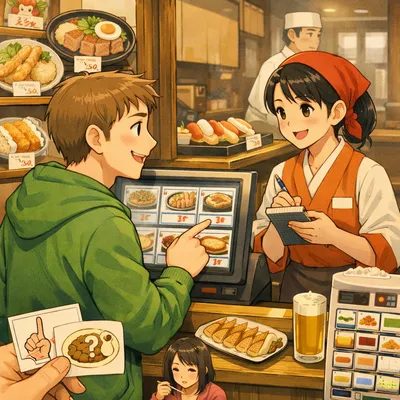
C) Order on a tablet or by QR code
Since 2020, tablet ordering and QR code phone ordering have become much more common in many restaurants. You scan a code, choose items, and submit your order.
I know, it sounds confusing at first. But the upside is huge: you can take your time, use translation tools, and avoid the pressure of rapid-fire conversation.
Stress-Free Tip: If the tablet or QR menu has an English option, it’s often hidden in a corner setting. Tap around gently. You’re not “breaking it,” I promise.
4) The special case: ticket vending machine restaurants
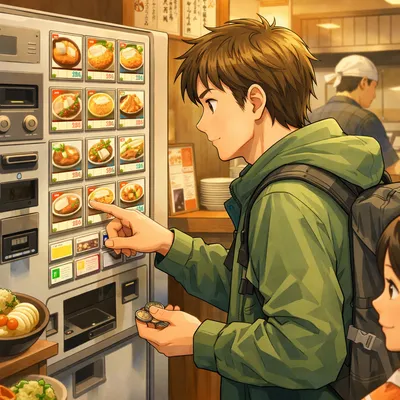
In some ramen shops, gyudon (beef bowl) chains, and quick eateries, you may see a ticket vending machine near the entrance.
The flow usually goes like this:
- Choose your meal on the machine
- Pay first
- Get a ticket
- Hand the ticket to staff (or place it on the counter) and sit where they direct you
This system can feel intense because people behind you may be waiting. Sounds dramatic? Maybe. But it helps to decide what you want before you step up.
Stress-Free Tip: Quick tip: look at photos on the machine, or watch what the person before you presses. Also, keep some cash available—some machines may not accept cards.
5) Eating: simple manners that make you look confident
You don’t need to be perfect. You just need to be prepared.
Before you start
Some people say “itadakimasu” before eating (a polite phrase of gratitude). You don’t have to say it as a visitor, but it’s a nice cultural touch if you feel comfortable.
Chopsticks: the three “please don’t” rules
Chopsticks are where anxiety loves to live, right? Let’s make it simple. These are widely recommended to avoid:
- Don’t stick chopsticks upright in rice (it resembles a funeral offering)
- Don’t spear food with chopsticks like a fork (it’s seen as poor manners)
- Don’t pass food chopstick-to-chopstick (also linked to funeral customs)
If chopsticks are hard, don’t panic. In many casual places, you can politely ask for a fork. Availability varies by restaurant, but it’s not a shocking request.
Stress-Free Tip: If you need a break, rest chopsticks on the holder (if provided) or across your bowl/plate edge neatly. Avoid leaving them stabbed into food.
Noodles: yes, slurping can happen
You may notice people slurping noodles. In many noodle shops, it’s normal and not considered rude. You don’t have to do it if it feels awkward. Just eat in a way that’s comfortable and respectful.
6) Sharing food: it depends on the restaurant type
Sharing rules can be surprisingly different depending on where you are.
At an izakaya (Japanese pub), sharing dishes is common. You order several plates for the table and everyone takes a bit.
At many other restaurants, especially places focused on individual set meals, each person ordering their own meal is more typical.
If you’re not sure, look around. Are tables filled with shared small plates? Or does everyone have their own tray/set? That usually tells you the “sharing vibe.”
Stress-Free Tip: When in doubt, order one dish per person first. You can often add side dishes later.
7) Paying: usually at the register, not at the table
This part surprises many visitors. In Japan, it’s common to pay at the register near the exit, not at your table.
You’ll often get a small bill slip placed on the table (sometimes face-down). When you’re ready, take it to the cashier.
Payment methods vary. Cash is still widely used, but more restaurants now accept credit cards and IC cards (like Suica). Still, don’t assume every place takes cards—especially smaller, older restaurants.
And yes, Japan generally does not have a tipping culture. You do not need to add extra money after paying.
Stress-Free Tip: Keep a small “restaurant cash stash” in your wallet (a few bills and coins). It prevents awkward moments when a machine is cash-only.
8) Leaving: one polite phrase (optional, but nice)
As you leave, some diners say “gochisousama deshita” (a polite “thank you for the meal”). Again, not required, but it’s a simple way to be gracious.
A smile and a nod also work perfectly.
Stress-Free Tip: If saying Japanese phrases makes you nervous, skip it. Friendly body language is already good manners.
Menus Without Stress: How to Choose Food When You Can’t Read Japanese
Let’s be honest. Menu panic is real.
But Japan is one of the easiest places to order without reading much, because many restaurants use visual help:
- Photo menus (often very clear)
- Plastic food displays in the window (shockingly realistic)
- Set meals where you choose “A/B/C” style options
If you can point, you can eat.
Also, translation apps can help a lot with printed menus. Just remember: translations can be imperfect, so if you have allergies, it’s safer to double-check with staff.
Stress-Free Tip: If you feel overwhelmed, choose a set meal. It reduces decision fatigue and usually comes with rice, soup, and sides.
Restaurant Comfort Tips (Because Crowds and Jet Lag Are Real)
Eating out is supposed to be fun. But on your first few days—especially after a long flight—restaurants can feel loud, fast, and crowded.
Go earlier to avoid lines
Many popular places get busy at typical meal times. If you eat a little earlier or later, you’ll often wait less.
Stress-Free Tip: Aim for an early lunch or an early dinner when you’re tired. Less waiting, less stress.
Choose “simple” restaurants on travel days
If you’ve been dragging luggage through stations (been there, mentally), choose something easy: a casual chain, a department store restaurant floor, or a place with pictures and tablets.
Not every meal needs to be a gourmet quest.
Stress-Free Tip: On arrival day, pick convenience and calm over “the perfect spot.” Your future self will thank you.
Smoking rules: usually non-smoking, but not always
Japan has moved more toward non-smoking restaurants in recent years, but you may still find older, small places that allow smoking or have smoking sections.
If you’re sensitive to smoke, look for signage at the entrance or ask staff. Policies can change, so check the latest information when possible.
Stress-Free Tip: Department stores and newer buildings are more likely to be fully non-smoking.
Common Mistakes (Totally Understandable, But Avoid These If You Can)
Everyone makes small mistakes. Japan is forgiving. Still, these are the big ones that cause awkward moments:
- Sitting down wherever you want when the restaurant expects to seat you
- Waiting forever to order because you didn’t realize there’s a call button or tablet system
- Trying to tip (it can confuse staff since tipping isn’t standard)
- Assuming credit cards always work in smaller restaurants
- Chopstick “don’ts” like sticking them upright in rice or passing food chopstick-to-chopstick
Don’t worry. If you slip up, a quick smile and a calm attitude go a long way.
Recommended Options (Only If You Want Things Even Easier)
Mobile internet (eSIM or pocket WiFi)
Best for:
Travelers who want to translate menus, use QR ordering, and look up dish photos without stress.
Not ideal for:
People who already have reliable international roaming or don’t plan to use their phone much.
My honest take:
If you want restaurant confidence, internet helps a lot. QR ordering and translation apps are much easier when you’re reliably connected. Just check the latest plan details and compatibility before you buy.
An IC card (Suica, Pasmo, etc.) for easy payments
Best for:
Visitors who want quick, tap-to-pay convenience where accepted (especially in cities).
Not ideal for:
Cash-only areas and small restaurants that don’t accept IC payments.
My honest take:
An IC card won’t work everywhere for restaurants, but when it does, it’s wonderfully simple. Still, keep some cash as backup.
Stress-Free Checklist
- Pause at the entrance and wait to be seated unless it’s clearly self-seating
- Look for a call button, tablet, or QR code before you try to wave staff down
- Use “sumimasen” to get attention (it’s enough)
- Keep a small amount of cash for ticket machines and cash-only restaurants
- Remember: tipping is not expected
- Avoid the three chopstick mistakes (upright in rice, spearing food, passing food chopstick-to-chopstick)
- Expect to pay at the register near the exit in many restaurants
- If you’re tired, choose picture menus, set meals, or tablet-order restaurants
FAQ
Do I need to speak Japanese to eat at restaurants in Japan?
No. Many places are used to visitors. Picture menus, plastic food displays, and tablet/QR ordering make it much easier than you might expect.
Should I tip in Japan?
Generally, no. Tipping isn’t a standard part of restaurant culture in Japan, so you usually just pay the bill amount.
Why do I have to pay at the register instead of the table?
That’s a common system in Japan. You’ll usually receive a bill slip at the table, then bring it to the cashier near the exit.
What if a restaurant only has a ticket vending machine and I can’t read it?
Look for photos, use a translation app, or choose the most popular-looking option. If you’re stuck, stepping aside for a moment to let others go first is okay.
Is it rude to ask for a fork?
Not rude. Some restaurants have forks available, especially in tourist areas. Availability varies, so it’s okay if they can’t provide one.
Final Thoughts
Eating at restaurants in Japan feels intimidating until it suddenly doesn’t. And that “suddenly” usually happens after you learn the basic flow.
Wait to be seated, order using the system in front of you, enjoy your meal, pay at the register, and skip the tip. That’s the core routine.
If you remember one thing, remember this: you don’t need perfect Japanese or perfect manners. You just need a few simple expectations. A little preparation turns restaurant time into one of the easiest, happiest parts of your trip.