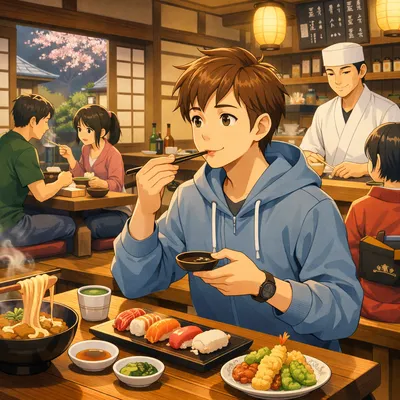
You’re standing outside a tiny restaurant in Japan. It smells amazing. The menu is full of characters you can’t read. The staff look busy. And your brain suddenly goes, “What if I mess this up?” Don’t worry. You’re not the only one.
Here’s the thing: you do not need Japanese fluency to eat well in Japan. In many places, you can order with photos, buttons, ticket machines, and a little bit of polite confidence. And yes—pointing is absolutely a valid life skill here!
In this guide, you’ll learn the simple “systems” Japanese restaurants use, the few words that actually matter, how to pay without confusion, and what to do when you have allergies or food preferences. Once you know the patterns, eating out becomes one of the easiest parts of your trip.
Quick Answer

You can order food in Japan without speaking Japanese by using three tools: pointing (photos or food samples), a translation app (especially camera mode), and a couple of short polite words.
Most places follow one of a few ordering styles: ticket machine, table service, or counter/food court.
If you remember one thing, remember this: point + “this, please” + a calm smile gets you surprisingly far.
Who This Guide Is For
This is for you if you’re:
- A first-time visitor to Japan who feels nervous about ordering
- A traveler with zero or very basic Japanese
- Someone who wants to try local places, not only tourist restaurants
- Traveling with family (kids get hungry fast, so you need simple systems!)
- Worried about manners, allergies, or accidentally ordering “something intense”
The Secret: Restaurants in Japan Often Run on “Systems”
Many first-time visitors think ordering is about speaking Japanese. Actually, it’s more about recognizing the setup.
In Japan, restaurants often use clear routines: you buy a meal ticket first, or you order via tablet, or you order at the counter and wait for your number. Once you spot which system you’re in, you’re basically done.
Quick self-check: When you walk in, do you see a machine with buttons? A tablet on the table? A cashier counter with a big menu board? That’s your clue.
Stress-Free Tip: If you feel stuck at the entrance, step to the side for 10 seconds and watch what the person ahead of you does. Sounds dramatic? Maybe. But it helps.
Your Minimal “Survival Kit” for Ordering (No Japanese Required)
1) Pointing is normal (and expected)
Japan is one of the best countries in the world for ordering by pointing. Many places have photo menus, plastic food displays, or big menu boards with pictures.
If there’s a photo, you can point. If there’s a food sample, you can point. If there’s a display case, you can point. Nobody will judge you for it.
Stress-Free Tip: If you see a photo menu outside, take a quick picture. If you freeze later, you can show the photo instead of trying to explain.
2) Use a translation app (camera mode is the real hero)
Many travelers use translation apps to get the “general idea” of a menu. The camera feature is especially useful for kanji-heavy menus or handwritten specials.
Tiny warning: translations can be weird sometimes. Think of it as “good enough to choose,” not “perfect culinary poetry.”
Stress-Free Tip: If the translation looks confusing, search the dish name later when you have Wi-Fi, or choose a photo-based option on the menu instead.
3) Learn just a few polite words (romanized only)
You don’t need full sentences. You need a few tiny tools that signal politeness and help staff help you.
- Sumimasen = “Excuse me” (to get attention politely)
- Kore onegaishimasu = “This, please” (while pointing)
- Osusume wa? = “What do you recommend?”
- Ijo desu = “That’s all” (when you’re done ordering)
- Arigatou gozaimasu = “Thank you very much”
Stress-Free Tip: If pronunciation worries you, say it slowly. Staff are usually listening for the “shape” of the phrase, not perfection.
How to Order in Different Types of Places
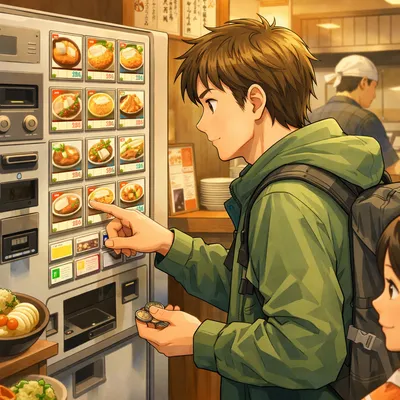
1) Ticket machine restaurants (ramen shops, gyudon chains, quick eats)
This is where many first-time visitors get stuck, because the ordering happens before you sit down.
The typical flow is:
- Find the ticket machine near the entrance
- Choose your item (often with photos or big “recommended” buttons)
- Pay at the machine
- Take the ticket and hand it to staff (or place it where they indicate)
Many machines now offer multiple languages or pictures, especially in busy areas, but it varies by shop.
Tiny warning: some machines accept cash only, or are picky about foreign cards. This changes by location, so be ready with some yen.
Stress-Free Tip: If there’s a line behind you and you feel pressure, step aside and let one person go ahead. Then try again calmly.
2) Table-service restaurants (teishoku set meals, small local restaurants)
Here, you usually sit first, then order.
The typical flow is:
- Wait to be seated (or choose a seat if it looks self-serve)
- Look at the menu (sometimes on the table, sometimes on the wall)
- Call staff with Sumimasen or a table call button
- Point and say Kore onegaishimasu
If you see a small button on the table, that’s not decoration. That’s your “summon help politely” device. Honestly, it’s one of Japan’s best inventions.
Stress-Free Tip: If you want two of something, you can hold up two fingers while pointing. Simple and effective.
3) Tablet ordering (family restaurants, chain izakaya, casual dining)
Tablet ordering is becoming very common, especially at chains. You tap photos, choose options, and send the order.
In many cases, you can switch the tablet language to English (not always, but often). Even when you can’t, the photos do most of the work.
Stress-Free Tip: Before you hit the final order button, scan for add-ons like extra cheese, spice level, or set options. It’s easy to tap the “upgrade” by accident when you’re hungry.
4) Food courts and mall restaurants (easy mode for nervous travelers)
Food courts are a great first-day choice. They’re bright, organized, and used to visitors.
The typical flow is:
- Pick a stall by looking at the display photos
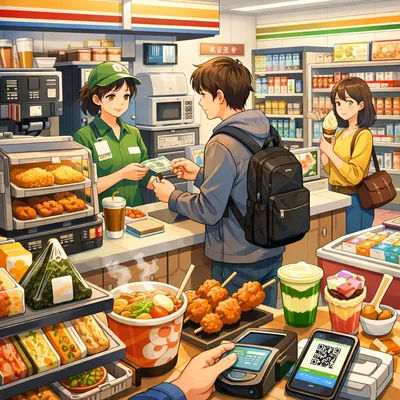
- Order at the counter
- Pay immediately
- Receive a number ticket or receipt
- Wait until your number is called or shown on a screen
If you’re worried about holding up a line, food courts can feel easier because the steps are clear and fast.
Stress-Free Tip: Take a photo of your number ticket. If you misplace the paper, you still have the number.
5) Depachika (department store food basements)
Depachika are those amazing food floors in department stores. They’re full of beautiful bento, desserts, and ready-to-eat meals.
Ordering is often simple: point at what you want in the display case, then pay. Some items are packaged; some are boxed fresh.
Tiny warning: depachika can be crowded, especially evenings and weekends. It’s exciting, but it can drain your energy fast.
Stress-Free Tip: If crowds make you tired, go earlier in the day. Or buy your meal and eat somewhere calm (hotel room picnic is underrated!).
Payment Basics: The Part That Feels Awkward (But Doesn’t Have to)
Let’s be honest: paying can feel more stressful than ordering, because every country does it differently.
No tipping (in most situations)
In Japan, tipping is generally not expected in everyday restaurants. Staff may even refuse it. If you want to show appreciation, a clear “thank you” and polite behavior are enough.
How the check works
In many table-service places, a small slip (your check) stays on the table. You usually take it to the register near the exit to pay.
In other places, staff bring the check to your table. And in some casual spots, you pay upfront when ordering. It depends on the restaurant style.
Stress-Free Tip: Before you sit down, quickly look for a register near the door. If you see one, there’s a good chance you’ll pay there at the end.
Cash vs card
Card acceptance is common in many cities, but some smaller restaurants still prefer cash. This varies a lot by neighborhood and shop.
Stress-Free Tip: Keep some yen on you, especially for ramen ticket machines and small local places.
What About Allergies, Vegetarian, or No Pork?
This is important, and it can be tricky. Even if a restaurant has an English menu, allergy details may not be fully clear.
Many travelers find it helpful to:
- Use a translation app to check ingredient notes
- Choose places with clear pictograms or allergen charts (more common at chains)
- Show a simple allergy card in English (and ideally Japanese, prepared in advance)
Tiny warning: broths and sauces may contain meat or fish even if the dish looks “vegetable.” This is common in Japanese cooking.
Stress-Free Tip: If your allergy is severe, it’s often safer to choose larger chains or places known for accommodating dietary needs, and to double-check details. When in doubt, check the latest official information from the restaurant before you go.
Easy Etiquette That Makes Ordering Smoother
You don’t need to be perfect. You just need to avoid the few things that cause confusion.
Use an indoor voice
Restaurants can be lively, but shouting across the room can feel intense. If you need help, a polite Sumimasen is usually enough.
Don’t wave money around at the table
In many places, you pay at the register, not by handing cash to staff at the table (unless it’s clearly that kind of shop).
Put your bag where it won’t block people
Some restaurants are small. A suitcase or big backpack can block aisles fast.
Stress-Free Tip: If you’re carrying luggage between hotel check-out and check-in, consider luggage delivery or station lockers so you can eat without playing “bag Tetris” under your chair.
Common Mistakes (Totally Understandable)
- Trying to speak full Japanese sentences and freezing mid-way. Pointing plus a short phrase is easier.
- Sitting down in a ticket-machine restaurant before buying a ticket. If you see a machine, use it first.
- Not having cash when the machine or small shop doesn’t take cards.
- Assuming “vegetarian” is obvious. Broth and sauce can contain fish or meat.
- Waiting too quietly when you need service. A gentle “excuse me” is normal.
Recommended Options (Only If You Want Extra Peace of Mind)
Reliable internet (eSIM or pocket WiFi)
Best for:
Travelers who want to use camera translation, map apps, and menu lookups smoothly.
Not ideal for:
People who prefer to stay offline, or travelers on very tight budgets who only need minimal connectivity.
My honest take:
If ordering anxiety is a big issue for you, internet access is one of the most calming “tools” you can bring. Translation apps don’t need to be perfect—they just need to help you choose confidently.
A simple allergy/diet card (download or print before you fly)
Best for:
Anyone with allergies, vegetarian/vegan needs, or religious restrictions.
Not ideal for:
Travelers with no restrictions who feel comfortable choosing photo menus and common dishes.
My honest take:
This is low effort and high reward. Even if you don’t use it, having it reduces stress. Just remember that policies vary, so it’s smart to confirm with each restaurant.
Luggage delivery (takkyubin) or station lockers
Best for:
Travelers arriving in Japan with big suitcases who want to eat without navigating crowded stations and narrow restaurant aisles.
Not ideal for:
People traveling with a small backpack, or those who need their luggage immediately.
My honest take:
This doesn’t directly “order food,” but it makes your whole day calmer. And when you’re calmer, ordering feels easier too. Check the latest official information and pricing from the service provider before you use it.
Stress-Free Checklist
- Download a translation app and test camera translation before your trip
- Save a few romanized phrases: Sumimasen, Kore onegaishimasu, Arigatou gozaimasu
- Carry some cash (especially for ticket machines and small shops)
- Look for the “system” first: ticket machine, tablet, table service, or counter
- Take a quick photo of menus or display items you might want to order
- If you have allergies, prepare an allergy/diet card in advance
- Avoid peak rush times if crowds make you tired (lunch and dinner can be intense)
FAQ
Is it rude to point at the menu in Japan?
No. Pointing at photos or menu items is very common, especially for visitors. Just do it politely and calmly.
What if there’s no English menu?
You can still order by using pictures, food samples, or a translation app. If it’s a ticket machine with no photos, choosing the “recommended” option is often the simplest move.
Do I need to tip in Japan?
In most everyday restaurants, tipping isn’t expected. A polite thank-you is enough.
How do I pay at a sit-down restaurant?
In many places, you take the check slip to the register near the exit. If you’re unsure, watch what other customers do or politely ask with a gesture toward the register.
Can restaurants handle allergies?
Some can, some can’t, and it varies. For severe allergies, it’s safer to prepare an allergy card and choose places with clear ingredient information. When possible, check the restaurant’s latest official information.
Final Thoughts
You don’t need perfect Japanese to eat well in Japan. You just need a simple plan, a few polite words, and permission to use the easiest tools available—photos, pointing, and translation apps.
Many first-time visitors feel nervous right up until their first successful order. Then something clicks. The “mystery” becomes a pattern. And suddenly, you’re not stressed—you’re choosing between ramen and curry like it’s your job.
Prepare a little. Stay flexible. And remember: Japan is used to visitors, and most staff want you to enjoy your meal. You’ve got this.