Money stress can sneak up on you in Japan at the worst moment, can’t it!
A common first-timer scene: you’re jet-lagged, you finally find a tiny ramen shop that looks perfect, and then you see the sign… cash only. Your phone battery is low. The menu is not in English. And your wallet is basically vibes.
Don’t worry. You’re not the only one. Once you understand how Japan “really” works with cash, cards, and ATMs, it gets way calmer, way faster!
This guide is written for English-speaking visitors who want Japan travel cash tips that actually help on the ground: how much yen to carry, where to withdraw without panic, what settings to check before you fly, and how to avoid the sneaky mistakes that waste money.
Quick note: ATM compatibility, card security requirements (PIN/3D Secure), exchange rates, fees, and payment acceptance can change. Use this as a calm starting point, and check the latest official information from your bank/card issuer and the ATM provider before you rely on anything important.
Quick Answer: What’s the simplest cash plan for Japan?

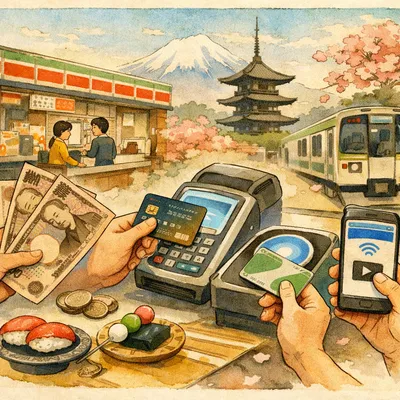
Bring a mix: cards + an IC card + some yen.
In many cases, 3,000–8,000 yen per day in cash plus a separate emergency reserve of 20,000–30,000 yen (stored separately) is a good balance.
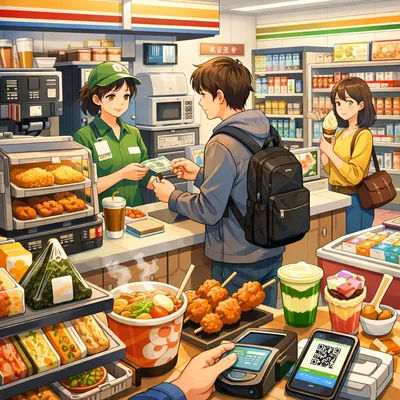
If you run low, top up using konbini ATMs (convenience store ATMs), especially 7-Eleven / Seven Bank ATMs.
Avoid “all-in” airport exchanges and watch out for Dynamic Currency Conversion (DCC). Choose to pay in JPY when asked.
Who This Guide Is For

This guide is for you if you’re:
- A first-time visitor to Japan who wants a simple money plan
- Not confident in Japanese and worried about ATM screens or asking for help
- Traveling with kids, a suitcase, or low energy (money mistakes hit harder then!)
- Trying to avoid paying extra fees, bad exchange rates, or getting stuck at a station
- Heading to Kyoto temples, local food streets, onsen towns, or rural areas where cash is more common
Cash in Japan: What’s the real situation?
Here’s the thing. Japan is much more card-friendly than it used to be, especially in big cities.
But cash still pops up in very specific moments. And those moments are exactly when you don’t want extra stress, right?
Places where cash is still very normal
Many first-time visitors get surprised by how often these show up:
- Small, independent restaurants (especially cozy local spots)
- Street food stalls, markets, festivals, flea markets
- Temples and shrines (offerings, small items, stamps, charms)
- Some local buses and small transport in rural areas
- Some coin lockers, older machines, and small services
Related guide: Small restaurants can feel confusing the first time, especially when payment happens at the counter. This guide can help: How to Eat at Restaurants in Japan: A Beginner-Friendly Guide.
Related guide: Cash is also useful at temples and shrines for small offerings, charms, and stamps. For simple etiquette, see How to Visit Japanese Temples and Shrines: Simple Etiquette for Tourists.
Stress-Free Tip: Think of cash as your “small local moments” budget. Your card can handle the big stuff (hotels, shopping, long-distance tickets). Cash covers the cute surprises.
How much cash should you carry in Japan? (Simple, usable numbers)
Let’s be honest. The internet loves extreme advice: “Japan is cashless!” or “Japan is only cash!”
Most travelers are happier in the middle.
Your daily cash target (practical range)
If you use cards and an IC card for transport, many visitors do well with:
- 3,000–5,000 yen per day for city-heavy trips (Tokyo/Osaka-style days)
- 5,000–8,000 yen per day if you’ll spend more time in smaller towns, food streets, and local transport
“Landing cash” (how much yen to have right away)
This is where many first-time visitors get stuck: you don’t need a suitcase full of yen, but you do want enough to survive your first day smoothly.
| Trip length | City-focused start | More rural start | Why it works |
|---|---|---|---|
| 2–3 days | 10,000–15,000 yen | 15,000–20,000 yen | Often no refill needed |
| 4–6 days | 15,000–25,000 yen | 20,000–30,000 yen | One ATM top-up is easy |
| 7–10 days | 20,000–30,000 yen | 30,000–40,000 yen | Carry less, withdraw as needed |
Also: keep a separate emergency reserve of 20,000–30,000 yen in a different place (not the same wallet). Sounds dramatic? Maybe. But it helps.
Stress-Free Tip: If you remember one thing, remember this: carry enough cash to handle “plan B” for one day (food + local transport + a taxi if needed), then refill with ATMs.
Related guide: If you want to plan your total trip budget, not just daily cash, this guide may help too: Japan Travel Budget: How Much Money Do You Really Need?
Arrival day plan: SIM/IC card/cash without feeling overwhelmed
After a long flight, your brain runs at about 37% capacity. That’s normal!
So let’s make your first money steps stupidly simple.
The “first 60–90 minutes” order that reduces stress
- Step 1: Get connected (eSIM/SIM/pocket WiFi). Because ATMs, maps, and translations are easier with internet.
- Step 2: Do a tiny card test at a konbini (small purchase). This helps confirm your card isn’t blocked for “suspicious overseas use.”
- Step 3: Set up transport (IC card like Suica/Pasmo/ICOCA). It becomes your “small payments helper.”
- Step 4: Withdraw your starter cash (often 10,000–20,000 yen is plenty).
- Step 5: Screenshot your hotel info and keep some cash accessible for check-in surprises.
A very real first-timer moment (and how to prevent it)
You arrive at a big station. You exit the “wrong side.” Now your hotel that looked “2 minutes away” is suddenly a 15-minute loop with stairs and crowds.
This is when cash helps. A quick drink, a locker, or a short taxi can save your energy. You don’t want to be counting coins like it’s an escape room.
Stress-Free Tip: On arrival day, don’t aim for perfection. Aim for smooth: internet + IC card + a bit of cash = you can handle surprises.
Related guide: If you want a calmer step-by-step plan for your first hour after landing, read this next: What to Do After Landing in Japan: A Simple Arrival Guide for First-Time Visitors
Best ways to get yen in Japan (and what to avoid)
Most visitors choose one of two routes: withdraw from ATMs or exchange cash. Using both is also totally fine.
Option A: Withdraw at a convenience store ATM (often easiest)
For many travelers, the least stressful option is using a konbini ATM because:
- You can find them almost everywhere, often late at night too
- They usually have English menus
- They’re used to foreign cards (especially major international networks)
Many guides highlight 7-Eleven / Seven Bank ATMs as a reliable starting point. Japan Post Bank ATMs are also commonly used by travelers. Compatibility can still vary by card and country, so it’s smart to have a backup card.
Stress-Free Tip: If one ATM says “cannot be used,” don’t panic. Try another network (for example, a different konbini, 7-Eleven, or Japan Post). This happens sometimes even with perfectly normal cards.
Related guide: Convenience stores are also useful for food, drinks, small purchases, and breaking large bills. For more practical tips, see Japan Convenience Store Guide: What to Buy, How to Pay, and What to Try.
Option B: Exchange money (useful, but don’t overdo it)
Exchanging at the airport or hotel can be convenient, but it’s often not the best value. Rates and fees vary.
A calm approach is exchanging a small emergency amount if you arrive late or your card isn’t working yet.
Tiny warning: Avoid exchanging your entire trip budget at the first counter you see. It’s not “wrong,” but it’s an easy way to lose money quietly.
Stress-Free Tip: If you’re nervous, exchange just enough for day one, then switch to ATM withdrawals once you’re settled.
Before you fly: the ATM/card settings that prevent ugly surprises
This part is not exciting. I know. But it saves you from the “why is my card being rejected?” moment in a crowded station.
1) Know your PIN (and make sure it’s 4 digits if required)
Many ATM transactions require a PIN. If you don’t know it, you can’t “wing it” with a signature. Not fun.
2) Turn on overseas ATM/transaction access
Some banks block international withdrawals by default. Check your banking app or call your bank before departure.
3) Check withdrawal limits and fees
Limits can be daily or per transaction. Fees can be from the local ATM, your bank, or both.
It’s often cheaper to withdraw less frequently (within reason) rather than doing tiny withdrawals every day.
4) 3D Secure for online payments (quiet troublemaker!)
Some online bookings, ticket sites, and mobile IC card top-ups may require extra card verification (often called 3D Secure). If your card can’t authenticate, payments may fail.
That doesn’t mean Japan hates your card, okay? It just means you need a backup plan (another card, or pay another way).
Stress-Free Tip: Bring two cards if possible (ideally different networks), and store them separately. One card problem shouldn’t end your dinner plans.
How to pay day-to-day: a simple “role split” that works
You don’t need to pick one perfect payment method. Japan is easiest when you use the right tool for each job.
Cash = small local moments
- Small restaurants, shrine visits, street food, little entry fees
- Anything that feels “local and tiny”
Credit/debit card = bigger purchases
- Hotels, department stores, larger restaurants, bigger shopping
- Some long-distance tickets and reservations
IC card (Suica/Pasmo/ICOCA) = your low-stress helper
An IC card is basically a prepaid tap-to-pay card used for trains and buses, and often for small purchases too.
When your hands are full and you just want a drink from a konbini, tapping an IC card is… honestly a tiny joy.
Stress-Free Tip: Try to keep your IC card topped up so you’re not hunting for cash at the exact moment your train arrives.
Related guide: If you are not sure how IC cards work, this guide explains them in more detail: How to Use IC Cards in Japan: Suica, PASMO, and Other Travel Cards Explained.
Cashless Japan: how far can you really go?
In major cities, you can often go mostly cashless. But “mostly” is doing a lot of work in that sentence, isn’t it?
Tokyo/Osaka vs. smaller towns (a helpful mindset)
Cities: cards and IC cards are widely accepted in many places. You’ll still run into cash-only restaurants.
Onsen towns, rural areas, islands: cash can become much more important, especially for small transport and family-run shops.
Stress-Free Tip: If your itinerary includes rural areas, withdraw a bit more before you leave the city. Not because rural Japan is scary. Just because ATMs can be less convenient when you’re moving around.
Don’t lose money unnecessarily: exchange traps and DCC
This is the “quiet money leak” section. Not dramatic, but it adds up.
Dynamic Currency Conversion (DCC): choose JPY when you can
Sometimes a card terminal (or ATM) offers to charge you in your home currency instead of yen. That’s DCC.
In many cases, choosing your home currency can mean a worse rate and extra fees baked in.
So when you see the choice, selecting JPY is often the safer default. (Always read the screen carefully.)
Hotel exchange and “convenience” exchange
Convenience is not free, unfortunately. Rates can be worse at hotels or certain counters.
Stress-Free Tip: If you’re tired and just need a small amount, convenience exchange is okay. Just don’t make it your main plan.
Small cash handling habits that reduce stress (and risk)
Japan is generally a safe destination, but travel is travel. Losing your wallet is still a bad day anywhere.
Keep “today cash” separate from “reserve cash”
Many travelers like a simple system:
- Main wallet: today’s cash (example: 5,000–10,000 yen)
- Hidden pocket/pouch: reserve cash
- Separate place: backup card
Carry more 1,000-yen bills if you can
Smaller places may not love big bills for tiny purchases. Having smaller bills reduces awkwardness.
Stress-Free Tip: If you end up with lots of coins, use them at konbini or vending machines. Coins multiply in Japan like they have a secret plan.
Common “money panic” problems (and what to do)
Let’s talk about the situations people worry about online, because yes, they happen sometimes.
Problem: The ATM rejects your card
Try a different ATM network (another konbini, 7-Eleven/Seven Bank, or Japan Post). If it still fails, use a backup card or exchange a small emergency amount while you contact your bank.
Stress-Free Tip: Save your bank’s international contact method before you fly. When your phone is low, you’ll be glad you did.
Problem: Your card works online but fails in-store (or the opposite)
This can be security settings, verification requirements, or a temporary block. Use your second card or cash, then check with your issuer.
Stress-Free Tip: Do a small “test purchase” early in the trip so you discover issues when it’s easy to fix.
Problem: You’re out late and need cash
Many konbini are open late, and ATMs are often accessible. In rural areas, late-night options can be fewer.
Stress-Free Tip: Withdraw earlier in the day if you’re heading somewhere quiet at night.
Common Mistakes (Totally understandable, but try to avoid these!)
- Arriving with zero yen and assuming Apple Pay/cards will cover everything
- Exchanging your full budget at the airport because it feels “safe”
- Not knowing your PIN and learning that fact at an ATM screen
- Keeping all cash in one place (wallet = single point of failure)
- Doing lots of tiny ATM withdrawals and paying unnecessary fees
- Choosing DCC (home currency) at a card terminal without realizing it
- Heading to an onsen town/rural area with city-level cash expectations
Stress-Free Tip: You don’t need a perfect system. You just need a backup. That’s what reduces stress.
Recommended Options (Simple choices that make money easier)
IC card (Suica/Pasmo/ICOCA)
Best for: anyone who wants fewer cash moments, faster station movement, and easier small payments.
Not ideal for: travelers who strongly prefer to track every purchase manually (IC spending is easy, but it’s still spending!).
My honest take: If you’re nervous about trains or stations, an IC card is one of the best “stress reducers” you can set up early.
Withdrawing cash at konbini ATMs (especially 7-Eleven/Seven Bank)
Best for: travelers who want a simple refill system without hunting for banks.
Not ideal for: anyone who has not checked overseas withdrawal settings or doesn’t know their PIN.
My honest take: It’s often the most practical plan: withdraw modest amounts as you go, and keep your wallet light.
Two-card backup strategy (different networks if possible)
Best for: first-timers, families, and anyone who wants “insurance” against random card issues.
Not ideal for: people who hate managing multiple cards (but you can keep the backup hidden).
My honest take: This is a boring tip that prevents very un-boring problems.
Stress-Free Checklist (Do this and future-you will be grateful)
- Check your card’s overseas use setting and your PIN
- Bring two payment cards if possible, stored separately
- Plan to carry 3,000–8,000 yen per day in cash (depending on your itinerary)
- Keep an extra 20,000–30,000 yen reserve in a different place
- Use an IC card for transport and small purchases to reduce cash stress
- Withdraw from konbini ATMs (7-Eleven/Seven Bank is a common starting point)
- When asked to pay in your currency or yen, choose JPY unless you have a clear reason not to
- Before leaving a big city for rural areas, withdraw a little extra cash
- Save your hotel info and a backup contact method for your bank
What to Prepare Next
You don’t need to plan everything at once. Start with the parts that reduce the most stress first.
- Decide your arrival-day internet plan (eSIM/SIM/pocket WiFi)
- Decide how you’ll handle transport payments (IC card plan)
- Pick a hotel location that’s easy with luggage, not just “central on a map”
- Make a simple first-day plan (food + transport + cash refill point)
FAQ: Japan travel cash tips
Do I need to bring yen from home, or can I get cash in Japan?
You can usually get cash in Japan via ATMs, especially at convenience stores. Bringing a small amount of yen for day one can still feel calming, especially for late arrivals.
Are 7-Eleven ATMs really the best option?
Many travelers find them convenient because they’re common and have English menus. But card compatibility varies, so it’s smart to have a backup plan (another card or a small exchange amount).
How much cash should I carry on me each day?
Many visitors feel comfortable with roughly 3,000–8,000 yen per day in cash, depending on how rural your itinerary is and how often you use cards and an IC card.
What is DCC, and why should I avoid it?
DCC is when a terminal offers to charge you in your home currency instead of yen. It can come with a worse exchange rate. When you have the choice, paying in JPY is often the safer default.
Is Japan basically cashless now?
In big cities, you can often use cards a lot. But cash is still common in small restaurants, shrines, markets, and rural areas—so going 100% cashless can be risky.
Final Thoughts
You don’t need to be perfect. You just need to be prepared.
A simple mix of cash + card + IC card is what keeps Japan feeling smooth, even when you’re tired, lost, hungry, or all three at once (a very realistic combo!).
Start with a sensible amount of yen, keep a small reserve, and use konbini ATMs to refill calmly. That’s it. You’ve got this, okay?