“Private onsen” and “ryokan” often get mixed together on booking sites, and that’s where expensive booking mistakes happen. This guide gives you a simple decision framework, explains the private-bath options in plain English, and shows you exactly what to look for on booking pages—so you can choose confidently for your trip style and budget.
Quick answer: what should you book?
- If privacy while bathing is non-negotiable: choose your bath type first (in-room bath vs reservable private bath), then pick the property.
- If the “traditional Japan” experience is your priority: choose a ryokan first (meals, room style, service), then decide whether you need a private bath add-on.
- If you want an easy trip with minimal rules: a hotel with reservable private baths can be the most stress-free middle option.
Related guide: Private Onsen, Family Bath, and Open-Air Bath Rooms in Japan: What’s the Difference?
Private Onsen or Ryokan? The first decision
If you want bathing privacy, choose room type first
Start by deciding how you want to bathe privately. This single choice usually determines price, availability, and how relaxed you’ll feel.
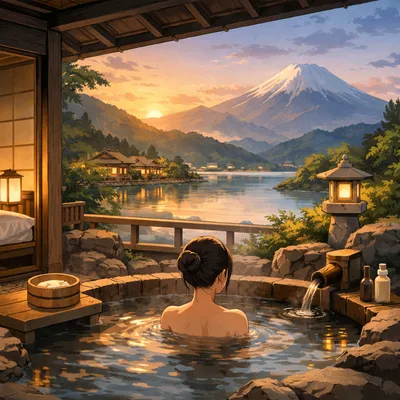
- Most private: an in-room bath (often open-air) you can use anytime.
- Private but scheduled: a reservable private bath you book for a time slot.
- Not private: shared public baths only (still wonderful, but not for everyone).
If you want a full Japanese experience, choose ryokan first
A ryokan is primarily about the stay style: traditional room setup, attentive service, and usually a multi-course dinner and breakfast. Some ryokan have hot springs, some don’t. Some have private baths, many don’t. So “ryokan” doesn’t automatically mean “private onsen.”
Related guide: How to Choose a Ryokan with a Private Onsen in Japan for Your First Trip
Ryokan vs “private onsen stay”: what’s actually different?
| What you’re choosing | What it means | Best for | Common surprise |
|---|---|---|---|
| Ryokan | Traditional-style lodging; often includes dinner and breakfast | Food lovers, anniversaries, “Japan bucket list” stays | Meal times are fixed; rooms may be futon-style |
| Hotel with private baths | Hotel-style comfort with reservable private bathing options | First-timers who want simplicity + privacy | Private baths may be time-limited or extra cost |
| Room with private bath | A specific room category that includes a private bath (sometimes hot spring water) | Couples, families, tattoo concerns, modesty/privacy needs | Some “open-air baths” are not hot spring water—check details |
Which stay fits your travel style?
Couples and honeymoon trips
- Choose: ryokan with in-room open-air bath if you want maximum privacy and “special occasion” feel.
- Or choose: a ryokan/hotel with reservable private baths if you’re fine with time slots and want better value.
- Tip: prioritize view + room comfort over spring “technical details” unless you’re a true onsen enthusiast.
Families with children
- Choose: a family/private bath option (in-room or reservable). It’s often easier than navigating public bath etiquette with kids.
- Check: meal flexibility, child meals, bedding setup, stairs/elevators, and whether the bath can be used together.
Related guide: Family-Friendly Ryokan in Japan: What to Check Before Booking (Without Regrets)
First-time visitors to Japan
- Most stress-free: one night at a ryokan (with dinner/breakfast), then hotels in cities.
- If you’re nervous about bathing rules: book a stay with a private bath so you can relax and learn at your own pace.
- If you’re sensitive to tight schedules: avoid plans with very strict dinner check-in cutoffs.
Related guide: How to Book a Ryokan in Japan Without Getting Confused: A Calm, Step-by-Step Guide for First-Timers
Luxury vs budget travelers
- Luxury: in-room open-air bath + kaiseki-style meals + view + upgraded room category.
- Better value: reservable private bath, or a standard room plus a private bath plan.
- Budget-friendly approach: stay in a simple ryokan/inn in an onsen town and use public baths—if you’re comfortable with shared bathing.
Private onsen types explained simply
In-room open-air bath (private bath in your room)
This is the most convenient option: you can bathe whenever you want, without booking a time slot. It’s also usually the most expensive room category and sells out quickly.
- Pros: maximum privacy, no scheduling, great for couples/families.
- Cons: higher price; not all are true hot spring water; some are small.
Reservable private bath (a separate bath you book)
You reserve a private bathing room for a set time (often 30–60 minutes). Some properties include it in the rate; others charge extra.
- Pros: cheaper than an in-room bath; still private; good for first-timers.
- Cons: limited slots; you may need to book at check-in; can feel rushed if you like long soaks.
“Family bath” vs “private bath” vs public bath
- Family bath: usually means a private bath intended for groups (not necessarily families only).
- Private bath: a bath used by one party at a time; may be reservable or first-come-first-served.
- Public bath: gender-separated shared bathing areas; often the largest and most scenic baths.
Related guide: Are Private Onsen Rooms in Japan Worth It? Pros, Cons, and Price Guide for First-Timers
Quick decision matrix (use this to choose fast)
| Priority | Best match | Why | What to watch for |
|---|---|---|---|
| Privacy | In-room private bath | Anytime bathing, no shared spaces | Confirm if it’s hot spring water; confirm view/privacy |
| Price | Reservable private bath + standard room | Private experience without premium room cost | Time limits; booking method; extra fees |
| Meals | Ryokan with dinner & breakfast | Signature “ryokan experience” | Fixed meal times; dietary limits vary—ask early |
| Convenience | Hotel-style property with private baths | Easier rules, often easier access | Baths may be smaller; fewer traditional touches |
| Onsen vibe | Onsen town stay | Atmosphere, strolls, multiple bathing options | Transport may take longer; some places are hilly |
How to read booking pages without mistakes
Key English keywords to look for
- “Private bath” / “reservable private bath” / “private bath can be reserved”
- “Open-air bath” (this describes the style; it does not guarantee privacy unless it says private or in-room)
- “In-room bath” / “bath in the room”
- “Hot spring bath” (suggests onsen water, but still confirm)
- “Dinner and breakfast included” (common for ryokan plans)
Red flags in room descriptions
- “Shared bathroom” or “bathroom outside the room” when you assumed you had a private bath.
- “Open-air bath available” without stating it’s private—this may mean a public open-air bath.
- Private bath “available” but no details on reservation method, time limit, or fees.
- Very similar room names where only one includes a bath. (Double-check the room amenities list.)
Questions to confirm before booking (copy/paste friendly)
- Is the bath inside the room, or is it a separate reservable private bath?
- Is the bath water hot spring water, or heated tap water?
- How do we reserve the private bath (in advance, at check-in, or first-come-first-served)?
- Is there an extra fee for the private bath? If yes, how much?
- What are the dinner check-in deadline and meal serving times?
- Are tattoos allowed in public baths, and if not, can we use private baths only?
Related guide: Japan Hotel Guide for First-Time Visitors: What to Know Before Booking
Best regions by travel goal (simple picks, not a “top list”)
Instead of chasing a specific property name, pick an area that matches your schedule and the experience you want. Always check current transport times and seasonal conditions.
Easy access from Tokyo (short trip, big payoff)
- Good for: 1-night onsen add-on to a Tokyo itinerary
- Why: less travel fatigue, easier to fit into a first trip
- Typical tradeoff: popular areas sell out early, especially weekends
Related guide: Best Onsen Areas Near Tokyo for First-Time Visitors: Hakone, Kawaguchiko, and More
Scenic views (mountains, lakes, coastal)
- Good for: anniversaries, photographers, travelers who want to stay in
- Why: the view often matters more than the “technical” bath details for overall satisfaction
- Typical tradeoff: view rooms are limited and priced higher
Traditional atmosphere (classic onsen town feel)
- Good for: strolling in yukata, trying local snacks, relaxing pace
- Why: the town itself becomes part of the experience
- Typical tradeoff: some towns require buses/taxis from the nearest major station
Common booking mistakes (and how to avoid them)
- Mistake: Booking a “ryokan” assuming it includes a private onsen.
Fix: Confirm the exact bath type: in-room vs reservable private bath vs public only. - Mistake: Booking a private bath stay, then arriving too late for dinner.
Fix: Check the dinner serving window and any latest check-in time for dinner plans. - Mistake: Choosing the cheapest plan, then discovering the private bath costs extra.
Fix: Look for fee notes and ask the property if unclear. - Mistake: Over-optimizing for “hot spring quality” and ignoring comfort.
Fix: Prioritize sleep quality, room temperature control, stairs/elevators, and access from transit.
Checklist: choose the right stay in 5 minutes
- Pick your bathing privacy level: in-room / reservable private / public OK.
- Decide your meal style: dinner & breakfast included vs flexible dining out.
- Set your non-negotiables: view, beds vs futon, stairs, child needs, tattoo constraints.
- Choose the area: easy access vs scenic vs traditional town atmosphere.
- Verify on the booking page: bath details, reservation method, time limits, fees, meal times.
FAQ
Is a ryokan the same as an onsen hotel?
No. A ryokan is a traditional-style inn focused on the overall experience (room style, service, often meals). An onsen hotel is a hotel that has hot spring baths. Some places are both, but not always.
Do I need a private onsen if it’s my first time?
You don’t need one—but it can make your first onsen experience much more relaxing if you’re nervous about etiquette, modesty, tattoos, or traveling with kids. A reservable private bath is often the best value for first-timers.
What’s better: in-room open-air bath or reservable private bath?
In-room is best for convenience and “special occasion” comfort. Reservable private is best for value if you’re okay with a schedule and possible time limits.
How far ahead should I book?
For popular areas and weekends, earlier is better—especially for rooms with in-room baths (limited inventory). If your dates are fixed, book as soon as you find a good cancellation policy you’re comfortable with.
Can I do a ryokan as a day trip?
Some properties offer day-use bathing or meal plans, but the classic ryokan experience is an overnight stay (especially if you want dinner and breakfast). Availability and rules vary—check the property’s current details.
Related guide: How to Choose the Best Area to Stay in Japan Without Regret (First-Timer Friendly)