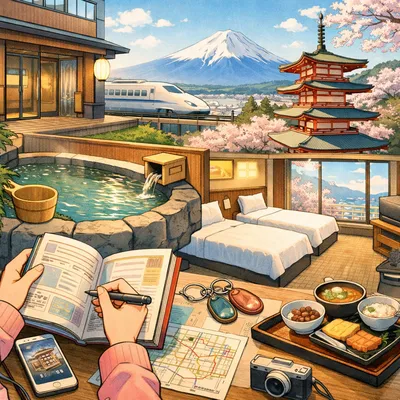
Booking a ryokan can feel surprisingly complicated the first time—prices are often “per person,” meal plans change everything, and the room/bath wording can be easy to misread. The good news: once you know what to look for on the booking page, reserving a ryokan becomes as straightforward as booking a hotel.
This guide walks you through the decisions and the exact details to confirm so you can book with confidence (and avoid the most common first-timer mistakes).
Quick Answer: The simplest way to book a ryokan without confusion
- Decide your non-negotiables: location, budget per person, meal plan, and bath style (shared vs private).
- Choose a booking route: official site (best details), a major OTA (easiest English/payment), or a specialist site (sometimes better inventory).
- On the booking page, verify 6 items: price is per person, meal plan, room type, bath access, taxes/fees, and cancellation rules.
- After booking, send one short message to confirm arrival time, dietary needs, and any policies you’re unsure about.
Key idea: Most “ryokan confusion” comes from meal plans, occupancy rules, and bath wording—not from the booking process itself.
Start with your travel priorities (so you don’t overthink the options)
Before you compare properties, decide what matters most to you. Ryokan listings can look similar, but the experience varies a lot.
Pick 4–5 non-negotiables
- Budget (per person, per night): Ryokan pricing is often shown per guest, not per room.
- Meals: no meals vs breakfast vs dinner + breakfast changes the total cost and the schedule.
- Bath style: shared bath only, private bath in-room, or reservable private bath.
- English support: some ryokan are very used to international guests; others are more local-focused.
- Location and access: can you reach it easily with luggage, and is there a shuttle?
When a ryokan is a better choice than a hotel
- You want a set dinner and breakfast as part of the stay.
- You want to try traditional-style rooms and a slower pace.
- You’re staying in an onsen town where evenings are quiet and the bath is part of the plan.
If you mainly need a base for sightseeing from early morning to late night, a hotel may be simpler—and you can do a ryokan for just one special night.
Mini takeaway: Decide meals + bath style first. Everything else becomes easier.
Related guide: How to Choose the Best Area to Stay in Japan Without Regret (First-Timer Friendly).
Where to book a ryokan in English (and when to switch methods)
There are three common booking routes. Each can be the “best” choice depending on what you need.
Option 1: The ryokan’s official website
Best for: the clearest meal/room details, special packages, and direct communication.
- Often has the most accurate room descriptions.
- May offer plans not shown elsewhere.
- Sometimes requires a card that supports international online payments.
Option 2: Major booking sites (OTAs)
Best for: easy English, familiar payment flow, and quick comparisons.
- Clearer cancellation displays (usually).
- More reviews and photos in one place.
- Inventory can be limited for small ryokan, especially for popular dates.
Option 3: Specialist ryokan platforms or travel agents
Best for: hard-to-book properties, complex needs (dietary, family, accessibility), or when you want help confirming details.
If it looks “sold out” in English, try this before giving up
- Check the official site for different plan names or minimum-stay rules.
- Adjust by one day (weekends and holidays fill fast).
- Try a different room category (some rooms are listed separately under different plans).
- Look for “no meals” plans if dinner plans are sold out.
- Message the property politely asking if any rooms can be opened for your dates (this sometimes works, especially far in advance).
Mini takeaway: If an English listing is sold out, the official site (or a quick message) is your best next step.
Understand the booking page before you click “Reserve”
Ryokan booking pages tend to pack a lot of meaning into a few words. Use the checks below to avoid 90% of common booking mistakes.
1) Price: is it per person or per room?
Many ryokan display rates per person, per night, often based on double occupancy. That means:
- Two guests may show a higher total than you expect if you assumed it was per room.
- Solo travelers may see a surcharge or fewer available plans.
If the page shows something like “price per adult,” treat that as your cue to re-check the total carefully on the final confirmation screen.
2) Meal plan labels: choose the schedule you actually want
| Plan type | What it usually means | Best for |
|---|---|---|
| No meals | Room only. Dinner and breakfast are on you. | Late arrivals, flexible days, budget focus |
| Breakfast included | One set breakfast at a fixed time window. | Easy mornings, you want dinner elsewhere |
| Dinner + breakfast | Two meals. Dinner often has a start time window you must meet. | The classic ryokan experience |
Important: If you book dinner included, you may need to arrive by a certain time. If you miss the dinner window, you might not be able to receive the meal (and refunds vary by property). Always check the stated latest check-in time for dinner plans.
3) Room type labels: what you’re actually booking
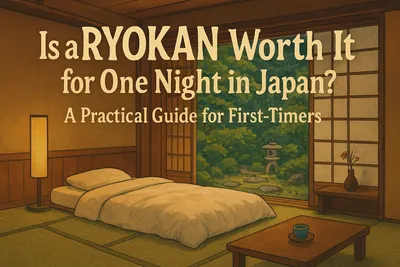
- Traditional-style room: often means sleeping on bedding laid out in the room at night.
- Western-style room: typically means beds.
- Mixed style: a combination (for example, beds plus a sitting area).
- Mountain/river view: can be a major price difference—verify it’s guaranteed, not “possible.”
If you care about beds (or need them), confirm the sleeping setup in the room description before paying.
4) Bath wording: shared, private, or “private but bookable”
This is where many first-time guests get surprised. Look for these distinctions:
- Shared bath: you use the communal bathing areas.
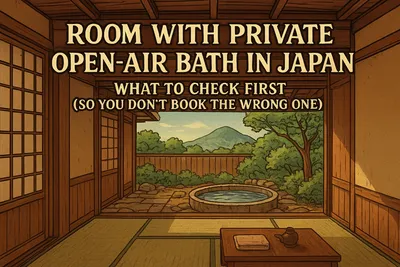
- Private bath in-room: your room has its own bath, typically available anytime.
- Reservable private bath: a private bath you book for a time slot. It may be free or may cost extra.
If the listing says “private bath available,” don’t assume it’s included or in your room—check whether it’s in-room or reservable, and whether there’s a fee.
5) Taxes and extra fees: what might be added at check-in
Depending on the area and property, you may see additional charges such as:
- Local accommodation taxes (varies by city/region).
- Hot spring bathing tax (often a small per-person fee in onsen areas).
- Service fees (sometimes included, sometimes separate).
Always read the “taxes and fees” section on the final screen. If anything is unclear, assume there may be a small amount due on arrival and check the property’s current policy.
Related guide: How to Pay in Japan: Cash, Credit Cards, IC Cards, and Mobile Payments Explained (Without Stress).
6) Cancellation policy: match it to your trip style
Ryokan often have stricter cancellation rules than big hotels, especially for meal plans and peak dates. Before you confirm:
- Check how many days before the fee starts.
- Check whether the fee is a percentage or the full amount.
- Confirm whether changing dates counts as a cancellation (policies vary).
Mini takeaway: Don’t click “Reserve” until you’ve checked: per-person pricing, meal plan, bath type, and cancellation rules.
A “what you’ll see on the booking screen” checklist (super practical)
When you’re staring at the final booking page, scan for these exact items:
- Guest count and ages (adults vs children rules can change the plan)
- Meal plan summary (no meals / breakfast / dinner + breakfast)
- Check-in window and any latest arrival time for dinner plans
- Room name and the bed/sleeping setup
- Bath access (shared vs in-room private vs reservable private)
- Total price breakdown (what’s included now vs due on arrival)
- Cancellation timeline
- Payment method (pay now vs pay at property)
After you book: confirm the details that prevent surprises
Once you have a reservation, one short message can prevent most last-minute stress—especially if you have dinner included.
What to confirm (copy/paste message template)
You can send something like this through the booking site message tool or the property contact form:
Subject: Reservation confirmation and questions
Message:
Hello, I have a reservation under [Your Name] on [Date]. Could you please confirm:
1) Our expected arrival time is around [Time]. Is this OK for check-in and dinner?
2) Do you have any notes we should know about your meal times?
3) We would like to ask about [dietary needs/allergies]. Is this possible?
4) Could you confirm whether the private bath is in-room or reservable, and whether there is an additional fee?
Thank you very much.
Other common confirmations (only if relevant)
- Shuttle pickup: where to meet and the last pickup time.
- Parking: whether it’s available and if reservation is needed.
- Policy questions: if you have concerns about any posted rules, ask politely in advance so you can choose a property that fits you.
Mini takeaway: Confirm arrival time + dinner timing + any special needs right after booking.
Related guide: How to Get from the Airport to Your Hotel in Japan Without Stress (First-Timer Guide).
Common mistakes first-time ryokan guests make (and how to avoid them)
- Booking the wrong meal plan
Fix: Re-check the plan summary on the final screen, not just the search results page. - Arriving too late for dinner
Fix: If you’ll arrive late, choose “no meals” or “breakfast only,” or confirm the latest dinner time before booking. - Assuming “private bath” means free, anytime access
Fix: Verify whether it’s in-room or reservable, and whether there’s a fee or time slots. - Misreading the price as “per room”
Fix: Always look for “per person” language and confirm the total for your exact guest count. - Not noticing smoking/non-smoking
Fix: Check the room policy line carefully; if you’re sensitive, choose clearly non-smoking only. - Choosing a beautiful but inconvenient location
Fix: Confirm the nearest station/bus stop and whether a shuttle exists—especially if you have luggage.
Related guide: Japan Travel Apps You Should Download Before Your Trip (First-Timer List).
A simple booking checklist (before booking, before payment, before arrival)
Before booking (planning stage)
- Pick your must-haves: meals, bath style, budget per person, location.
- Decide whether you want one “special night” or multiple nights.
- Check transit time from your daytime sightseeing area.
Before payment (final screen)
- Confirm guest count and total price.
- Confirm meal plan and latest arrival time for dinner.
- Confirm room sleeping setup and smoking policy.
- Read taxes/fees and cancellation rules.
3–7 days before arrival
- Message the ryokan with arrival time and dietary requests.
- Confirm shuttle details (if offered).
- Save the address and phone number in your maps app.
Related guide: First Time in Japan? 15 Things to Know Before You Go (Stress-Free Tips).
FAQ: Booking a ryokan in Japan
Is it normal that the price changes when I change the number of guests?
Yes. Many ryokan price stays per person, and meal plans are also priced per guest. Always re-check the total when you adjust the guest count.
Can I book a ryokan without meals and still enjoy the baths?
Usually yes, as long as you’re staying overnight. Baths are typically included for guests, but rules vary—check the property details for any limits or extra charges.
Do ryokan accept credit cards?
Many do, but not all—especially smaller, traditional properties. Check the accepted payment methods on the booking page and consider bringing a backup payment option. Policies can change, so verify close to your trip.
What if the ryokan’s information is unclear in English?
Use the property message function to ask simple questions (meal times, bath type, fees). If you don’t get a clear answer and the details matter to you, choose a property with clearer policies to reduce stress.
Wrap-up: book confidently in 10 minutes
If you remember just one thing: meal plan + bath type + per-person pricing are the three areas that cause most booking confusion. Confirm those, read the cancellation rules, and send one short message after booking. You’ll be set for a smooth, memorable ryokan stay.
Related guide: Where to Stay in Tokyo for Your First Trip to Japan (Stress-Free Areas).