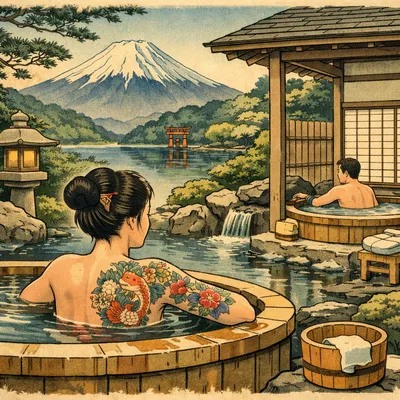
You’ve finally decided you want an onsen in Japan. Then you open booking sites and suddenly it’s… chaos. “Private onsen.” “Open-air bath.” “Family bath.” “Room bath.” Different prices. Different rules. And you’re sitting there thinking, “Am I about to spend a lot of money on the wrong thing?”
What this guide covers: This article is a value check: whether paying more for a private onsen room is worth it. If you already decided to book one and need selection tips, read How to Choose a Ryokan with a Private Onsen.
Let’s be honest. This is where many first-time visitors get stuck. Especially if you don’t speak Japanese, you’re worried about etiquette, or you’re traveling as a couple and don’t want to split up for gender-separated public baths.
This guide is here to calm that down. You’ll learn the difference between a room with a private onsen bath and a reservable private bath (family bath), what they usually cost (as a rough guide), and how to decide what’s actually worth it for you.
Quick note: Bath rules, tattoo policies, reservation systems, shuttle services, and prices can change and vary by property. Use this guide as a stress-free starting point, and always check the latest official information (or confirm directly with the ryokan or hotel) before you book.
Quick Answer: Are Private Onsen Rooms in Japan Worth It?

Often, yes—if privacy is your main stress point and you can afford the upgrade.
A room with a private onsen bath is the easiest, most relaxing option because you can bathe anytime without booking a slot.
A reservable private bath (family bath) is usually the best value if you want privacy but don’t need unlimited access.
If you mainly want the “big onsen experience,” a good public bath (with a little prep) can be more satisfying and cheaper.
Who This Guide Is For
This is for you if:
- You’re visiting Japan for the first time and onsen feels exciting… and slightly terrifying.
- You don’t speak Japanese and you want fewer “wait, what did I book?” moments.
- You want to bathe with your partner or family (without separating by gender).
- You have tattoos and you’re worried about being turned away.
- You’re trying to avoid wasting money on upgrades that don’t match your travel style.
- You’re tired just thinking about crowded bath areas and complicated rules.
First, What Does “Private Onsen” Mean in Japan?
Here’s the thing. In Japan, “private onsen” is not one single thing. It’s usually one of these two:
1) Reservable private bath (often called a “family bath”)
This is a bath in the shared area of the ryokan or hotel, but you reserve it for a set time just for your group.
Many places run it in 45–60 minute slots, and you may need to book a time at check-in (or sometimes in advance).
Stress-Free Tip: If you want privacy but your budget is tight, a reservable private bath is often the sweet spot.
2) A room with a private onsen bath (in-room bath, sometimes open-air)
This means your guest room has its own bath. Depending on the property, it may be an open-air bath on a balcony/terrace or an indoor bath.
The big win is freedom: you can usually bathe whenever you want during your stay, without competing for time slots.
Stress-Free Tip: If you’re anxious about etiquette, nudity rules, or crowds, an in-room bath is the “easy mode” option.
Private Bath vs Private Onsen Room: Which One Feels More Relaxing?
Many first-time visitors think, “Private is private, right?” Not exactly.
If you’re imagining this scenario…
You arrive after a long travel day. Your phone battery is low. You’re hungry. You just want to soak and reset.
In that moment, a room with a private bath is hard to beat. No hallway. No timing. No “please come back later.”
But if your travel style is more “out all day”
If you’re sightseeing from morning to night and you mainly want one relaxing soak, a reservable private bath can feel just as satisfying.
You get the private experience without paying for the most expensive room category.
My honest take: People rarely regret booking private time. They sometimes regret paying for unlimited access they didn’t actually use.
Pros: Why Private Onsen Options Are So Popular (Especially for First-Timers)
1) Privacy (no audience, no stress)
This is the big one. You don’t have to worry about other guests seeing you naked. You don’t have to worry about “Am I doing this right?” in public.
For many nervous travelers, privacy isn’t a luxury. It’s the difference between enjoying onsen and skipping it.
Stress-Free Tip: If you’re the kind of person who hates changing clothes in a gym locker room, go private. You’ll actually relax.
2) Couples and families can bathe together
Most public onsen are separated by gender. That surprises a lot of visitors.
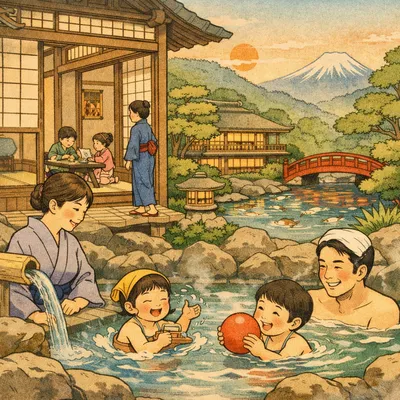
Private baths and in-room baths are usually the easiest way for couples or families to enjoy onsen together.
This can also be a big help with small kids, because you can keep an eye on them the whole time.
Stress-Free Tip: If “we want to do this together” is your main goal, start your search with reservable private baths or in-room baths, not public baths.
3) Tattoos can be easier (but don’t assume)
Some properties clearly say tattoos are fine if you use a private bath. Others still have restrictions.
So yes, private options are often more tattoo-friendly in practice—but rules vary a lot.
Tiny warning: Do not assume “private bath = tattoo OK.” Confirm directly with the ryokan or hotel before booking if tattoos matter for your trip.
4) You can enjoy onsen at your own pace
With an in-room bath, you can soak early in the morning, late at night, or twice before breakfast because… why not?
With a reservable bath, you can at least choose a time that fits your dinner schedule and energy level.
Stress-Free Tip: If you get overwhelmed by crowds, bathing at off-peak times (early morning is often quieter) can make the whole experience feel gentle.
5) The “special” feeling is real
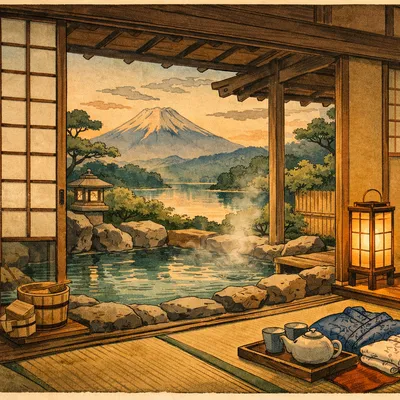
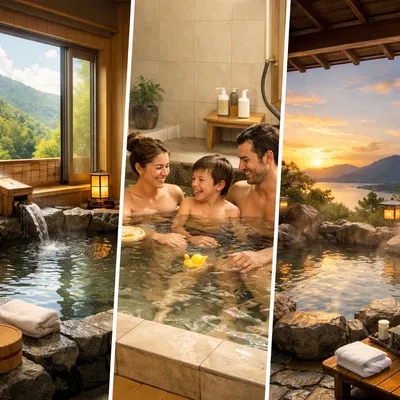
A private open-air bath with a view (mountains, river, ocean, snow) is one of those “wow, I’m really in Japan” moments.
It’s not necessary for a good trip. But it can be a meaningful splurge for anniversaries, honeymoons, or a once-in-a-lifetime visit.
Stress-Free Tip: If you’re going to splurge, splurge on the part of the trip that reduces stress and adds comfort—not just the part that looks fancy in photos.
Cons: The Not-So-Fun Parts (That Booking Pages Don’t Always Say Clearly)
1) Private onsen rooms can be expensive
In many cases, a room with an in-room onsen bath costs several thousand yen to 10,000+ yen more per night than a standard room at the same property.
In popular areas like Hakone, some sources suggest private-bath rooms can start around 20,000 yen per person per night or more, depending on the property and season.
Prices vary widely, so treat this as a rough guide and check current rates before you commit.
Stress-Free Tip: If the upgrade cost makes you tense, it’s not the relaxing choice. Consider a reservable private bath instead.
2) Reservable private baths usually have time limits
Many properties run private baths in 45–60 minute slots.
That’s usually enough time, but it can feel rushed if you imagined a long spa session.
Also, prime times (often before/after dinner) can book out fast.
Stress-Free Tip: If you choose a reservable bath, ask about booking as soon as you check in. Waiting until after dinner is how people miss their preferred time.
3) You may need to plan more than you want to
I know, it sounds confusing. You’re trying to book “relaxation,” but you’re also managing reservation rules.
Some places require advance booking for private baths. Others are first-come-first-served at check-in.
Stress-Free Tip: Before you book, look for clear wording like “reservation required,” “first-come-first-served,” and “time limit per session.” If it’s not clear, message the property.
4) The bath may be smaller than you expect
Private baths (and many in-room baths) are often smaller than the dramatic public baths you see in photos.
If you’re dreaming of huge pools, multiple bath types, and a “bath theme park” vibe, a private option might feel a little… compact.
Stress-Free Tip: If your goal is variety and scale, consider a ryokan with a great public bath and use privacy solutions (like bathing at quiet times) instead of paying for a private room.
5) Total ryokan cost can surprise you
Ryokan pricing is often per person, and many plans include dinner and breakfast.
So an upgrade doesn’t just add a little. It can add a lot, especially for families.
Also, many areas charge a small hot spring tax (often around 150 yen per person per night, depending on the region).
Stress-Free Tip: When comparing prices, make sure you’re comparing the same meal plan (room-only vs two meals). That’s where people get tricked.
Price Guide (Realistic Ranges, Not Fantasy Numbers)
Let’s keep this calm and practical. Prices change by season, day of week, and location, so use these as rough reference points.
Reservable private bath (family bath): typical costs
- Often around 2,000–4,000 yen per session (45–60 minutes), according to multiple travel and ryokan sources.
- Some properties offer it free for guests or for a smaller fee (for example, around 1,000 yen), depending on the property.
- Some areas also offer day-use plans with a private bath, sometimes around up to 5,000 yen for two people, depending on the facility and plan.
Stress-Free Tip: If you’re trying onsen for the first time, paying for one private session can be a smart “test run” before you splurge on an in-room bath.
Room with a private onsen bath: typical costs
Many guides describe a common mid-range pattern like this:
- Mid-range: often in the ballpark of 20,000–40,000 yen per night for two people (frequently with two meals), depending on area and season.
- Higher-end: can be significantly more, especially for larger suites, famous onsen towns, peak foliage/sakura periods, and weekend stays.
Because the research you provided is incomplete for this section (it cuts off mid-line), it’s safest to treat these as general market ranges and check the specific property’s current pricing before booking.
Stress-Free Tip: If you’re flexible, try weekdays and shoulder seasons. Private-bath rooms can jump in price on weekends and holidays.
So… Which One Should You Choose?
Let’s make this decision simple. Pick based on your main stress trigger.
Choose a room with a private onsen bath if…
- You want maximum privacy and minimum social stress.
- You want to bathe multiple times without planning.
- You’re worried about tattoos and want the simplest setup (still confirm rules).
- You’re traveling with a partner and want a “special stay” feeling.
- You’ll be happiest knowing the bath is always available, even if you’re tired.
Stress-Free Tip: If you’re doing only one ryokan night on your whole trip, that’s often the best time to splurge.
Choose a reservable private bath (family bath) if…
- You want privacy, but you don’t need unlimited bathing.
- You’d rather spend money on food, shopping, or a nicer location.
- You’re okay with a time slot and a bit of scheduling.
- You want to try onsen together as a couple or family without paying for the top room tier.
Stress-Free Tip: If your schedule is packed, a single reserved session can be the perfect “reset button” without taking over your whole day.
Choose a public onsen (with prep) if…
- You care most about big baths, variety, and atmosphere.
- You’re okay bathing separately by gender.
- You don’t have tattoos (or the facility clearly allows them).
- You’re comfortable learning basic etiquette.
Stress-Free Tip: Many first-timers find public onsen easier than expected once they know the basic flow: wash first, soak quietly, no swimsuits, no photos.
Accommodation Terms Explained (So Booking Pages Make Sense)
Ryokan
A traditional Japanese inn. Often includes dinner and breakfast. Rooms may be tatami-style, and you may sleep on futon bedding (or sometimes beds, depending on the room).
Onsen
A hot spring bath using natural hot spring water. Some properties have onsen water in public baths only, and some have it in private baths or in-room baths too.
Private onsen
A marketing term that can mean either a reservable private bath or an in-room bath. Always confirm which one it is.
Family bath / reserved bath
A private bath you reserve for your group for a limited time. Despite the name, it’s often used by couples too.
Important: “Family bath” does not always mean the property is designed for families with children.
Open-air bath
A bath outdoors (or semi-outdoors). It can be public, private, or in-room. The word “open-air” alone does not tell you if it’s private.
Room with private open-air bath
A guest room with its own open-air bath attached. Usually the most convenient and private option, and often priced higher.
Dinner included / two meals included
Many ryokan plans include dinner and breakfast. This affects price a lot, and it affects your schedule too (dinner time, last check-in time).
Shuttle service
Some ryokan offer a shuttle from the nearest station. Times may be limited, and reservations may be required.
Yukata
A casual cotton robe often provided at ryokan. You can usually wear it around the property (and sometimes to nearby areas), depending on the location.
Common Mistakes (Totally Understandable, But Try to Avoid These)
- Assuming “private bath” means it’s in your room. Many “private” options are reservable shared-area baths.
- Not checking the time limit. A 45-minute slot is normal, but you want to know before you book.
- Booking a remote ryokan for your first night in Japan. After a long flight, complicated transfers plus a strict check-in time can be rough.
- Ignoring meal rules. Some dinner plans have a latest start time, and missing it can mean missing dinner.
- Assuming tattoo rules are the same everywhere. They aren’t. Even within the same onsen town, rules vary.
- Choosing “near the station” without checking what that station is like. A huge station can be confusing with luggage, even if the hotel is technically close.
Stress-Free Tip: When you’re tired, simple beats perfect. Choose the option that reduces moving parts.
Recommended Options (Practical Ways to Get a Private Soak Without Overpaying)
Option 1: Reserve a private bath session (instead of upgrading your room)
Best for: Couples and families who want privacy but don’t need unlimited access.
Not ideal for: Travelers who hate schedules or want multiple long soaks.
My honest take: This is often the best value choice. You get privacy, you control the stress level, and you keep your budget for other parts of the trip.
Option 2: Book one night with an in-room onsen bath as a “trip highlight”
Best for: Honeymooners, anniversary trips, or anyone who wants one truly relaxing night.
Not ideal for: Travelers who will barely be in the room (or who feel anxious spending on upgrades).
My honest take: One night can be enough. You don’t have to turn your whole trip into luxury to enjoy a private-bath experience.
Option 3: Try a day-use private bath plan (if your schedule is tight)
Best for: Travelers staying in cities who want an onsen experience without a full ryokan overnight.
Not ideal for: Travelers who want the full ryokan experience (dinner, yukata, slow mornings).
My honest take: This can be a smart compromise. Just confirm what’s included, time limits, and whether reservations are needed.
Booking Checklist (Use This Before You Pay)
- Is the bath in your room, or is it a reservable private bath in a shared area?
- Is it open-air or indoor?
- Is it real onsen water (hot spring), or a regular heated bath? (This varies by property.)
- For reservable baths: is it free, paid, first-come-first-served, or bookable in advance?
- What is the time limit per session (often 45–60 minutes)?
- Can your group bathe together (couple/family/mixed-gender)? Confirm if you’re unsure.
- Are tattoos allowed for your situation? If it matters, confirm directly with the property.
- Are children allowed, and are there extra fees for meals or bedding? Policies vary.
- Is dinner included? If yes, what is the latest dinner start time?
- What is the latest check-in time?
- Is there a shuttle from the station, and what time does it run?
- Will large luggage be easy (elevators, stairs, long walks, steep roads)?
Stress-Free Checklist (Do These and Your Onsen Stay Gets Easier)
- Decide your priority: unlimited private bathing, or one private session.
- Pick an onsen town that fits your energy level (simple access beats “famous” when you’re tired).
- Save your accommodation name and address in your phone before travel.
- Arrive with enough battery (or a small power bank) so you can handle maps and check-in calmly.
- If you want a reservable private bath, ask about booking as soon as you check in.
- Bring a small amount of cash for possible bath fees or local taxes (many places accept cards, but not all).
- Read the room plan carefully: room-only vs two meals makes a huge difference.
What to Prepare Next
You don’t need to plan everything at once. Start with the parts that remove the biggest stress first.
- Decide your internet plan (so you can navigate stations and message properties if needed).
- Plan luggage strategy for onsen towns (lighter is nicer, and luggage delivery can help).
- Make a simple arrival-day plan that avoids complicated transfers if you’re landing late.
- Write down your “must-have” bath needs (private, tattoo-friendly, kids allowed, meal plan).
FAQ
Is a room with a private onsen bath always “real” hot spring water?
Not always. Some in-room baths use hot spring water, and some are regular heated baths. Check the room description carefully and confirm with the property if it’s important to you.
What’s the difference between a “family bath” and a “private onsen room”?
A family bath is usually a reservable private bath in a shared area with a time limit. A private onsen room means the bath is attached to your room and is typically available anytime during your stay.
Are private baths automatically tattoo-friendly?
Often they are easier, but rules vary a lot. If tattoos matter for your trip, confirm directly with the ryokan or hotel before booking.
Do I need to speak Japanese to book a private bath?
Usually no. Many places handle reservations at check-in with simple time-slot systems, and some accept messages in English. If anything is unclear, a short booking-message question can help.
If I’m nervous about onsen etiquette, should I avoid public baths completely?
Not necessarily. Many first-time visitors enjoy public onsen once they know the basics. But if etiquette anxiety would stop you from enjoying it, private is a perfectly valid choice.
Final Thoughts
Private onsen rooms in Japan can be absolutely worth it. Not because you “should” do it, but because they remove a lot of the common first-timer stress: crowds, rules, timing, and self-consciousness.
At the same time, you don’t have to spend big to get a private soak. A reservable private bath can give you the calm, private experience at a much lower cost.
If you remember one thing, remember this: choose the option that matches your comfort level and energy. You don’t need to be perfect. You just need to be prepared. And once that’s handled, the onsen part can finally be what it’s supposed to be—quiet, warm, and wonderfully simple.