You finally made it to Japan. You are tired. Your suitcase feels heavier than it did at the airport (how?!). And now you are standing in front of an onsen entrance, staring at a sign you cannot fully read… and wondering if your tattoo is about to become a whole situation.
Let’s be honest. This is where many first-time visitors get stuck. You came for the relaxing hot spring dream. But you do not want to be refused at the door, or feel like everyone is staring, or have to explain your life story in simple English while your phone battery is at 7%.
This guide is here to make it easy. You will learn why tattoo rules exist, what “tattoo-friendly” really means in Japan, and why private baths are often the lowest-stress option for tattooed travelers.
Quick note: Bath rules and tattoo policies can change, and they vary a lot by facility. Use this as a calm starting point, and always check the latest official information before you go. If you are booking a ryokan, confirm tattoo rules directly with the property before booking.
Quick Answer

Many onsen and sento in Japan still restrict tattoos, so “just showing up” can be risky.
Private baths (like a reservable family bath or a room with a private open-air bath) are often the easiest option because you can bathe without sharing with strangers.
That means less rule-checking stress, less chance of being turned away, and less worry about other guests complaining.
If you remember one thing, remember this: private bath = fewer awkward moments.
Who This Guide Is For
This guide is for you if:
- You are visiting Japan for the first time and you want an onsen experience without drama
- You have tattoos (small, medium, or large) and you do not want to gamble on the rules
- You do not speak Japanese and you want clear, practical steps
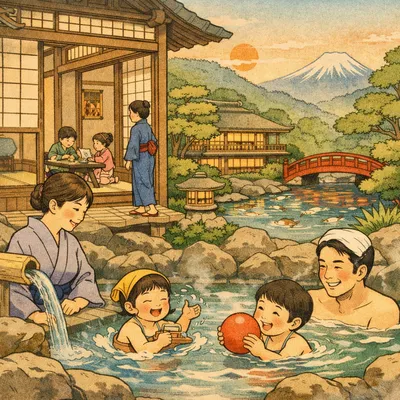
- You are traveling as a couple, with friends, or as a family and you prefer bathing together
- You are curious about ryokan, private baths, and “what booking pages actually mean”
Why Tattoos Can Be a Problem at Onsen (It’s Not About You)
This part is surprisingly important for your stress level.
In many places, tattoos have historically been associated with organized crime in Japan. Because of that, some facilities still use blanket “no tattoo” rules. It is often less about judging you personally, and more about old social expectations and avoiding complaints.
Research-based surveys also suggest the split is still real: around 56% of onsen and sento facilities reportedly refuse tattooed guests, while about 31% reportedly allow them (with the rest being conditional or unclear). So yes… it can feel random.
Stress-Free Tip: When you see a tattoo rule in Japan, try not to take it personally. Treat it like a dress code. Your job is not to “win an argument.” Your job is to find the option that lets you relax.
Why Private Baths Are Often the Easiest Option (And Honestly, the Calmest)
Here’s the thing. “Tattoo-friendly” can mean several different things:
- Fully tattoo OK in the public bath
- OK only if you cover the tattoo with a sticker or tape
- Not OK in the public bath, but OK in a private bath
That last one is why private baths are so popular with tattooed travelers. Many facilities that restrict tattoos in shared baths may still allow them in a private, reservable bath, because you are not sharing the space with other guests.
The 3 stress problems private baths solve
1) Less rule confusion.
Instead of decoding conditions like “two stickers only” or “small tattoos only,” you can focus on one question: “Is the private bath okay with tattoos?”
2) Lower risk of being refused.
Even when policies are strict for public baths, private baths are often treated differently (though it varies, so confirm).
3) No audience.
You do not have to worry about stares, complaints, or accidentally making someone uncomfortable. You can just… soak.
Stress-Free Tip: If you are only doing one onsen experience on your trip, consider making it a private-bath ryokan night. It costs more than a basic sento visit, but it can save a lot of emotional energy.
Your Main Options If You Have Tattoos
Option 1: Book a private bath (best “set it and forget it” plan)
This can look like:
- A reservable private bath at a ryokan or onsen hotel
- A family bath that you book for a time slot
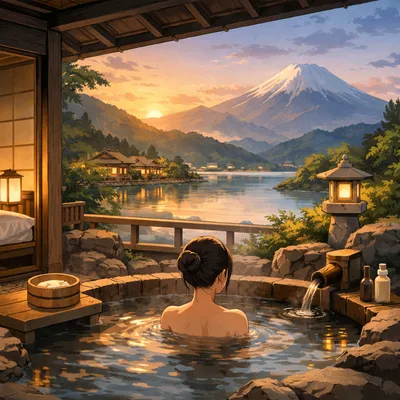
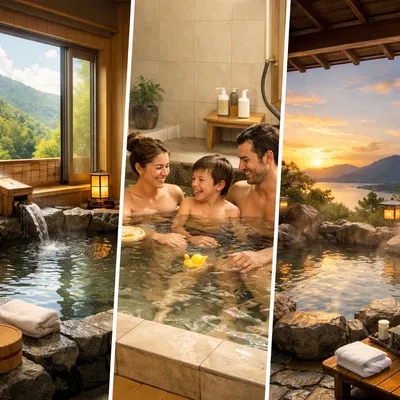
- A room with a private open-air bath (more expensive, very convenient)
You will usually bathe alone or with your own group (couple, family, friends). Mixed-gender bathing is typically possible in private baths, because it is your private space.
Tiny warning: “Private bath” does not always mean “included.” Some places charge extra, some require reservations, and some are first-come-first-served. Always read the plan details carefully.
Stress-Free Tip: If you arrive after a long travel day, choose a property where you can reserve the private bath time in advance (or at least immediately at check-in). When you are tired, uncertainty feels 10x bigger.
Option 2: Find a tattoo-friendly public onsen or sento (best for budget + flexibility)
Yes, tattoo-friendly public baths do exist, and they are slowly increasing. There are also English-friendly listing sites that collect tattoo-friendly options (for example, sites like Tattoo Japan, Onsen Sensei, and other tattoo-friendly onsen lists).
Just keep your expectations realistic: lists can be outdated, and policies can change with management, local rules, or even time of day. So treat lists as a starting point, not a guarantee.
Stress-Free Tip: If you are relying on a public bath, screenshot the facility’s latest official policy (or bring the confirmation email/message). It can help if staff are unsure.
Option 3: Cover your tattoo with stickers or tape (best for small tattoos)
Some facilities allow tattoos if they are covered. Conditions vary a lot. You may see rules like “up to two cover stickers” or “palm-sized tattoos only.” Some places sell the stickers on-site.
This can be a good solution for small tattoos. For larger tattoos, it can turn into an arts-and-crafts project you did not ask for.
Tiny warning: Do not assume “I can cover it” means “it’s fine.” Some places are still a hard no. Check first.
Stress-Free Tip: Pack a few waterproof tattoo cover patches in your day bag if you want flexibility. But still treat it as “maybe,” not “guaranteed.”
Option 4: Go at quieter times (best as a backup plan, not your main plan)
Some travel resources suggest bathing at less busy hours, when fewer families are around. This can reduce awkwardness, but it does not change the official rule.
So think of this as a comfort tip, not a permission slip.
Stress-Free Tip: If you are allowed in, quieter times can feel more relaxing. If you are not allowed in, quieter times will not help. Confirm first, then optimize timing.
How to Choose the Right Private Bath Style (Without Booking the Wrong Thing)
Private baths come in a few common formats. Booking pages do not always explain the difference clearly, which is… honestly impressive in the worst way.
Room with a private open-air bath (most convenient, often most expensive)
You have your own bath attached to your room. Often it is open-air. Sometimes it is indoor. Sometimes it uses real hot spring water, sometimes it is heated tap water (this varies).
Good for: couples, honeymooners, anxious first-timers, people who want zero scheduling stress.
Not ideal for: tight budgets, travelers who will barely be in the room.
Stress-Free Tip: If you are nervous about etiquette, this is the easiest way to enjoy onsen vibes while learning at your own pace.
Reservable private bath (kashikiri-buro) (best balance for many travelers)
This is a private bath you book for a time slot, often 30–60 minutes. You may reserve at check-in, online, or sometimes first-come-first-served.
Good for: travelers who want privacy but do not need a private bath in the room.
Not ideal for: people who hate schedules, or travelers arriving late who might miss reservation slots.
Stress-Free Tip: If your train arrives at 6:30 pm and dinner is at 7:00 pm, ask yourself: “When will we actually use the bath?” Timing matters at ryokan.
Private bath labeled “family bath” (often private, not necessarily kid-focused)
This confuses a lot of first-time visitors, so you are not the only one.
In Japan, a “family bath” often means a private bath for a small group (couple, family, friends). It does not automatically mean the property is designed for children.
Stress-Free Tip: If you are traveling with kids, also check child policies, meal options, and whether the room setup works for your family. The bath name alone does not tell you that.
Practical Onsen Etiquette (So You Don’t Feel Nervous)
Even with a private bath, you may still use shared changing areas, hallways, or showers (depending on the facility). The basics are simple.
The “don’t panic” checklist
- Wash your body before entering the bath (this is the big one)
- Do not put towels in the bath water (keep it on your head or on the side)
- Tie up long hair so it does not touch the water
- Rinse lightly after soaking if you want, but soap is usually done before, not after
- Speak quietly (onsen is not a pool party, sorry)
Stress-Free Tip: If you are unsure, watch what locals do for 10 seconds. Copy the calm person. There is always a calm person.
Accommodation Terms Explained (So Booking Pages Make Sense)
Ryokan
A traditional-style Japanese inn. Often includes dinner and breakfast, set check-in times, and a more “hosted” feeling than a standard hotel.
Onsen
A bath using natural hot spring water. Not every big bath is onsen, even if it looks like one.
Sento
A public bathhouse, usually using heated tap water (not hot spring water). Great cultural experience, often inexpensive, but tattoo rules vary widely.
Private onsen
This phrase can be vague. It might mean a bath attached to your room, or a reservable bath shared by guests in time slots. Always check the details.
Family bath / Kashikiri-buro / Reserved bath
Usually a private bath you can use for a set time. Reservation rules and fees vary by property.
Rotenburo (open-air bath)
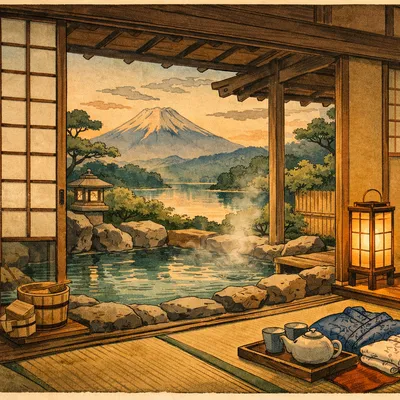
An outdoor bath. It can be public or private. “Open-air” sounds romantic (and it often is), but confirm whether it is shared or attached to your room.
Dinner included / Room-only plan
Ryokan often sell plans. “Dinner included” can be a highlight, but it also locks you into meal times. “Room-only” gives flexibility, but you might need to find food nearby.
Shuttle service
Some ryokan offer a shuttle from the nearest station. Times can be limited. Confirm the schedule before booking, especially if you arrive late.
Common Mistakes (Totally Understandable, But Let’s Avoid Them)
Assuming tattoo rules are the same everywhere
Nope. Policies vary by facility, by bath type, and sometimes by what “covering” means.
Stress-Free Tip: When in doubt, message the property and ask one clear question: “Are tattoos allowed in the private bath?”
Booking a “private bath” plan without checking what is actually private
Some travelers assume “private bath” means “in the room.” Often it means reservable time slots.
Stress-Free Tip: Look for wording that clearly says “in-room bath” or “attached to the room” if that is what you want.
Choosing a remote onsen town for your first night in Japan
It looks peaceful online. Then you land, you are jet-lagged, and you realize you still have two trains and a bus to catch.
Stress-Free Tip: Consider doing your onsen/ryokan night after you have had one “easy” night in a city hotel, unless you are confident with transfers.
Forgetting the ryokan schedule (check-in, dinner time, bath reservations)
Ryokan can be relaxing, but they can also be structured.
Stress-Free Tip: If you want the private bath, plan your arrival time around it. Late check-in can reduce your options.
Recommended Options (Choose What Fits Your Trip)
Room with a private open-air bath
Best for: tattooed travelers who want maximum privacy, couples, nervous first-timers, special-occasion trips.
Not ideal for: budget-focused travelers, people who plan to be out all day and just sleep.
My honest take: This is the “least mental effort” option. If your goal is to relax and not think about rules at all, it can be worth the higher price.
Ryokan with reservable private baths (kashikiri-buro)
Best for: travelers who want privacy without paying for an in-room bath.
Not ideal for: travelers arriving late, or anyone who hates time slots.
My honest take: Often the best value-for-stress trade-off. Just confirm how reservations work, and whether tattoos are allowed in that private bath.
Tattoo cover stickers (as a flexible backup)
Best for: small tattoos, travelers mixing public baths and private baths, day-trip onsen plans.
Not ideal for: large tattoos, sensitive skin, or anyone relying on this as their only plan.
My honest take: Useful to carry, but do not build your whole onsen plan around stickers. Policies can be strict.
Luggage delivery (takkyubin) for onsen towns
Best for: travelers going to ryokan areas with stairs, hills, or bus transfers; families; anyone with big suitcases.
Not ideal for: one-night stays where you need your suitcase immediately (delivery timing matters).
My honest take: If you are heading to an onsen town, luggage delivery can reduce stress more than almost anything else. Confirm delivery cut-off times and arrival timing with your hotel.
Booking Checklist (Private Bath + Tattoo Edition)
- Is the bath private, shared, reservable, or attached to the room?
- Is the private bath open-air or indoor?
- Does the bath use real hot spring water or a regular heated bath? (Varies by property.)
- Are tattoos allowed in the private bath even if the public bath is not?
- Is the private bath free or paid extra?
- How do reservations work: in advance, at check-in, or first-come-first-served?
- Is there a time limit per session?
- What is the latest check-in time, especially if dinner is included?
- If the ryokan is not walkable, is there a shuttle from the station? What time does it run?
- If you have large luggage, will access be easy (elevators, slopes, long walks), or should you use luggage delivery?
Stress-Free Tip: If you only send one message to a ryokan, make it this: “We have tattoos. Are tattoos allowed in your private bath? And how do we reserve it?” Simple and effective.
Stress-Free Checklist (Do This Before You Go)
- Pick your onsen strategy: private bath ryokan, tattoo-friendly public bath, or cover-sticker backup
- Save screenshots of the facility’s rules (or your email confirmation) on your phone
- Pack a small quick-dry towel and a plastic bag for wet items (helpful for day-trip baths)
- Bring a few tattoo cover patches if you want flexibility (but do not rely on them everywhere)
- Plan your arrival time if you need to reserve a private bath slot
- Consider luggage delivery if you are heading to an onsen town with transfers
- Keep a little cash available (some smaller bathhouses and rural areas may still be cash-focused)
What to Prepare Next
You do not need to plan everything at once. Start with the parts that remove the biggest stress first.
- Decide where your “easy first night” will be (especially if you land late)
- Plan how you will handle luggage on transfer days (carry vs delivery)
- Save your accommodation name and address in English in your notes app
- Make a simple bath plan: one private bath experience is enough to feel satisfied
FAQ
Are tattoos illegal in Japanese onsen?
No. It is usually not a legal issue. It is typically a facility policy based on local customs and customer expectations. Rules vary, so check the latest official information before you go.
If a place says “no tattoos,” can I still use the private bath?
Sometimes yes, sometimes no. Many facilities reportedly allow tattoos in private baths even if public baths are restricted, but you should confirm directly with the ryokan or hotel before booking.
What if I do not speak Japanese—how do I ask about tattoos?
Many places can handle simple English messages. Keep it short: ask whether tattoos are allowed in the private bath and how reservations work. If you are booking online, sending one message before paying can save a lot of stress.
Is a “family bath” only for families with children?
Usually no. In Japan, “family bath” often means a private bath for a small group (couple, family, friends). It does not automatically mean the property is child-focused.
Do I need to cover my tattoo in a private bath?
Often no, because you are not sharing the bath with other guests. But rules vary, so confirm with the facility—especially if the private bath is inside a shared bathing area.
Final Thoughts
Want the calm truth? Japan can be wonderfully welcoming… and also very rule-based in specific places like onsen.
If you have tattoos, you do not need to give up on hot springs. You just need a plan that matches how Japan actually works right now.
For many first-time visitors, private baths are the easiest option because they remove the biggest stress triggers: confusion, refusal risk, and feeling watched.
You do not need perfect preparation. You just need a couple of smart checks before you book. Then you can do what you came to do: soak, breathe, and enjoy Japan, nice and slow.