Ryokan dinner is one of the most memorable parts of staying at a traditional Japanese inn—and also one of the most confusing for first-time visitors. The good news: you don’t need to “know the rules” to enjoy it. If you understand the basic flow (when it starts, where it’s served, what’s included, and how to communicate preferences), the whole evening becomes calm and fun.
Quick Answer: What is a ryokan dinner?
In many ryokan, dinner is a multi-course seasonal meal served at a set time, often included in your plan. Dishes usually arrive one by one, and staff guide the pace. Drinks and some add-ons are typically extra.
Related guide: Want a simple walkthrough of the experience? What Happens at a Ryokan Dinner? A Simple, First-Timer-Friendly Walkthrough.
What Ryokan Dinner Is Really Like for First-Time Visitors
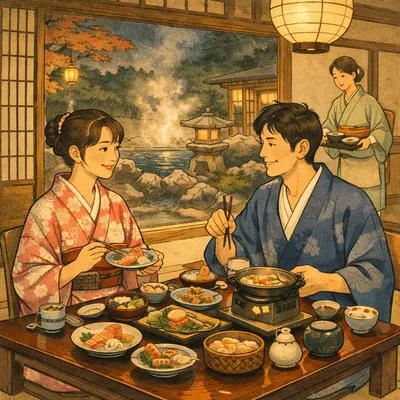
Think of ryokan dinner as a calm, structured evening rather than “going out to eat.” You’ll usually:
- Check in and confirm your dinner time and location
- Relax (often with a bath before dinner)
- Sit down at your assigned place (in your room or a dining hall)
- Eat a sequence of small-to-medium dishes that highlight local and seasonal ingredients
It’s normal if you don’t recognize dishes. You’re not expected to identify everything or eat in a strict “perfect” way. If you’re polite and relaxed, you’re doing it right.
Is dinner included? Understanding meal plans before you book
Ryokan pricing depends heavily on whether meals are included. Common plan types include:
- Dinner + breakfast included: Often the classic “full ryokan experience.”
- Breakfast only: Dinner is on your own.
- Room only: No meals included.
Stress-free booking tip: Before you pay, confirm whether dinner is included, whether it’s a set time, and whether the meal is served in-room or in a dining area.
Related guide: If you’re comparing ryokan vs regular hotels, start here: Japan Hotel Guide for First-Time Visitors: What to Know Before Booking.
Dinner Timing: When it starts, how long it takes, and what happens if you’re late
Typical start times
Many ryokan offer dinner seatings in the early evening (often around 6:00–7:30 pm). Some places let you choose a time at check-in; others assign it.
How long dinner takes
Plan for about 60 to 120 minutes depending on the ryokan and the number of courses. The pace is usually unhurried.
If you’ll be late
If your train is delayed or your day runs long, contact the ryokan as soon as you can. Many kitchens prepare timed courses, and late arrivals can limit what they’re able to serve.
- Do: message or call with your updated arrival time
- Don’t: assume you can eat whenever you want like a hotel restaurant
What to do before dinner (so you’re not rushed)
- Confirm dinner time and location at check-in
- Ask about any last-minute dislikes or allergies (earlier is better)
- Take a bath before dinner if you want to (many guests do)
- Put valuables away and get comfortable
Related guide: If you’re new to Japan logistics, this helps reduce day-one stress: First Time in Japan? 15 Things to Know Before You Go (Stress-Free Tips).
Where you eat: In your room vs. in the dining hall
Ryokan dinners are commonly served either in your room or in a shared dining area. Neither is “better”—they’re just different.
| Option | What it feels like | Good for | Small watch-outs |
|---|---|---|---|
| In-room dinner | Private, quiet, very traditional | Couples, families, anyone who wants privacy | Staff may enter to serve/clear; table setup can reduce floor space temporarily |
| Dining hall | Restaurant-like, but still calm and structured | Solo travelers, people who prefer more space | May have fixed seating times; some venues are quieter than typical restaurants |
Can you wear a robe to dinner?
In many ryokan, it’s normal to wear the provided robe to dinner, especially for in-house dining. If you’re unsure, check the ryokan’s info sheet or ask at the front desk. If you prefer, neat casual clothes are usually fine too.
Related guide: For general “what’s polite” questions in Japan, this is a helpful overview: Japanese Etiquette for Tourists: What Foreign Visitors Should Know (Stress-Free Guide).
What the courses usually include (without getting too technical)
The exact menu varies by ryokan, region, and season. But first-timers often see a similar rhythm:
Common course types you may see
- Small starters: A few bite-sized items to begin
- Soup: Light and delicate
- Fresh seafood course: Often served chilled
- Simmered or steamed dish: Comforting and seasonal
- Grilled item: Fish or meat is common
- Hot pot or tabletop dish: Sometimes cooked at your table
- Rice set: Rice plus small sides often arrive toward the end
- Dessert or fruit: Usually simple and refreshing
How the menu changes by season and region
Many ryokan design their dinner around what’s best locally and seasonally. That’s why two ryokan dinners can feel completely different even if both are “multi-course.” If you have strong dislikes, it’s better to communicate them early rather than expecting a standard menu everywhere.
How to eat a multi-course ryokan dinner without feeling lost
When dishes arrive one by one
Staff usually brings each course at a comfortable pace. If you’re still eating, it’s okay to continue—there’s no need to rush. If you finish early, simply wait; the next dish will come.
What to do with all the little plates and lids
- Lidded bowls: Place the lid off to the side (inside facing up is a common, tidy choice)
- Many small dishes: Try a bite of each; you don’t need to “finish in order”
- Shared items: If something seems shared, ask or watch what others do in the dining hall
Chopsticks and sauces (simple, safe approach)
- Use the provided chopstick rest when you pause
- Dip lightly into sauces—small sauce dishes are often meant for a few bites at a time
- If you struggle with chopsticks, take your time; staff are used to international guests
Is conversation okay?
Yes. Some dining rooms are naturally quiet, and in-room meals can feel especially peaceful. Quiet doesn’t mean you’re doing something wrong—just match the tone of the space.
Drinks, extras, and what’s not included
What’s usually included
Most meal-included plans cover the set dinner courses. Tea and water may be available, but inclusions vary.
What often costs extra
- Alcohol (beer, wine, local drinks)
- Soft drinks
- Premium ingredients or upgrades (when offered)
- Additional à la carte items
How ordering works (and when you pay)
If you want a drink, you can usually ask the staff member serving you. Many ryokan add drink charges to your room bill, and you settle the total at checkout. Policies vary, so if you want to confirm, ask when you check in.
Related guide: If you’re unsure how payments work in Japan, this guide keeps it simple: How to Pay in Japan: Cash, Credit Cards, IC Cards, and Mobile Payments Explained (Without Stress).
Dietary restrictions: what can and cannot be changed
Ryokan dinners are often carefully planned, so last-minute changes can be hard. That said, many ryokan can handle some requests if you tell them early enough.
What’s often possible (with advance notice)
- Removing specific disliked ingredients
- Adjusting for certain allergies (depending on severity and kitchen setup)
- Serving less raw food (sometimes possible)
What can be difficult
- Strict vegan or complex dietary patterns at very traditional ryokan
- Severe allergies where cross-contact must be fully prevented
- Same-day changes after ingredients are already prepared
When to tell the ryokan
Tell them before you book if possible, or immediately after booking. If you wait until check-in, options may be limited.
Simple wording you can use (copy/paste)
- Allergy: “I have an allergy to [ingredient]. Can dinner be prepared without it? Please tell me if this is not possible.”
- No raw seafood: “If possible, I would prefer no raw seafood at dinner.”
- Vegetarian: “Do you offer a vegetarian dinner? If not, please let me know before my stay.”
Stress-free reality check: If your diet is strict, consider choosing a ryokan that clearly states it can accommodate you, or book a plan without dinner and eat at a restaurant where you can choose freely.
Sample first-night timeline (so you can picture the flow)
Every ryokan is a little different, but this is a common, low-stress rhythm:
- 3:00–5:00 pm: Check in, confirm dinner time/location, settle into your room
- Before dinner: Relax, explore the property, take a bath if you want
- 6:00–7:30 pm: Dinner begins (multi-course meal)
- After dinner: Another bath, tea/snacks, quiet time
- Later: Bedding is prepared (varies by ryokan)
Common mistakes first-timers make (and easy fixes)
Arriving too late and missing dinner
Fix: Plan your travel day so you arrive before the dinner cutoff time, and message the ryokan if delays happen.
Expecting a buffet or “order anything” restaurant
Fix: Assume it’s a set multi-course meal unless the plan clearly says otherwise.
Not confirming where dinner will be served
Fix: Ask at check-in: “Is dinner in my room or in the dining area?”
Worrying too much about etiquette
Fix: Follow the staff’s lead, be polite, and take your time. That’s enough.
Ryokan dinner checklist (save this)
- Confirm your meal plan includes dinner
- Check dinner start time and latest arrival time
- Confirm meal location (in-room vs dining hall)
- Tell the ryokan about allergies/preferences before your stay
- Assume drinks cost extra unless told otherwise
- Plan 1–2 hours for dinner
FAQ: Ryokan dinner questions first-time visitors ask
Do I have to finish everything?
No. Try what you can and eat comfortably. If there’s something you can’t eat, it’s okay to leave it.
Will there be English explanations of each dish?
Sometimes there’s an English menu or basic descriptions, but not always. Even without detailed explanations, you can enjoy the meal by trying small bites and noticing flavors and textures.
Is it okay to take photos?
Usually yes, especially in your room. In shared dining spaces, keep it quick and discreet and avoid photographing other guests.
Can children eat ryokan dinner?
Many ryokan offer a children’s meal or a simplified set. If you’re traveling with kids, ask about child meals when booking.
What if I don’t eat seafood?
Seafood is common, but not guaranteed everywhere. Contact the ryokan before booking and ask what alternatives are possible.
Related guide: Planning the rest of your stay style in Japan? This helps you choose areas confidently: How to Choose the Best Area to Stay in Japan Without Regret (First-Timer Friendly).