You’re walking around Tokyo or Kyoto, it’s your first day, you’re already a little tired… and suddenly you need a restroom. Or you’re holding an empty coffee cup and a snack wrapper and you’re thinking, “Okay… where are all the trash bins?” Then you spot a “no smoking” sign everywhere and wonder if smoking is basically impossible in Japan.
Don’t worry. You’re not the only one. This is where many first-time visitors get stuck, because Japan is safe and organized… but those “basic” things can be surprisingly hard to spot if you don’t know where to look.
In this guide, I’ll show you the simple mental map that makes it easier: restrooms are usually easy, trash bins are often not, and smoking is usually only in designated areas. Once you learn the “approved places” to search, you’ll feel much calmer, I promise.
Quick note: Local rules and facility policies can vary by city, station, and building, and they can change over time. Use this as a calm starting point, and follow signs on-site (and check the latest official information when something really matters).
Quick Answer

In Japan, the easiest places to find what you need are stations, airports, large shopping buildings, and tourist facilities.
Restrooms: Check stations first, then department stores/malls, then convenience stores and attractions.
Trash bins: Assume you may not find one on the street. Look inside convenience stores, stations, and big buildings—or carry your trash until your hotel.
Smoking areas: Smoke only in designated smoking areas (often in stations, airports, malls, service areas, and some restaurants/hotels). Many areas restrict street smoking.
Who This Guide Is For
This is for you if any of these sound familiar:
- You’re a first-time visitor to Japan and you worry about getting stuck in a “basic needs” situation.
- You don’t speak Japanese and you’re nervous about asking for help.
- You’re traveling with kids (restrooms become a mission).
- You’re carrying luggage and want the easiest, closest option.
- You smoke and you’re worried you’ll accidentally break rules.
- You hate the feeling of wandering around with low phone battery and no plan.
The Key Mindset: “Look in Designated Places”
Here’s the thing: Japan often keeps public spaces tidy by not putting bins and smoking spots everywhere.
Instead, many cities and facilities guide people toward specific, designated locations for trash disposal and smoking. Separation rules (sorting) also matter, so random bins on the street are less common.
That’s why your best strategy is not “walk until you spot one.” It’s “go to the place that almost always has one.”
Stress-Free Tip: When you’re tired, aim for a station or big commercial building. They’re like little “comfort hubs” for travelers—often restrooms, bins, and sometimes smoking areas all in one place.
How to Find Restrooms in Japan (Usually Easier Than You Fear)
Good news first: restrooms are generally easy to find in Japan compared to many countries, and they’re often very clean. Stations in particular are usually well-equipped, and many tourist areas have clear restroom signage.
Where to look first (in order)
- Train/subway stations: Often the most reliable option, especially in cities.
- Department stores and malls: Great when you want a calmer, more spacious restroom.
- Convenience stores: Sometimes available, but it depends on the store.
- Tourist attractions and museums: Usually have restrooms near entrances.
- Hotels: If you’re nearby, this is the most stress-free “known option.”
A very real first-timer situation: “I’m at a huge station and I can’t find it.”
I know, it sounds confusing. Stations can feel like mini-cities, especially right after a long flight when your brain is running on airplane snacks.
If you’re lost inside a station, your best move is to look for:
- Information counters (staff can point you the right way)
- Restroom icons on overhead signs
- “Toilet/Restroom” on station maps (many stations have them near gates)
Stress-Free Tip: If you’re carrying a suitcase, don’t try to “wing it” through crowds. Pause near a map board, find the restroom icon, then walk with purpose. Sounds dramatic? Maybe. But it helps.
Convenience store restrooms: helpful, but don’t assume
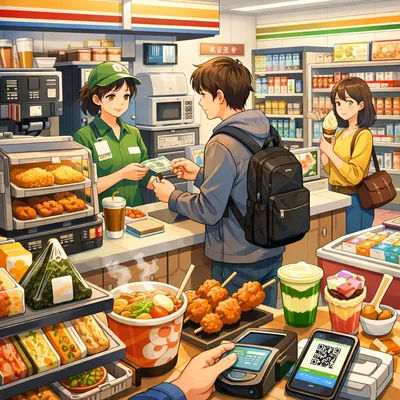
Convenience stores (often called konbini) can be a lifesaver. But not every store offers public restroom access, and some limit it depending on location and time.
If you do use one, it’s polite to be a good guest. Many travelers buy a small item (like a drink) if they can—especially in busy areas.
Stress-Free Tip: When you’re traveling with kids, plan “restroom stops” around big stations and malls. You’ll avoid the panic-sprint later.
How to Find Trash Bins in Japan (The One That Surprises Everyone)
Let’s be honest. The trash bin situation is the #1 “Wait, what?” moment for many visitors.
In many areas, public street bins are rare. This is still commonly mentioned as a traveler pain point, and the usual solution is simple: carry your small trash with you and dispose of it later at a proper spot (or back at your hotel).
Where you can often find trash bins
- Inside convenience stores: Often near the exit or by the counter area, usually with sorting sections.
- Stations: Near ticket gates, platforms, or vending machine areas (varies by station).
- Airports and bus terminals: Generally easier than city streets.
- Department stores and malls: Sometimes near food floors or rest areas.
- Tourist facilities: Often near entrances or food areas.
A tiny but important detail: bins may be “inside,” not outside
Many first-time visitors look around benches and sidewalks and think, “There’s nothing.” Then they walk into a building and suddenly there are bins.
So if you’re holding trash, try this: go inside the station building, mall, or convenience store instead of scanning the street.
Stress-Free Tip: Treat stations and airports like your “reset points.” If you have trash building up, plan to dump it at your next major transit stop.
Using convenience store trash bins politely
Convenience store bins are often designed for customers, and they usually require sorting. Some stores may also discourage people from dumping bags of outside trash.
Tiny warning: Don’t walk in and throw away a whole day’s worth of sightseeing trash. It can create problems for the store, and some locations may remove bins or restrict use.
What to do instead (easy and polite)
- Throw away small items from things you bought there.
- Carry other trash until a station or your hotel.
- Keep a small “trash pouch” in your bag for the day.
Stress-Free Tip: Pack a small zip pouch or plastic bag in your day bag. It turns “Where is the bin?!” into “No problem, later.”
How to Find Smoking Areas in Japan (And Avoid Awkward Mistakes)
If you smoke, Japan can feel strict at first. And yes—it often is. In many places, the expectation is simple: smoke only in designated smoking areas.
Many areas restrict or discourage smoking on the street or while walking. So the goal is not “find a quiet corner.” The goal is “find the official spot.”
Where designated smoking areas are commonly located
- Stations: Some have smoking rooms or designated areas (not all).
- Airports: Often have clearly marked smoking rooms.
- Large commercial buildings: Sometimes on certain floors or near entrances (varies).
- Highway service areas: Often have dedicated smoking spaces.
- Some restaurants and hotels: Policies vary widely, and indoor rules are stricter than before.
Indoor smoking rules got stricter
Japan’s indoor smoking regulations became stricter from April 2020, and many restaurants and public facilities now have tighter rules. In many cases, smoking is only allowed in dedicated smoking rooms, and some places are fully non-smoking.
If you’re choosing a restaurant or hotel and smoking matters to you, it’s smart to check the latest policy before you go (rules and setups can differ by venue).
Stress-Free Tip: If you know you’ll want a smoke break, plan it around a big station or mall. Random streets are often the worst place to start searching.
Portable ashtrays: the calm backup plan
A portable ashtray is one of those small items that can save you from stress. If you can’t find a smoking area quickly, you can still manage your cigarette waste properly and wait until you reach a designated spot.
Tiny warning: A portable ashtray is not a “permission slip” to smoke anywhere. It’s a cleanup tool for when you’re moving between designated areas.
Stress-Free Tip: If you smoke, carry a portable ashtray and a small sealed pouch. It’s simple, discreet, and avoids the “now what do I do with this?” moment.
What to Do When Your Phone Battery Is Low (Or You Have No Signal)
This is a classic: you’re trying to search for a restroom or smoking area, but your battery is at 6% and your map is spinning like it’s thinking about life.
When tech fails, go old-school and go obvious:
- Head to the nearest station (even a smaller one).
- Look for a department store or mall.
- Find a hotel lobby (staff can often point you to the nearest public option).
- Use an information counter when available.
Stress-Free Tip: Save your hotel location in your map app before you go out each day. Your hotel is your guaranteed “reset base” for restrooms and trash.
Using Apps and Map Search (Without Overthinking It)
Apps can really help—especially when you’re new to an area. Some services are designed to show nearby restrooms, trash bins, and smoking areas on a map (for example, apps like “Doko?” are often mentioned for this purpose).
But you don’t need a perfect app setup to survive Japan, okay? Even basic map searching can work well.
Simple searches that often work
- “restroom” or “toilet”
- “smoking area”
- “trash bin” (results vary; try stations or malls instead)
Stress-Free Tip: If map results feel unreliable for trash bins, switch strategies: search for a nearby station or department store instead. You’re more likely to find bins once you’re inside.
Common Mistakes (Totally Understandable, But Avoid These)
- Assuming street trash bins are common: They often aren’t. Carry a small bag and you’ll feel instantly less annoyed.
- Dumping lots of trash in a convenience store bin: These bins are usually for customers and often require sorting.
- Smoking “just for a second” outside a station: Many areas restrict street smoking, and signage is taken seriously.
- Wandering a massive station randomly: Stop, find a map board, then move with a plan. Your feet will thank you.
- Waiting until it’s urgent: Especially with kids—use restrooms when you see a good one.
Stress-Free Tip: The moment you think, “I might need a restroom soon,” use the next station or mall restroom. Future-you will be very grateful.
Recommended Options (Small Things That Make This Easier)
A small “day trash kit” (zip pouch + a few tissues)
Best for: Everyone who buys snacks, drinks, or convenience store food.
Not ideal for: People who hate carrying anything extra (but it’s tiny, I promise!).
My honest take: This is the simplest way to stay calm about bins. Japan is clean because people carry their trash until they find the right place. Joining that system makes your day smoother.
A portable ashtray (for smokers)
Best for: Smokers who don’t want to stress about finding a smoking area immediately.
Not ideal for: Non-smokers (obviously) or anyone who thinks it makes street smoking “okay.”
My honest take: It’s a practical backup. It won’t help you find a smoking area, but it helps you handle cigarette waste responsibly until you do.
A small power bank
Best for: Anyone relying on maps and translation apps in big cities and stations.
Not ideal for: Travelers who barely use their phone (rare these days!).
My honest take: A low battery turns small problems into big stress. A power bank is boring… and that’s exactly why it’s great.
Stress-Free Checklist
- Decide your “go-to” places: station first, then mall/department store, then convenience store.
- Carry a small zip pouch or bag for trash (especially wrappers and receipts).
- Plan restroom stops early if you’re traveling with kids.
- If you smoke, plan breaks around stations/malls and consider a portable ashtray.
- Look for bins inside buildings, not on the street.
- Bring a small power bank so you can use maps when you need them most.
- When unsure, follow local signs and use information counters.
What to Prepare Next
You don’t need to plan everything at once. Just set yourself up for the moments that usually cause stress.
- Make a simple “arrival day plan” (airport to hotel, plus one easy meal option).
- Decide how you’ll handle payments for small purchases (cash vs card, plus an IC card if useful).
- Save your hotel name and address in your phone for quick reference.
- Pack a tiny daily kit: tissues, hand sanitizer, a trash pouch, and a power bank.
FAQ
Are public restrooms free in Japan?
Many public restrooms in stations, parks, and large facilities are free. Some paid restrooms exist in certain locations, but they’re not the norm for everyday sightseeing.
Why are there so few trash bins in Japan?
In many places, trash disposal is handled through specific facilities and sorting systems, so street bins are less common. The practical approach is to carry small trash until you reach a station, big building, or your hotel.
Can I use convenience store trash bins even if I didn’t buy anything?
It depends on the store, but many bins are intended for customers and require sorting. If possible, use them for items you bought there, and avoid dumping large amounts of outside trash.
Is it okay to smoke while walking in Japan?
Often, no. Many areas restrict street smoking or strongly discourage it. It’s safest to smoke only in designated smoking areas and follow local signage.
What’s the easiest place to find all three: restroom, trash bin, and smoking area?
Large hubs like airports, major stations, and highway service areas are often the easiest “one-stop” places. Not every station has a smoking area, but these hubs are your best bet.
Final Thoughts
Japan can feel like a puzzle at first. Especially when you just want a restroom, a bin, or a quick smoke break and your brain is already overloaded.
But once you remember this simple rule—use designated places—everything gets easier. Stations and big buildings are your best friends. Carry a tiny trash pouch. Follow signs. And if you smoke, plan for designated areas.
You don’t need to be perfect. You just need to be prepared. And with this little mental map, you’ll feel much more in control out there.