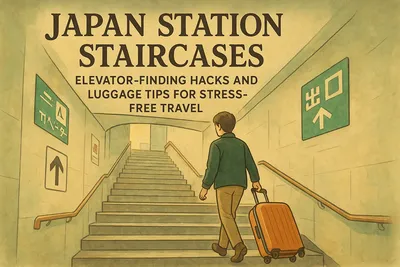
You know that moment when you arrive in Japan and everything is exciting… and also you’re dragging a suitcase the size of a small refrigerator through a busy station?
Don’t worry. You’re not the only one. This is where many first-time visitors get stuck. Not because Japan is “hard,” but because nobody explains the luggage options in a calm, practical way.
Here’s the thing: Japan is actually very friendly to travelers who don’t want to carry bags all day. You have two main tools: coin lockers (for short-term storage) and luggage delivery (for sending bags ahead). Once you understand when to use which, your trip gets noticeably easier.
Quick Answer

If you want to store a bag for a few hours, use coin lockers at stations, airports, and big shopping areas.
If you want to move a suitcase between cities (or airport to hotel) without carrying it, use luggage delivery (often called takkyubin or TA-Q-BIN).
Lockers are usually charged by size and by calendar day. Delivery is usually next-day, but longer routes can take 2–3 days, so timing matters.
Who This Guide Is For
This guide is for you if:
- You’re a first-time visitor to Japan and you’re worried about getting lost with luggage.
- You don’t speak Japanese and you want simple, step-by-step options.
- You’re traveling as a couple, family, or group and you want fewer “bag logistics” arguments.
- You want to avoid crowded trains and stations with big suitcases.
- You’re doing a multi-city trip and you’d love a more “hands-free” style.
Coin Lockers in Japan: What They Are (and Why They’re a Big Deal)
Coin lockers are short-term storage lockers. You’ll commonly see them at train stations (JR, subway, private railways), airports, and sometimes near major tourist areas or shopping centers.
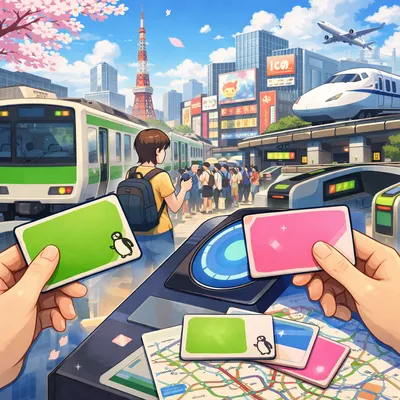
Let’s be honest: the name “coin locker” is a little outdated. Many lockers now accept IC cards like Suica or Pasmo, and some even use touch screens with English menus. It’s more like “cashless locker,” which is kind of funny, right?
Typical use case: You arrived too early for hotel check-in. Or you checked out but your flight is later. Or you want to visit a crowded area without hauling a suitcase. Lockers are perfect for that.
Stress-Free Tip: If you remember one thing, remember this: lockers are for hours, luggage delivery is for tomorrow.
Locker Sizes and Prices: What to Expect (Without Overthinking It)
Locker prices vary by station and area, so think of these as rough guidelines, not a promise. Many sources describe pricing by size, charged per calendar day.
Common locker sizes (approximate)
- Small: around 35 × 34 × 57 cm
- Medium: around 57 × 34 × 57 cm
- Large: around 117 × 34 × 57 cm
Typical price range per day (estimate)
- Small: about 400–500 yen
- Medium: about 500–700 yen
- Large: about 600–1000 yen
You may also see cheaper pricing in some locations (for example, 300/400/500 yen tiers are sometimes mentioned). It depends on the station, the company operating the lockers, and how busy the area is.
Stress-Free Tip: If your suitcase is “big international carry-on” size, it often fits medium. If it’s a large checked suitcase, you’ll likely need large. When in doubt, look for a locker with a suitcase icon or check the posted dimensions.
Important Timing Rule: Lockers Often Charge by Calendar Day
This part surprises a lot of travelers.
Many lockers charge by the calendar day (0:00–24:00). So if you store your bag at 10:00 and pick it up after midnight, you may pay for an extra day.
Also, locker areas in stations often follow station operating hours (commonly something like first train to last train, often around 6:00–24:00). Exact hours vary, so check the signs at your station.
Stress-Free Tip: If you’re storing luggage late in the evening, try to retrieve it before midnight to avoid an extra day charge (when that calendar-day rule applies).
How Long Can You Use a Coin Locker?
In many stations, lockers are typically allowed for up to about 3 days. After that, the locker operator may remove the luggage and keep it separately (with extra procedures and fees).
Airports sometimes offer longer locker limits (some sources mention up to around 8 days in certain airport locker areas). Big stations may also have staffed baggage counters that can handle longer storage (some sources mention up to around 15 days in certain places).
This can change by location, so it’s smart to check the latest official information at the station or airport website before you rely on long storage.
Stress-Free Tip: If you need storage for more than a day or two, consider a staffed baggage counter or luggage delivery instead of trying to “live out of a locker.”
Old-Style vs New-Style Lockers (So You Don’t Panic at the Machine)
You’ll usually see two types. Knowing this in advance makes you feel weirdly confident in a station. Sounds dramatic? Maybe. But it helps.
Old-style lockers (key + coins)
These are the classic ones. You insert coins (often 100-yen coins), close the door, turn the key, and keep the key.
- Payment is often coins only (commonly 100-yen coins).
- You usually pay when you lock the door.
Tiny warning: If you lock it and then realize you forgot something, reopening may require paying again depending on the locker type and rules.
Stress-Free Tip: Before you lock it, do a 5-second check: phone, wallet, passport, and anything you’ll need in the next few hours.
New-style lockers (touch screen + IC card or receipt code)
These are increasingly common. You’ll see a central touch screen that controls a whole wall of lockers, often with an English option.
Many allow:
- IC card payment (Suica, Pasmo, and similar)
- Cash (coins and sometimes bills)
- Sometimes card/contactless (varies a lot)
Instead of a physical key, you may get a receipt with a PIN or QR code, or your IC card becomes the “key.”
Stress-Free Tip: Treat that receipt like a boarding pass. Don’t crumple it into the bottom of your bag “for later.” Later is exactly when you’ll need it.
Step-by-Step: How to Use a Coin Locker (Without Speaking Japanese)
Many first-time visitors worry they’ll need Japanese to do this. Good news: you usually don’t.
Step 1: Find lockers in the station
Look for signs that say “Coin Lockers” or “Lockers”, often with a simple locker icon. In large stations, lockers can be spread across multiple floors and exits.
Stress-Free Tip: If the lockers near your gate are full, don’t assume the whole station is full. Try a different exit or floor. Big stations often have multiple locker zones.
Step 2: Choose the right size
Open lockers are usually obvious. If it’s a new-style system, the screen may show which sizes are available.
Stress-Free Tip: If you’re traveling with two people, it can be cheaper to use one large locker for two smaller bags—if they fit comfortably.
Step 3: Store your bag and lock it
Old-style: put bag in, insert coins, close door, turn key.
New-style: select “Store,” choose a locker number (or it assigns one), put bag in, close door, then pay at the screen.
Stress-Free Tip: Take a quick photo of the locker area (not just the locker number). Stations can have multiple “Locker Area A/B/C” zones, and they look surprisingly similar.
Step 4: Retrieve your bag
Old-style: use the key.
New-style: select “Retrieve,” then use your IC card or enter the PIN / scan the QR code from the receipt.
Stress-Free Tip: If you used an IC card, try to use the same card for retrieval. If you have multiple cards in your wallet, keep track of which one you used.
What If All the Lockers Are Full?
Yes, it happens. Especially in busy tourist cities, during weekends, and around major holidays.
Here are calm, realistic options:
Option 1: Check another locker area
Many stations have lockers near different exits, underground shopping areas, or even near platforms. Some large stations have monitors that show locker availability by area (but not everywhere).
Stress-Free Tip: If you’re in a huge station, ask at an information counter, “Lockers?” and show your suitcase. Even with limited English, staff can often point you to another area.
Option 2: Use a staffed baggage counter
Some major stations and airports have staffed counters for baggage storage. These can be a lifesaver for oversized luggage, long storage needs, or “every locker is taken” days.
Rules, prices, and maximum storage days vary, so check the posted information or the facility’s official site.
Stress-Free Tip: If you’re traveling in peak season, plan a backup: know where the staffed counter is at your arrival station.
Option 3: Use luggage delivery instead
If you don’t need the suitcase today, sending it ahead can be easier than hunting for a large locker.
Stress-Free Tip: If your next hotel is confirmed, luggage delivery can turn a chaotic transfer day into a simple “just carry a day bag” day.
Luggage Delivery in Japan: The Secret Weapon for a Calm Trip
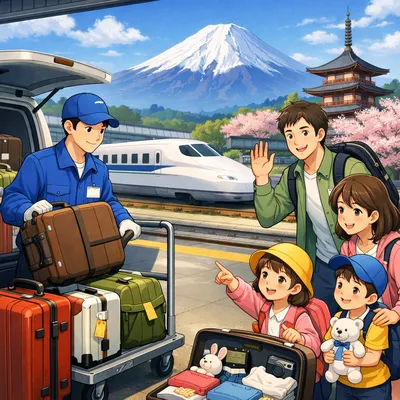
Luggage delivery is exactly what it sounds like: you ship your suitcase from one place to another, usually arriving the next day.
You’ll often see it called takkyubin or TA-Q-BIN. Major companies include Yamato Transport, Sagawa, and Japan Post (Yu-Pack). Services and counters vary by location, so check what your hotel or airport offers.
This is not a weird luxury add-on. In Japan, it’s a normal travel style. Many travelers use it to avoid crowded trains, stairs, and station transfers.
Stress-Free Tip: If you’re taking long-distance trains with transfers, luggage delivery can reduce your stress more than almost anything else.
When to Use Lockers vs Luggage Delivery
Let’s make this simple.
Use coin lockers when…
- You need storage for a few hours while sightseeing.
- You arrived early or have a late departure.
- You want to explore a neighborhood without dragging a suitcase.
- You need your bag back the same day.
Use luggage delivery when…
- You’re moving cities and don’t want to carry a suitcase on trains.
- You’re traveling with kids and want fewer things to manage.
- You’re staying somewhere with lots of stairs or limited elevator access.
- You can wait until tomorrow (or later) for your suitcase to arrive.
Stress-Free Tip: A very common rhythm is: deliver the big suitcase, and keep a small overnight bag with essentials.
How Luggage Delivery Works (In Real-Life Travel Situations)
I know, it sounds confusing at first. But the process is usually straightforward, especially if your hotel helps.
Step 1: Decide your “send” and “receive” locations
Common routes include:
- Airport → Hotel
- Hotel → Hotel (city-to-city)
- Hotel → Airport (at the end of your trip)
Stress-Free Tip: Before you travel, save your hotel name, address, and phone number in your notes app. Many delivery forms ask for these.
Step 2: Pack a small essentials bag
Delivery is often next-day, but some routes (long distance, remote areas, islands) can take 2–3 days. That’s why you should keep:
- One change of clothes
- Toiletries and any medication
- Chargers and valuables
- Anything you absolutely need tomorrow morning
Stress-Free Tip: Think of it like airline checked baggage. Keep the important stuff with you.
Step 3: Fill out the form (with help if needed)
At a hotel, the front desk often helps you complete the shipping slip. At airports or shipping counters, staff may guide you too, especially in major tourist areas.
You don’t need perfect Japanese. You just need to be prepared with your destination details.
Stress-Free Tip: If you’re nervous, show the next hotel’s booking confirmation on your phone. It’s a simple way to reduce misunderstandings.
Step 4: Choose delivery timing
Many deliveries are next-day, but cut-off times and delivery windows depend on the company and location. Always confirm the arrival day at the counter or hotel front desk, and check the latest official information if timing is critical.
Stress-Free Tip: If you’re changing hotels every single night, delivery can still work, but you must plan carefully. It’s often easiest when you stay at least two nights at the next hotel.
Station and Train Stress: Why “Hands-Free Travel” Matters
Many first-time visitors imagine Japan’s trains as calm and spacious. And sometimes they are!
But big-city stations can be crowded. Elevators can be busy. Some transfers involve long walks. And certain trains have luggage rules or limited space.
So yes—reducing luggage can reduce stress. A lot.
Stress-Free Tip: If you’re traveling during morning and evening rush hours, it’s often easier to avoid moving big suitcases at those times.
Common Mistakes (Totally Understandable, But Avoid These If You Can)
Forgetting the calendar-day rule
Crossing midnight can add an extra day charge in many lockers. It’s an easy surprise.
Losing the receipt or mixing up the IC card
New-style lockers can rely on a receipt code or the exact IC card you used. Keep it safe and consistent.
Assuming “coin locker” means you need coins
Some do require coins, but many accept IC cards now. Still, having a little cash is useful just in case.
Waiting until the last minute in a busy station
Lockers can fill up. If you absolutely need one, try to store luggage earlier in the day.
Sending luggage without keeping essentials
Delivery is reliable, but timing can vary. Keep what you need for the next day with you.
Recommended Options (Only If They Fit Your Trip)
IC Card (Suica or Pasmo)
Best for:
Travelers who want easy payments for trains, convenience stores, and many newer lockers.
Not ideal for:
People who prefer cash-only travel or who don’t want to manage another card (though it’s usually simple).
My honest take:
If you’re nervous about machines and exact change, an IC card can make lockers and transit feel much smoother. Just keep track of which card you used for the locker.
Luggage Delivery (Hotel Front Desk or Airport Counter)
Best for:
Multi-city travelers, families, and anyone who wants to avoid hauling suitcases through crowded stations.
Not ideal for:
Trips where you change hotels every night, or when you need your suitcase the same day.
My honest take:
This is one of the most practical “comfort upgrades” in Japan. It’s not about being fancy. It’s about saving your energy for sightseeing.
Staying Near a Major Station (When Possible)
Best for:
First-time visitors who want simpler navigation and fewer transfers with luggage.
Not ideal for:
Travelers who prioritize quiet neighborhoods over convenience, or who don’t mind longer walks.
My honest take:
A station-adjacent hotel can reduce stress on arrival and departure days. You don’t need to do this for every city, but it helps when you’re learning the system.
Stress-Free Checklist
- Save your hotel name, address, and phone number in your phone (for delivery forms).
- Keep a small “essentials bag” ready in case you send your suitcase ahead.
- Carry a little cash, even if you plan to use an IC card.
- Before locking a locker, double-check passport, wallet, phone, and anything you’ll need soon.
- Take a photo of the locker area so you can find it again.
- Avoid moving big luggage during rush hour when possible.
- If you need long storage, check for a staffed baggage counter at the station or airport.
- For delivery timing and limits, check the latest official information before you rely on it.
FAQ
Do I need Japanese to use coin lockers in Japan?
Usually no. Many lockers have simple buttons and some new-style lockers have English menus. Signs often use clear icons too.
Are coin lockers really “coin” lockers?
Some older ones are coin-only, but many newer lockers accept IC cards like Suica or Pasmo, and sometimes other payment methods depending on the location.
How long can I keep luggage in a station locker?
Many stations allow around up to 3 days, but it varies. If you need longer, look for staffed baggage storage and check the facility’s latest rules.
Is luggage delivery in Japan same-day?
It’s often next-day, but not always. Longer distances or remote destinations can take 2–3 days. Confirm the schedule when you ship it.
What should I do if all the lockers are full?
Try another locker area in the same station, look for a staffed baggage counter, or consider sending your suitcase by luggage delivery if you don’t need it immediately.
Final Thoughts
You don’t need to be perfect. You just need to be prepared.
Coin lockers and luggage delivery are two of the easiest ways to make Japan feel calmer—especially when you’re jet-lagged, navigating a big station, and trying not to block foot traffic with a suitcase.
Plan a simple strategy: lockers for a few hours, delivery for tomorrow. Keep essentials with you. And when details matter (prices, time limits, delivery timing), check the latest official information before you go.
Once you’ve done it once, you’ll probably wonder how you ever traveled any other way!