Japan is amazing. Japan is also… very popular right now. And if you’re a first-time visitor, crowds can feel like the “hard mode” version of travel—especially when you don’t speak Japanese, you’re dragging a suitcase, and the station signs suddenly look like a maze.
Let’s be honest. Most people don’t mind a little buzz. They mind the shoulder-to-shoulder moments, the surprise lines, and that tired feeling where you realize you’ve spent half the day just… waiting.
Don’t worry. You’re not the only one. This is where many first-time visitors get stuck. The good news is that you don’t need secret local knowledge to make Japan feel calmer. You just need a few simple choices—when you go, what time you visit, where you base yourself, and how you move around.
Quick Answer

To avoid crowds in Japan, aim for off-peak seasons (and weekdays), visit popular spots early in the morning, and stay in calmer neighborhoods with easy train access.
Use reservations when possible, avoid commuter rush hour with luggage, and swap a few “must-see” hotspots for quieter alternatives.
Small changes in timing and planning can make the same trip feel twice as relaxing.
Who This Guide Is For
This guide is for you if you’re:
- A first-time visitor to Japan who wants a calmer, less overwhelming trip
- Someone who doesn’t speak Japanese and worries about getting stuck in lines or confusion
- Traveling during peak seasons (cherry blossoms or autumn colors) and trying to “reduce the damage”
- Not a fan of crowds, packed trains, or noisy tourist streets
- Trying to choose a hotel area and you’d rather sleep somewhere quieter
- Traveling with kids, parents, or anyone who gets tired quickly in crowds
1) Pick calmer dates: the easiest crowd “hack”
If you can choose your timing, this is the biggest lever you have. Many travelers find that Japan feels completely different when you shift your trip by even a couple of weeks.
In general, it’s often said that late March to early April (cherry blossoms) and late October through November (autumn leaves) bring major crowds to famous areas.
It’s also commonly recommended to be extra careful around big domestic travel periods like Golden Week, Obon, and New Year, when many Japanese travelers are also on the move. Dates can shift year to year, so check the latest official calendars and transport updates before you go.
Months that can feel calmer (not a promise, but a pattern)
Based on common travel-media advice, months like February, June (rainy season), September, and mid-to-late May are often suggested as less crowded options in many areas.
Of course, weather trade-offs are real. June can be humid and rainy. February can be cold. But if your priority is calm, those trade-offs can be worth it, right?
Weekdays matter more than you think
Here’s the thing. Even in peak seasons, weekday mornings can feel surprisingly manageable. If you have one “big name” sight you really care about, try scheduling it for Tuesday–Thursday.
Stress-Free Tip: If you remember one thing, remember this: plan your most famous spots on weekdays, and keep weekends for flexible, local wandering.
2) Use time of day like a superpower (yes, really)
Many first-time visitors assume crowds are “just how it is.” But in Japan, time of day changes everything.
In many cases, popular temples and shrines are much quieter around opening time—and often around 7:00 a.m. for places that open early or have accessible grounds. By late morning, tour groups and day-trippers tend to arrive, and the vibe can flip fast.
Early morning: calm streets, better photos, less waiting
This is the part that sounds a little dramatic, but it helps. If you can do even one or two early starts, you’ll likely feel the difference in your energy.
Common situation: you wake up early from jet lag anyway. Instead of fighting it, you can “spend” that early hour on the place that would be packed at noon.
Night time: a quieter version of the same neighborhood
Some areas that are packed mid-day can feel calmer at night. Streets open up. Lines shrink. The atmosphere gets more local.
Tiny warning: check closing times for shops, observation decks, and attractions. Hours can change by season, and some places close earlier than you’d expect. Always check the latest official information before you go.
Avoid commuter rush hour (especially with luggage)
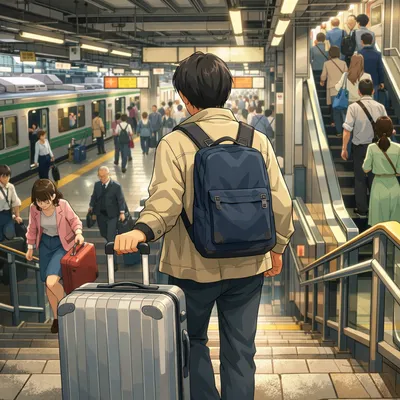
Let’s talk trains. They’re wonderful. They can also be extremely crowded during commute windows—often around 8 a.m. and 5–7 p.m. in big cities.
If you’re carrying a suitcase, those times can feel intense. Not dangerous—just cramped and stressful.
Stress-Free Tip: If you’re moving hotels, try traveling between 10 a.m. and 4 p.m. when possible. Your shoulders will thank you.
3) Keep the “must-sees,” but swap a few hotspots
You don’t have to skip famous places completely. You just need balance.
A calmer itinerary often looks like this: one famous thing in the morning, then a quieter neighborhood for lunch and wandering, then a reserved activity or relaxed evening.
“Skip this, try this instead” (easy swaps)
These are not “better” than the famous places. They’re simply less intense for many travelers, and can still give you that Japan feeling.
Tokyo swaps
- Instead of a packed rooftop view: consider a free or lower-key observation spot like Carrot Tower (often mentioned as a calmer option) if it fits your route.
- Instead of a super-crowded youth shopping street: try neighborhoods like Shimokitazawa or Yanaka, which many travelers describe as more relaxed for strolling.
Kyoto vibes without the heaviest Kyoto crowds (sometimes)
- Instead of a famous torii tunnel at peak time: you can look for smaller shrine paths in other cities, or visit the famous one very early to reduce the crowd pressure.
- Instead of a headline “old town” area: some travelers swap to a smaller nearby town (for example, Hida-Furukawa is sometimes suggested as a calmer alternative to more famous historic streets nearby).
Important note: crowd levels change constantly due to weather, school trips, events, and social media trends. Think of these as “often calmer,” not guaranteed quiet.
Stress-Free Tip: Keep your top 2–3 “dream sights.” Then deliberately choose 2–3 quieter fillers so your trip has breathing room.
4) Stay in a calmer base (your hotel choice matters a lot)
This is a big one, especially for nervous travelers. If your hotel area is chaotic, your whole trip can feel chaotic.
Many first-time visitors book Shinjuku or Shibuya because they’re famous and convenient. And yes, they’re convenient. They’re also busy almost all the time.
Tokyo: quieter areas that still connect well
Travel sources often mention areas like Nihonbashi, Marunouchi, near the Imperial Palace, Meguro, Ebisu, and Ochanomizu as potentially calmer while still being well-connected.
Not every street is quiet, of course. But these areas can feel more “grown-up city” than “festival crowd,” if that makes sense.
Kyoto: avoid the most packed tourist core (if you can)
In Kyoto, areas around Gion, Kiyomizu-dera, and central shopping streets can be very crowded, especially mid-day.
Some guides suggest looking near the Kyoto Imperial Palace, or slightly away from the most famous lanes, to reduce the constant foot traffic. Exact “quiet zones” can vary, so use the map view when booking and check what’s nearby (bus stops, big attractions, nightlife streets).
A surprisingly calm strategy: stay outside, day-trip in
Here’s a gentle alternative: stay in a smaller city or quieter neighborhood and do a day trip into the big-name area.
This can reduce the “always crowded” feeling, because you return to a calmer base at night. Just check last train times if you plan evening activities.
Stress-Free Tip: When choosing a hotel, zoom out on the map and ask: “Will I enjoy walking here at 9 p.m.?” If the answer is “no,” keep looking.
5) Reduce lines with smart planning (without over-planning)
Lines are a special kind of travel stress, aren’t they? You’re tired, hungry, and suddenly you’re standing in a queue you didn’t plan for.
The goal is not to schedule every minute. It’s to remove the biggest pain points.
Reserve what tends to sell out
For popular observation decks, theme parks, special exhibitions, and some experiences, booking ahead can reduce waiting and uncertainty.
Rules and systems change, so always check the latest official website for your attraction before you go.
Use “paid entry” gardens and museums as a calm reset
Many travelers notice that places with a small entry fee can feel less chaotic than free hotspots nearby. Not always, but often.
If you’re getting overwhelmed, a garden, museum, or quieter temple with entry can be a great “reset button.”
Eat at slightly off times
Lunch at 11:00 or 14:00 can be dramatically easier than 12:00. Same food, less waiting, happier you.
Stress-Free Tip: Build one daily “buffer block” (60–90 minutes) for delays, snacks, and unexpected lines. It makes crowds feel less personal.
6) Make moving around less crowded (and less confusing)
Stations in Japan are safe and well-signed, but they can be overwhelming. Especially the first time you see a multi-level station with ten exits and a sea of people moving confidently.
I know, it sounds confusing. But you can make it easier with a few habits.
Choose simpler transfers, not just the fastest route
Navigation apps may suggest the quickest path with multiple transfers. When you’re tired, that can be a lot.
It’s often easier to choose a route with fewer transfers, even if it takes a bit longer. Less platform-hopping means less stress and fewer chances to get lost.
Use an IC card for smoother station life
In many cities, an IC card (like Suica or Pasmo) lets you tap in and out without buying individual tickets. That means fewer lines at ticket machines.
Availability and options can change, so check the latest official transport info before your trip if you want a specific card or mobile setup.
Consider luggage delivery for big moves
If the idea of dragging a suitcase through a packed station makes your soul leave your body… you have options.
Japan has luggage delivery services (often called “takkyubin” in travel guides) that can send your suitcase from one hotel to another. It can reduce stress on transfer days, especially if you’re avoiding rush hour.
Details vary by company and hotel, so ask your accommodation what services they support and confirm timing.
Stress-Free Tip: On travel days, pack a small day bag with essentials (meds, charger, one change of clothes). Then you can send the suitcase ahead without worry.
7) If you must visit peak-season Japan, do this
Sometimes you can’t avoid peak season. Maybe it’s the only time you can get vacation. Maybe you’re chasing cherry blossoms. Totally understandable.
So let’s make it calmer anyway, shall we?
A simple peak-season game plan
- Do your biggest sights early (aim for opening time when possible)
- Pick one major area per day (don’t zig-zag across the city)
- Use reservations for at least one activity to avoid “sold out” stress
- Plan a quiet break: a garden, museum, café, or riverside walk
- Return to your hotel area before you’re exhausted (yes, even if it feels “too early”)
Stress-Free Tip: Peak season is not the time to prove you can do 25,000 steps daily. Your future self will not be impressed!
Common Mistakes (Totally Understandable)
These are the crowd-related mistakes many first-time visitors make. No judgment. Japan is a lot at first.
- Trying to visit famous sights at 11 a.m. because it “feels like a normal time.” (It’s also everyone else’s normal time.)
- Booking a hotel in the busiest district and then wondering why you never feel rested.
- Planning too many areas in one day, which increases time in stations and on crowded trains.
- Moving with big luggage during rush hour and feeling stressed before the day even starts.
- Assuming you must see everything on the Golden Route, even if crowds drain you.
Stress-Free Tip: A calmer trip is not a “less authentic” trip. It’s just a trip designed for your actual energy level.
Recommended Options (Only If They Fit Your Trip)
eSIM or Pocket WiFi (so you can reroute fast)
Best for:
Travelers who get anxious about getting lost, and anyone who wants to quickly check alternate stations, quieter routes, or less crowded times.
Not ideal for:
People who prefer to stay offline, or groups who don’t want to manage device setup and battery use.
My honest take:
Reliable internet makes crowd avoidance easier because you can change plans on the fly. Just don’t wait until landing day to figure it out—setup is calmer when done before you fly.
Luggage delivery between hotels
Best for:
Anyone traveling with large suitcases, families, and travelers who want to avoid crowded trains and station stairs.
Not ideal for:
One-night stays where timing is tight, or travelers who need their suitcase immediately upon arrival.
My honest take:
This can be a real stress-reducer on transfer days. Confirm cut-off times and delivery windows with your hotel, because rules and schedules can vary.
Advance bookings for popular attractions
Best for:
People who hate uncertainty and don’t want to gamble with sold-out tickets or long lines.
Not ideal for:
Travelers who want a fully spontaneous trip and don’t mind skipping things last-minute.
My honest take:
Reserve only your “high-risk” items (the ones that sell out). Leave the rest flexible so you can adapt to weather and energy.
Stress-Free Checklist
- Choose travel dates with crowd levels in mind (and double-check holidays before booking)
- Schedule your top famous sights on weekdays when possible
- Plan 1–2 early mornings for the most crowded places
- Avoid rush hour if you’re traveling with luggage
- Pick a hotel area that feels calm at night, not just “close to everything”
- Save your hotel name and address in your notes app (in English) and pin it on your map
- Decide which attractions need reservations and book them early
- Build a daily buffer block for lines, snacks, and surprises
- Consider luggage delivery for big city-to-city moves
- Prepare internet access before you arrive so you can reroute easily
FAQ
What’s the best time of day to visit popular temples and shrines?
In many cases, opening time or early morning (often around 7:00 a.m. for early-access areas) is much calmer than late morning and midday.
Is it possible to enjoy Kyoto without huge crowds?
Yes, but it usually takes strategy: go early, prioritize weekdays, and balance famous sights with quieter neighborhoods. Crowds can vary daily, so stay flexible.
I don’t speak Japanese. Will avoiding crowds be harder?
Not necessarily. Japan is visitor-friendly, and signage in major areas is often clear. With internet access and a simple plan, you can reroute and avoid peak times more easily.
Should I avoid trains to avoid crowds?
No. Trains are still the easiest way to get around. The key is avoiding commuter rush hours and choosing routes with fewer transfers when you’re tired.
Do I need to book everything in advance to avoid lines?
No. Booking a few high-demand attractions helps, but leaving free time is also important. A balanced plan is usually the least stressful.
Final Thoughts
A calmer Japan trip isn’t about finding a magical crowd-free country. It’s about making small, smart choices so you’re not battling crowds all day.
Pick better timing when you can. Start early for the big sights. Stay somewhere that lets you breathe. And give yourself permission to skip one or two “famous” things if they don’t fit your energy.
You don’t need to be perfect. You just need to be prepared. And once you are, Japan becomes a lot easier—and a lot more fun.