The Shinkansen looks simple in photos. Sleek train, clean platform, done. Then you arrive at a big station, see three different ticket options, two different gates, and a departure board that feels like it’s moving faster than the train itself.
Don’t worry. You’re not the only one. This is where many first-time visitors get stuck.
This guide walks you through the exact things that cause stress: how tickets work (yes, sometimes it’s two), how to get through the gates without panicking, and how to choose between reserved and non-reserved seats. You’ll also get a few gentle etiquette tips, because nobody wants to be “that tourist” on a quiet train.
Quick Answer

To ride the Shinkansen, you usually need a base fare ticket plus a Shinkansen express ticket (sometimes printed separately, sometimes combined).
You can buy or reserve tickets online, at a ticket office, or at a ticket machine.
For the least stress, choose a reserved seat, arrive early, and follow signs for “Shinkansen” to the dedicated gates and platforms.
Who This Guide Is For
This is for you if any of these sound familiar:
- You’re visiting Japan for the first time and the train system feels intimidating.
- You don’t speak Japanese and you’re worried you’ll buy the wrong ticket.
- You’re traveling with kids, parents, or a partner and you want to sit together.
- You have luggage and you’re picturing yourself dragging it through a crowded station (fair).
- You want to avoid etiquette mistakes without memorizing a rulebook.
What the Shinkansen Is (and Why It’s Less Scary Than It Looks)
The Shinkansen is Japan’s high-speed rail network connecting major cities. It’s one of the most popular ways for travelers to move around the country, and it’s built for efficiency.
Here’s the thing: it’s not “hard.” It’s just different from what many visitors are used to.
Once you understand tickets + gates + seat types, the Shinkansen becomes one of the calmest parts of your trip.
Stress-Free Tip: Treat your first Shinkansen ride like an airport departure. Arrive early, confirm the platform, then relax.
The Ticket Basics: Why You Often Need Two Tickets
This is the big one. Many first-time visitors assume they need one ticket. In Japan, Shinkansen travel often uses two parts:
- Base fare ticket (sometimes called passenger ticket): the basic distance fare.
- Shinkansen express ticket (supplement): the extra fee for riding the Shinkansen.
Depending on how and where you buy, these may be two separate paper tickets or combined into one. Both are normal.
If you have two tickets, you’ll typically insert both together at the gate. The gate reads them and gives them back.
Tiny warning: Don’t walk away without your tickets. The gate returns them, and it’s easy to miss when you’re juggling bags.
Stress-Free Tip: Before you reach the gate, pause for five seconds and physically separate your Shinkansen tickets from other receipts and cards. Your future self will thank you.
How to Buy Shinkansen Tickets (Online, Machines, or the Ticket Office)
Option 1: Online booking (often the easiest)
As of recent guidance (including 2025-era traveler info), online booking is often presented as the most convenient option, especially because some services offer English support.
Commonly mentioned services include SmartEX (often used for Tokaido/Sanyo/Kyushu Shinkansen areas) and Ekinet (often used for JR East areas). Availability, payment methods, and pickup rules can change, so check the latest official information before you go.
One more useful timing detail: reservations are commonly available from about one month before travel, and some services for certain lines may allow booking much earlier (sometimes up to around a year). Again, confirm on the official site for your route.
Stress-Free Tip: If stations make you nervous, book online and screenshot your confirmation details (train name/number, time, car, seat).
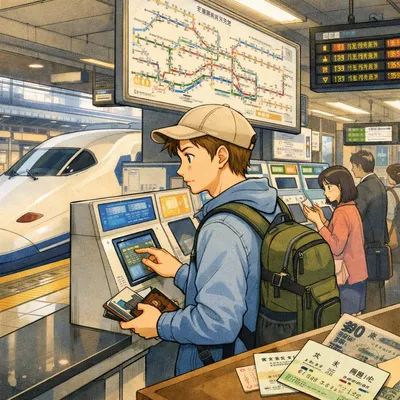
Option 2: Ticket machines (fast, but a bit “button-heavy”)
Major stations usually have Shinkansen-capable ticket machines. Many offer English menus.
The machine is great when you know what you want. It’s less great when you’re still deciding between reserved vs non-reserved, or you’re not sure which train to take.
Stress-Free Tip: If the machine menu starts to feel like a quiz you didn’t study for, stop and switch to the ticket office. That’s what it’s there for.
Option 3: Ticket office (Midori no Madoguchi)
Many JR stations have a staffed ticket office commonly known as Midori no Madoguchi. You can ask questions, confirm routes, and buy tickets with help.
The trade-off is simple: it can be busy, and you may wait longer at peak times.
What to tell the staff (simple checklist)
You don’t need perfect Japanese. You just need the essentials:
- Number of passengers
- Date of travel
- Departure station and destination
- Preferred departure time (or “morning/afternoon”)
- Ordinary car or Green Car
- Reserved seat or non-reserved seat
Stress-Free Tip: Write your route on your phone in English (e.g., “Tokyo to Kyoto, 2 adults, reserved seats, around 10:00”). Show it at the counter if you get flustered.
Reserved vs Non-Reserved Seats (and Which One You Should Choose)
This choice affects your stress level more than you might expect.
Reserved seats
A reserved seat means you have a specific car and seat number. You can board calmly, sit down, and stop scanning every headrest like you’re playing a travel version of musical chairs.
It’s generally the most comfortable option for:
- Families who want to sit together
- Travelers with luggage
- Anyone traveling during busy periods
- Nervous first-timers (honestly, most people)
Stress-Free Tip: If you remember one thing, remember this: reserved seats buy you calm.
Non-reserved seats
Non-reserved means you sit wherever there’s an open seat in the non-reserved cars. If it’s crowded, you may end up standing.
Non-reserved can work well for short rides or off-peak travel. But during busy seasons, it can get packed fast, and many guides recommend booking ahead.
Tiny warning: If you’re traveling with a group and you choose non-reserved, you might not sit together.
Stress-Free Tip: If you choose non-reserved, arrive early and line up where the non-reserved car doors will stop. Platform markings help.
Green Car (first class)
Green Car is the upgraded class with roomier seating and a quieter feel. It costs more, but it can be worth it if you want extra space or you’re doing a longer ride.
Stress-Free Tip: If crowds drain you, upgrading for one long travel day can be a strategic “energy saver,” not a luxury splurge.
Japan Rail Pass and the Shinkansen: What to Know
If you’re using a Japan Rail Pass, you’ll usually be able to make reserved seat bookings at no additional cost (as commonly stated in JR Pass guidance). That’s a big reason many pass holders reserve seats rather than gamble on non-reserved cars.
Rules and coverage vary by pass type, train type, and region, so check the latest official JR Pass and JR company information before you go.
Stress-Free Tip: If you have a pass and you’re unsure, ask staff to book your next few long-distance rides in one go. It can reduce decision fatigue.
Finding the Right Gates: Why It Sometimes Feels Like Two Separate Stations
Many stations have a “regular” area and a Shinkansen area. You may pass through two sets of gates depending on the station layout:
- A general gate to enter the JR station area
- A dedicated Shinkansen gate to enter the Shinkansen platforms
I know, it sounds confusing. But the signage is usually clear once you know what you’re looking for: follow signs for “Shinkansen”.
How to go through the Shinkansen gate (without the awkward beep)
If you have paper tickets, insert them into the ticket gate slot. If you have two tickets, insert both together. The gate will return them on top.
If you booked online, you may have a QR code or a pickup ticket depending on the service. Follow the instructions from your booking provider and check the latest official guidance, since systems can change.
Stress-Free Tip: Before you insert anything, watch one person go through. Copy their timing. This tiny “monkey-see-monkey-do” moment saves a lot of stress.
On the Platform: How to Know Where to Stand (and Which Car You’re In)
Once you’re through the Shinkansen gate, you’ll head to the platform. This is where the calm returns—because the platform is organized.
Look for:
- Platform number on the departure board
- Train name and number (for example, different service types exist on some lines)
- Car number and seat number if you reserved
- Floor markings showing where doors will stop and where to queue
Shinkansen trains are known for punctuality, so it helps to confirm your platform early and not wander off at the last second.
Stress-Free Tip: Aim to be on the platform 10–15 minutes early. Enough time to find your car, not so early that you’re just standing there forever.
Boarding and Finding Your Seat (It’s Simpler Than It Feels)
When the train arrives, people line up and board quickly. Let passengers exit first, then step on.
Reserved seats are clearly labeled by car and seat number. If you’re in the wrong car, don’t panic. Just step back onto the platform at the next stop or move through the connecting doors between cars if allowed and practical.
Stress-Free Tip: Keep your ticket or booking details accessible until you’re seated. Many “wrong car” moments happen because someone put the ticket away too early.
Luggage on the Shinkansen: The Low-Stress Approach
Let’s be honest: the Shinkansen itself is easy. The stressful part is often getting to it with luggage.
On board, smaller suitcases can usually go:
- On the overhead rack (if manageable)
- In front of your legs (if it fits without blocking others)
- In designated storage areas when available
Rules and luggage space setups can vary by line and train type, so it’s smart to check the latest official information if you’re traveling with very large bags.
If you hate hauling bags through stations
Many travelers use luggage delivery services to send big suitcases between hotels. It can make stations dramatically easier—especially in crowded cities.
Stress-Free Tip: If you’re doing a Tokyo-to-Kyoto style route with big luggage, consider sending the largest bag ahead and traveling with a smaller overnight bag. Your shoulders will notice.
Simple Shinkansen Etiquette (So You Don’t Feel Self-Conscious)
You don’t need to be perfect. You just need to be prepared.
Common expectations include:
- Keep your voice low (especially on quieter cars).
- Set your phone to silent mode.
- Take calls off your seat area if needed (or avoid calls).
- Keep your space tidy and take trash with you if bins aren’t nearby.
None of this is meant to be scary. It’s just how the train stays calm, even when it’s full.
Stress-Free Tip: If you’re unsure, follow the vibe. Quiet car? Be extra quiet. Busy family car? Still polite, but you won’t feel like you’re breathing too loudly.
Common Mistakes (Totally Understandable, But Avoid These If You Can)
- Mixing up reserved and non-reserved cars: Double-check your ticket for car number and seat details.
- Forgetting there may be two tickets: If you have two, you usually need both at the gate.
- Going to the wrong gate: Follow signs specifically for “Shinkansen,” not just “JR Line.”
- Arriving too late: Shinkansen boarding is efficient. That’s great… unless you’re sprinting.
- Assuming non-reserved will be fine during peak times: It might be, but it’s risky. Reserved seats are often recommended when it’s busy.
Stress-Free Tip: Build in “confusion time.” Add 15 minutes for your first Shinkansen day. Sounds dramatic? Maybe. But it helps.
Recommended Options (Only If You Want Extra Peace of Mind)
Online booking (SmartEX / Ekinet or official services)
Best for:
Travelers who want to lock in a seat early, avoid lines, or feel calmer with everything confirmed on their phone.
Not ideal for:
People who prefer paying cash only, or travelers who don’t want to deal with account setup. Availability also depends on your route and the service rules.
My honest take:
If stations make you anxious, online booking can remove a huge mental load. Just make sure you understand pickup/entry requirements and check the latest official instructions.
Reserved seats (even when non-reserved is cheaper)
Best for:
First-timers, families, anyone with luggage, and anyone traveling during busy periods.
Not ideal for:
Ultra-flexible travelers doing short hops who don’t mind standing occasionally.
My honest take:
Reserved seats are one of the simplest “pay a little, stress a lot less” choices in Japan travel.
Luggage delivery between hotels
Best for:
People with large suitcases, travelers moving cities, and anyone who hates stairs and crowds.
Not ideal for:
Same-day hotel switches where you need your bag immediately (delivery timing varies), or travelers with only a small carry-on.
My honest take:
This is not mandatory. But if you’re dreading the station part more than the train part, it can be a game-changer.
Stress-Free Checklist
- Decide: reserved or non-reserved (choose reserved if you want the calm option)
- Check whether your ticket is one combined ticket or two separate tickets
- Save your route details: departure, destination, date, and approximate time
- If booking online, screenshot your confirmation (train, time, car, seat)
- Arrive at the station early and follow signs for Shinkansen
- Confirm your platform number before buying snacks or wandering
- Pack a small “seat kit” (water, charger, tissues) so you’re not digging through luggage
- Keep your voice low and your phone on silent mode
- If traveling in peak periods, book ahead when possible (and check official updates)
FAQ
Do I really need two tickets for the Shinkansen?
Often, yes: a base fare ticket plus a Shinkansen express ticket. Sometimes they’re printed separately, sometimes combined. Both are normal.
Is it better to reserve a seat?
For most first-time visitors, yes. Reserved seats reduce stress, help you sit together, and avoid the risk of standing when it’s crowded.
When can I reserve Shinkansen tickets?
Many reservations open about one month before travel. Some services on certain lines may allow earlier bookings. Check the latest official information for your route.
I don’t speak Japanese. Can I still buy tickets easily?
Yes. Major stations often have English-friendly machines, and ticket offices can help if you show your route details clearly.
What if I go through the wrong gate or get on the wrong car?
It happens. Ask station staff, and don’t force it through. Japan’s stations are used to helping confused travelers, and signage is designed to guide you back.
Final Thoughts
The Shinkansen is one of those Japan experiences that looks intimidating until you do it once. Then you realize it’s basically a well-organized routine.
You don’t need to be perfect. You just need to be prepared: understand the ticket setup, choose the seat type that matches your comfort level, and give yourself a little extra time at the station.
Do that, and your first bullet train ride can feel less like a challenge… and more like the calm, efficient travel day you were hoping for.